

Arm Says Microcontroller Price Hikes Helped Fuel Sales
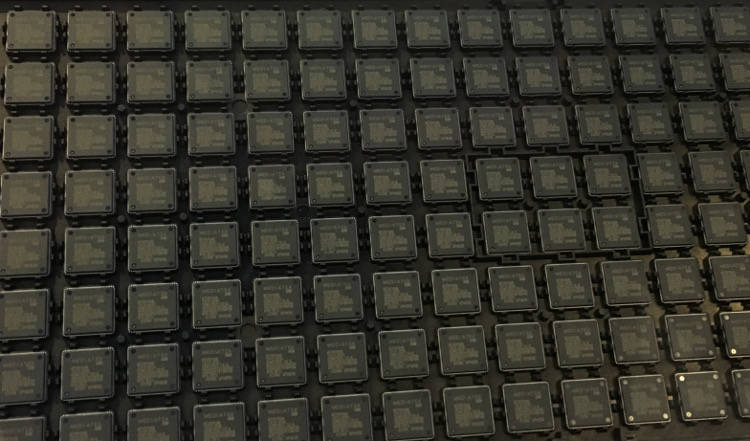
With Arm looking to re-enter the public market at some point, the British chip designer is hoping to get would-be investors excited with figures that indicate it achieved record revenues and profits in 2021.
Arm on Thursday said its fiscal 2021 revenue grew 35 percent year-on-year to $2.7 billion, serving as one of the few bright spots in what was an otherwise dreadful year for its owner, Japan-based SoftBank Group, which failed to sell the chip designer to GPU giant Nvidia after facing pushback from regulators.
During that doomed merger attempt, Nvidia's submissions [PDF] to the UK's monopoly watchdog with Arm, arguing in favor of the acquisition, at times painted Arm as some kind of injured swan in need of help to survive. For example, it was stated that "as a standalone business, Arm faces significant challenges to growth," and "Arm’s original market, and the largest source of its revenue, mobile, is saturated." Now that the fateful takeover has been called off, Arm can't wait to assert it was, and is, going gangbusters all by itself after all.
To demonstrate its profitability, Arm said its earnings before interest, taxes, depreciation and amortization (EBITDA) was up 68 percent to $1 billion in fiscal 2021, which gave it an adjusted EBITDA margin of 37 percent. While EBITDA is a popular way to measure financial performance, we should note this does not provide a complete picture of Arm's financial health.
The chip designer's fiscal 2021 growth came from license revenues, which increased 61 percent to $1.13 billion, and from royalty revenues, which increased 20 percent to $1.54 billion. This was made possible by what Arm said was a record 29.2 billion Arm-based chips that shipped last year.
"Our record results demonstrate that the demand for Arm technology and the strength of the Arm ecosystem has never been greater – our compute platform will power the next set of technology revolutions across cloud computing, automotive and autonomous systems, the IoT, the Metaverse and beyond," said Rene Haas, who took over from Simon Segars as Arm's CEO after the Nvidia deal fell through.
"As we look ahead to a future built on Arm, our priority is to continue to deliver on our business strategy, enable partners with the solutions they need through further investment in our roadmaps and engineering talent, and together with our ecosystem redefine the future of computing," Haas added in his statement.
- SoftBank aims to keep control of Arm after IPO – report
- Arm China CEO refuses to go despite SoftBank taking control
- Arm China website posts letter from staff opposing change of management
- RISC-V CEO seeks 'world domination' by winning over the likes of Intel
Arm was rather vague on what drove growth in its licensing business, only saying in a brief press release that its expanded portfolio of processor designs and its Arm Flexible Access program "gave more customers more reasons and more ways to license Arm technology."
Thankfully, the company was more specific on the growth drivers behind its royalty business, which makes money from partners selling Arm-based chips into the market. For this, Arm credited the "continuing strong growth of 5G smartphones" as well as automotive sales for in-vehicle infotainment and advanced driver assistance systems.
Arm also said price increases for 32-bit microcontrollers (MCUs) contributed to the boost in licensing revenue, which is great for the company but not so great for the companies that had to pay substantially more money for MCUs that go into their products.
As The Register reported earlier this year, a survey of 530 engineers conducted by distributor Avnet found that the global chip shortage was causing MCU prices to go up "more than 10 and even 20 times that of pre-pandemic pricing" because demand was outstripping supply.
Arm, like other chip companies, may have benefited from the volatility of the semiconductor industry last year, but the ongoing volatility of the stock market may not make now a great time for SoftBank to pursue an initial public offering for Arm, as SoftBank's CEO hopes to do. ®
From Chip War To Cloud War: The Next Frontier In Global Tech Competition
The global chip war, characterized by intense competition among nations and corporations for supremacy in semiconductor ... Read more
The High Stakes Of Tech Regulation: Security Risks And Market Dynamics
The influence of tech giants in the global economy continues to grow, raising crucial questions about how to balance sec... Read more
The Tyranny Of Instagram Interiors: Why It's Time To Break Free From Algorithm-Driven Aesthetics
Instagram has become a dominant force in shaping interior design trends, offering a seemingly endless stream of inspirat... Read more
The Data Crunch In AI: Strategies For Sustainability
Exploring solutions to the imminent exhaustion of internet data for AI training.As the artificial intelligence (AI) indu... Read more
Google Abandons Four-Year Effort To Remove Cookies From Chrome Browser
After four years of dedicated effort, Google has decided to abandon its plan to remove third-party cookies from its Chro... Read more
LinkedIn Embraces AI And Gamification To Drive User Engagement And Revenue
In an effort to tackle slowing revenue growth and enhance user engagement, LinkedIn is turning to artificial intelligenc... Read more