

AMD Preps Rack-scale Helios Systems To Contend With Nvidia's Vera Rubin NVL144
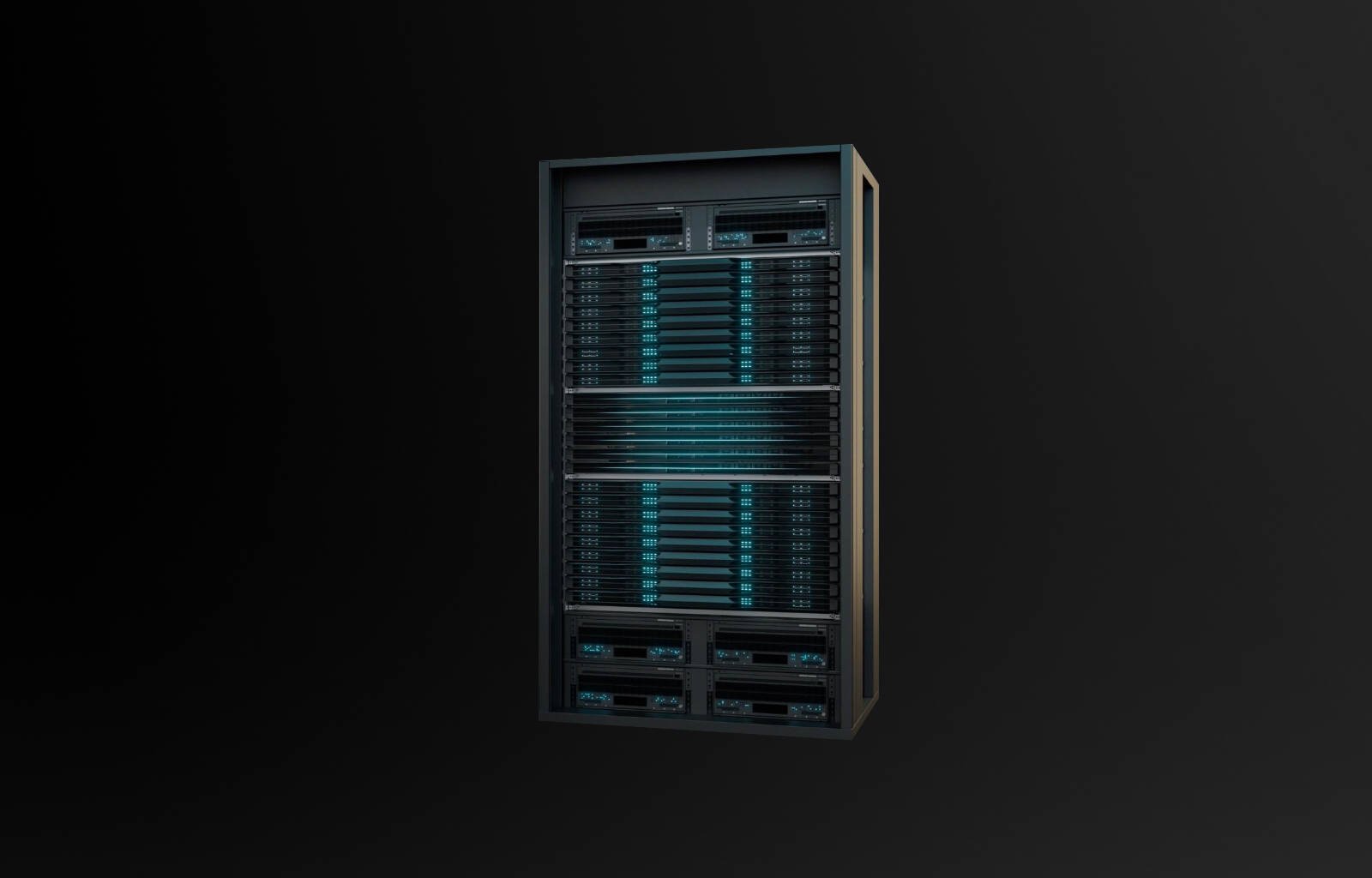
AMD offered its best look yet at the rack-scale architecture that'll underpin its MI400-series GPUs in 2026 at its Advancing AI event in San Jose on Thursday.
Codenamed Helios, the massive double-wide rack system is designed for large-scale frontier model training and inference serving. It'll be powered by 72 accelerators that have been made to look like one great big GPU by using Ultra Accelerator Link (UALink) to pool their compute and memory resources.
If you're not familiar, UALink is a relatively new interconnect tech designed to provide an alternative to NVLink – the technology that made Nvidia's own rack-scale systems like the GB200 and GB300 NVL72 possible.
Helios's six dozen MI400s will come equipped with 432 GB of HBM4 memory good for 19.6 TBps of bandwidth and 40 petaFLOPS of 4-bit floating performance.
The GPUs will be paired to AMD's sixth-gen Epyc Venice CPUs, though the exact ratio of CPUs to GPUs in Helios remains to be seen. Meanwhile, AMD's Pensando Vulcano superNICs are said to provide each accelerator with 300 GBps of scale-out bandwidth over what we assume are 12x 200 Gbps Ultra Ethernet links.
AMD Helios systems won't exactly fit into a standard rack – click to enlarge
As for who's going to supply the UALink switches necessary to make all this compute behave like one great big system, AMD isn't saying. But if we had to guess, it'll probably be Broadcom. You may recall a little over a year ago when AMD opened up its Infinity Fabric interconnect tech to partners – a technology that turned out to be foundational to the UALink standard – Broadcom was among the first to throw its weight behind it.
With that said, we are told that it's going to be just as fast as NVLink, delivering 3.6 TBps of bandwidth per accelerator.
Put together, AMD expects the system to deliver 2.9 exaFLOPS of FP4 performance (presumably with sparsity) for inference and up to 1.4 exaFLOPS of FP8 for training, putting it in direct contention with Nvidia's Vera Rubin NVL144 rack systems due out next year.
Announced at GTC this spring, Nvidia's Vera Rubin NVL144 will be equipped with 72 dual GPU Rubin SXM modules with two GPUs per package along with an unspecified number of a custom 88-core CPU called Vera. Altogether, Nvidia claims it will deliver up to 3.6 exaFLOPS at FP4 and 1.2 exaFLOPS at FP8.
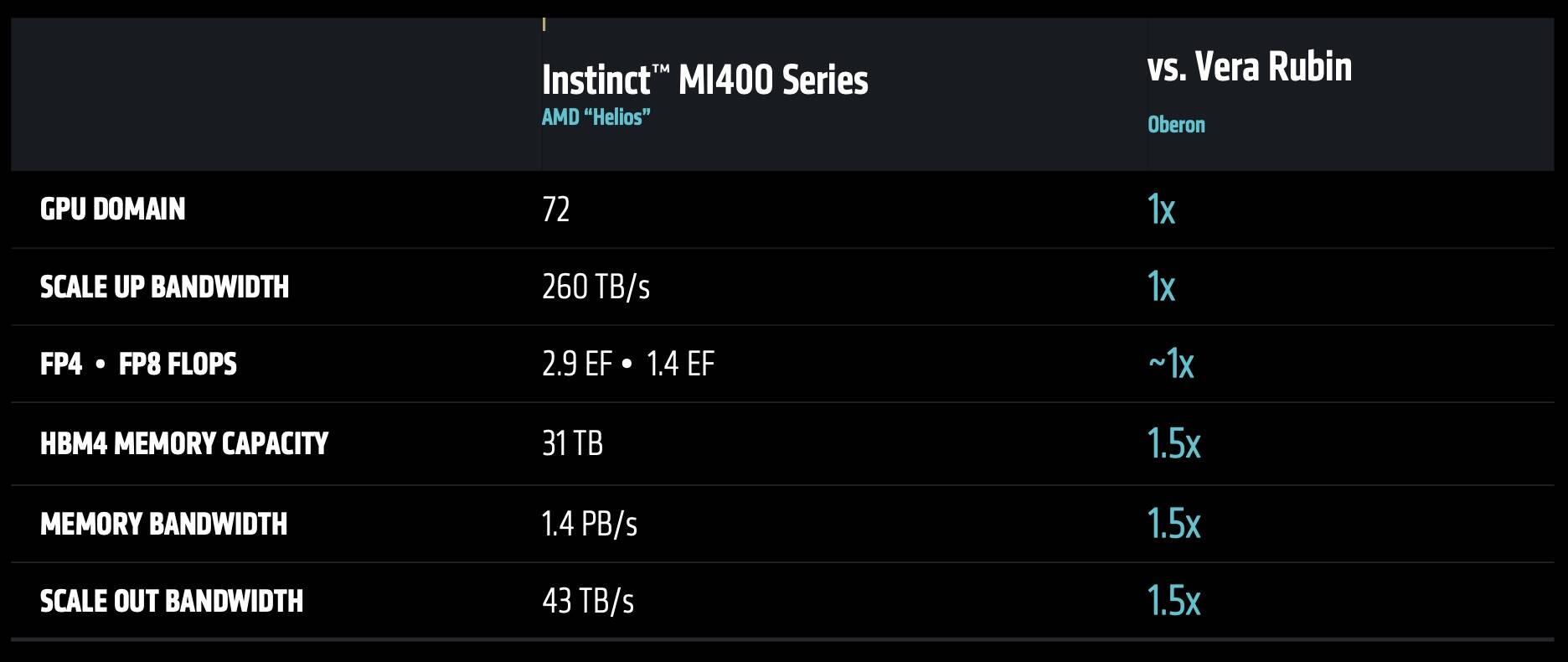
Here's how AMD thinks its Helios rack systems will stack up against Nvidia's Vera Rubin-based Oberon (NVL144) platform – click to enlarge
While the two rack systems will deliver roughly the same level of performance, AMD claims Helios will offer 50 percent higher memory capacity and bandwidth at 31 TBps and 1.4 PBps versus 20 TBps and 936 TBps on the VR-NVL144.
- Nvidia opens up speedy NVLink interconnect to custom CPUs, ASICs
- UALink debuts its first AI interconnect spec – usable in just 18 short months
- Omni-Path is back on the AI and HPC menu in a new challenge to Nvidia's InfiniBand
- Nvidia's Vera Rubin CPU, GPU roadmap charts course for hot-hot-hot 600 kW racks
"These advantages translate directly into faster model training and better inferencing performance and hugely advantaged economics for our customers," Andrew Dieckmann, corporate VP and GM of AMD's datacenter GPU business, said during a press conference ahead of the Advancing AI keynote on Thursday.
But as you might have noticed, that additional memory and bandwidth comes at the expense of the system being a whole lot fatter than Nvidia's NVL designs. Because AMD didn't share power targets for its MI400-series rack systems, it's hard to say how the machine will compare in terms of performance per watt.
Given how power-constrained datacenters are already in the wake of the AI boom, energy efficiency could end up having an outsized influence on which systems bit barn operators deploy.
Alongside Helios, AMD also teased an even denser rack-scale compute platform due out in 2027 that'll utilize its Verano Epyc CPUs, MI500 GPUs, and Vulcano NICs.
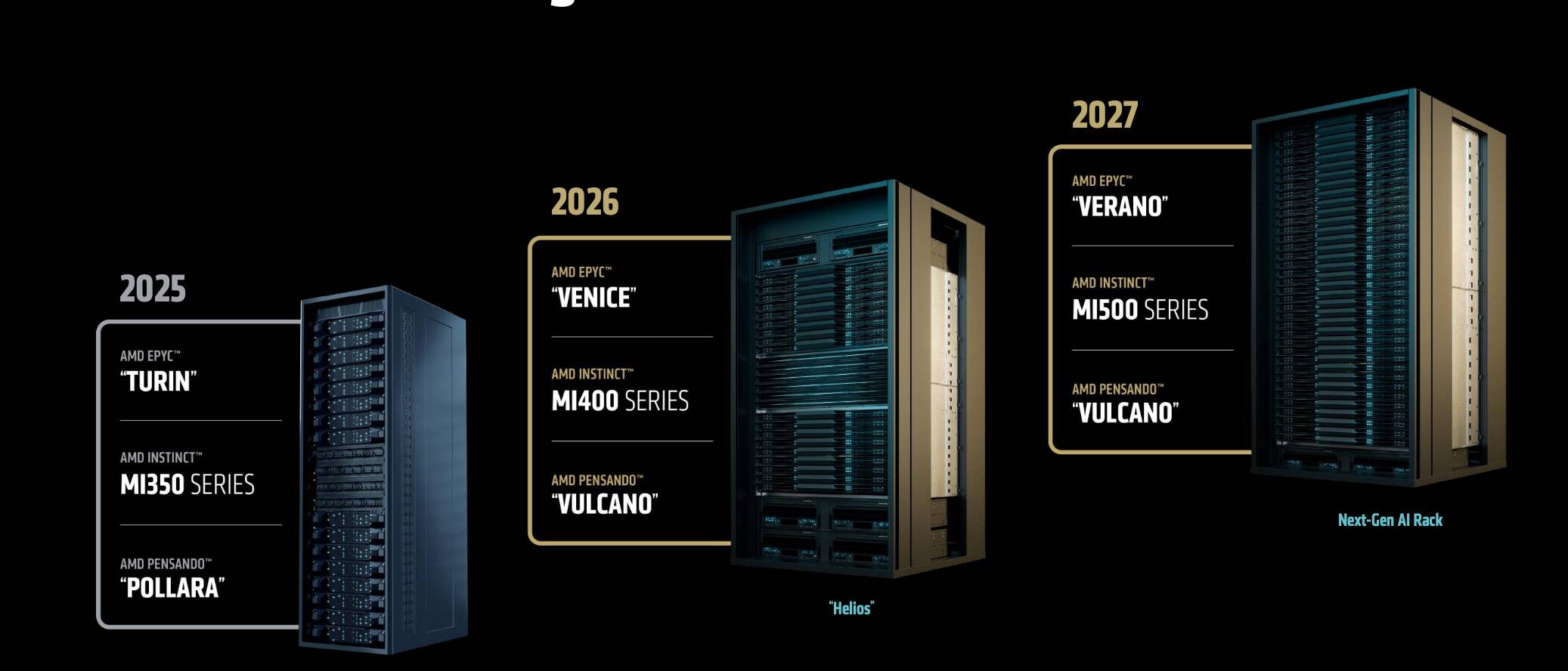
AMD's next-gen rack systems will feature its upcoming Verano Epycs and MI500 series chips when they arrive in 2027 – click to enlarge
While details on that system remain thin, we do know that it'll have to contend with Nvidia's 600 kW Kyber rack systems, which will feature 144 Rubin Ultra sockets and are expected to deliver 15 exaFLOPS of peak FP4 performance and 144 TB HBM4E, good for 4.6 PBps of bandwidth. ®
From Chip War To Cloud War: The Next Frontier In Global Tech Competition
The global chip war, characterized by intense competition among nations and corporations for supremacy in semiconductor ... Read more
The High Stakes Of Tech Regulation: Security Risks And Market Dynamics
The influence of tech giants in the global economy continues to grow, raising crucial questions about how to balance sec... Read more
The Tyranny Of Instagram Interiors: Why It's Time To Break Free From Algorithm-Driven Aesthetics
Instagram has become a dominant force in shaping interior design trends, offering a seemingly endless stream of inspirat... Read more
The Data Crunch In AI: Strategies For Sustainability
Exploring solutions to the imminent exhaustion of internet data for AI training.As the artificial intelligence (AI) indu... Read more
Google Abandons Four-Year Effort To Remove Cookies From Chrome Browser
After four years of dedicated effort, Google has decided to abandon its plan to remove third-party cookies from its Chro... Read more
LinkedIn Embraces AI And Gamification To Drive User Engagement And Revenue
In an effort to tackle slowing revenue growth and enhance user engagement, LinkedIn is turning to artificial intelligenc... Read more