

Airlines Told To Cancel Flights To Stop Travel Chaos
By Daniel Thomas & Tom Espiner
Business reporter, BBC News
UK airlines have been told to cancel flights they can't deliver this summer to stop a rerun of May's travel chaos.
The government and the aviation regulator wrote to carriers on Tuesday telling them to ensure their summer timetables were "deliverable".
They added that earlier cancellations were "better" than axing flights at the last minute.
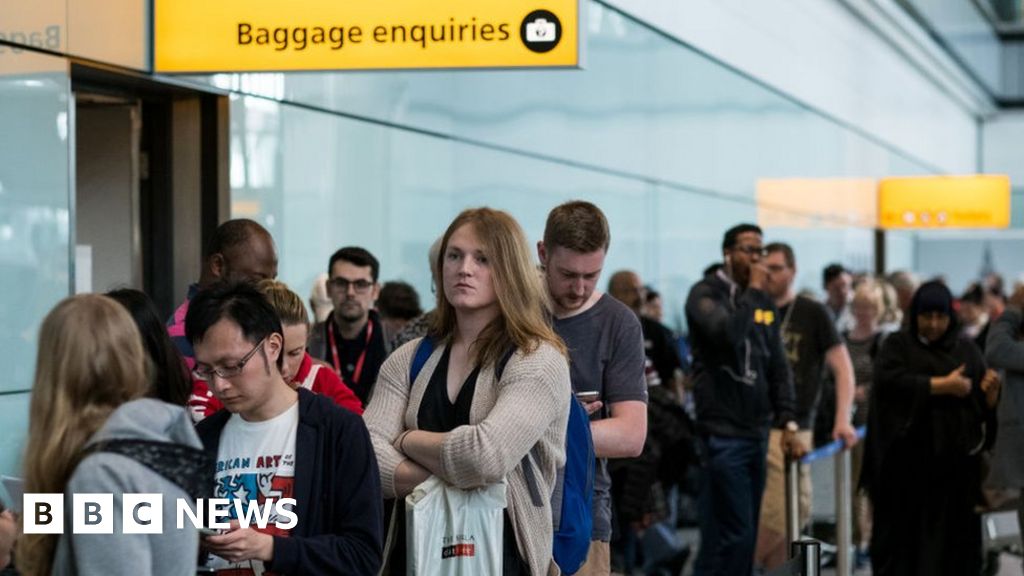
It comes after tens of thousands of passengers have been affected by cancellations and delays at airports.
The problem was particularly bad during Easter and last month's half-term school holiday, and British Airways, TUI and Easyjet have apologised.
Staff shortages have been blamed, after thousands of airline jobs were cut during the pandemic and have yet to be replaced despite a spike in post-pandemic travel demand.
In their joint letter, the Department for Transport and the Civil Aviation Authority set out five "specific expectations" for the sector.
They wrote: "We think it's important that each airline reviews afresh its plans for the remainder of the summer season until the end of September to develop a schedule that is deliverable.
"Your schedules must be based on the resources you and your contractors expect to have available, and should be resilient for the unplanned and inevitable operational challenges that you will face.
"While cancellations at any time are a regrettable inconvenience to passengers, it is our view that cancellations at the earliest possibility to deliver a more robust schedule are better for consumers than late notice on-the-day cancellations."
Image source, Getty Images
EasyJet is one of the airlines to have cancelled flights
The letter stated that airlines must "keep consumers informed" about their rights during disruption, such as having "sufficiently staffed call centres and user-friendly digital channels".
It also urged airlines, ground handlers, air traffic control and the Border Force work more closely to try to prevent problems.
'Problems to persist'
Airlines and unions told MPs on the Commons Business Committee on Tuesday that the staffing shortages blighting the industry were likely to persist this summer.
Oliver Richardson, national officer for civil air transport at the Unite union, told MPs it was unlikely the situation would be fixed "unless we work together".
Representatives from BA, Easyjet and ground handling firm Swissport said they also faced long delays to get security clearance for new staff.
Swissport's UK boss, Jude Winstanley, said it had hired 3,000 people since the start of the year, but it was taking up to 90 days to get them a full airside pass due to the referencing process.
Image source, Getty Images
According to the CAA, up to 4% of UK flights were cancelled during half term and the Platinum Jubilee weekend - up from the usual rate of 1%.
Boss Richard Moriarty called the situation distressing and unacceptable, adding that the industry needed to get a grip - although he said it was "not solely a UK specific issue".
There have been calls for EU aviation workers to be added to the government's shortage occupation list, but aviation minister Robert Courts denied this would help.
He told the committee that EU HGV drivers - another industry facing shortages - had been offered up to 5,000 visas to fill gaps in the UK, and only 27 had come forward.
"If there were spare workers in Europe they would be in Schiphol [Amsterdam airport]," he said.
Do you work in the aviation industry? Are you a passenger affected? Share your experiences by emailing haveyoursay@bbc.co.uk.
Please include a contact number if you are willing to speak to a BBC journalist. You can also get in touch in the following ways:
If you are reading this page and can't see the form you will need to visit the mobile version of the BBC website to submit your question or comment or you can email us at HaveYourSay@bbc.co.uk. Please include your name, age and location with any submission.
From Chip War To Cloud War: The Next Frontier In Global Tech Competition
The global chip war, characterized by intense competition among nations and corporations for supremacy in semiconductor ... Read more
The High Stakes Of Tech Regulation: Security Risks And Market Dynamics
The influence of tech giants in the global economy continues to grow, raising crucial questions about how to balance sec... Read more
The Tyranny Of Instagram Interiors: Why It's Time To Break Free From Algorithm-Driven Aesthetics
Instagram has become a dominant force in shaping interior design trends, offering a seemingly endless stream of inspirat... Read more
The Data Crunch In AI: Strategies For Sustainability
Exploring solutions to the imminent exhaustion of internet data for AI training.As the artificial intelligence (AI) indu... Read more
Google Abandons Four-Year Effort To Remove Cookies From Chrome Browser
After four years of dedicated effort, Google has decided to abandon its plan to remove third-party cookies from its Chro... Read more
LinkedIn Embraces AI And Gamification To Drive User Engagement And Revenue
In an effort to tackle slowing revenue growth and enhance user engagement, LinkedIn is turning to artificial intelligenc... Read more