

AI Going Critical: Hyundai To Help Build Nuclear-powered Datacenter In Texas
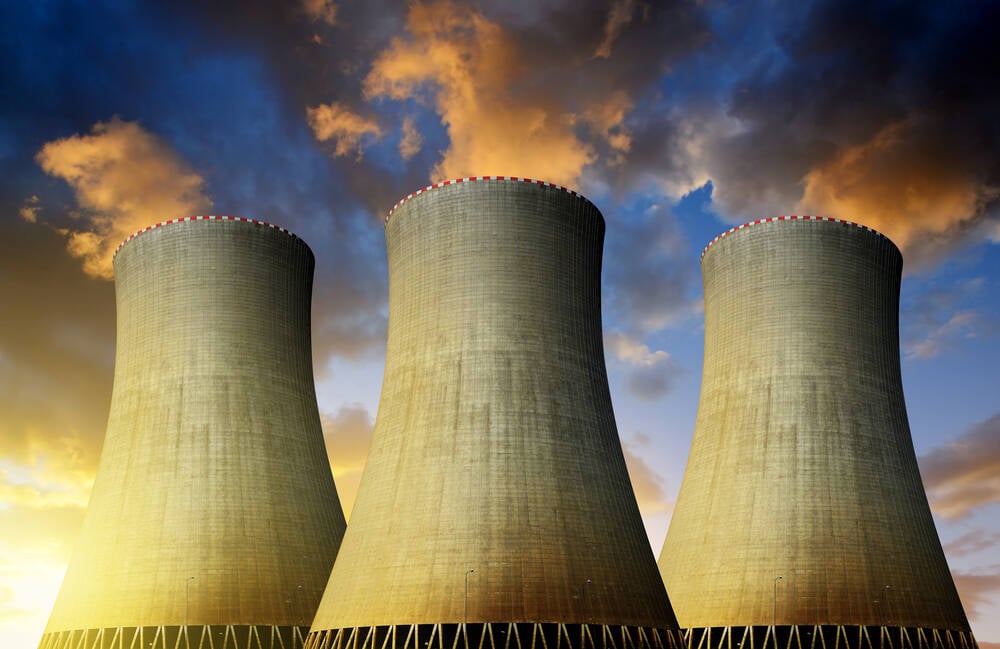
Nuclear power is enjoying something of a second renaissance in the US as hyperscalers grapple with AI's seemingly insatiable appetite for power.
Fermi America's Amarillo, Texas "HyperGrid" is the latest to embrace the power of atoms. The company has selected South Korean industrial magnate Hyundai to support the deployment of up to six gigawatts of nuclear power for what it describes as the "world's largest advanced energy campus."
The project is backed by Rick Perry, who served as Texas governor and US Energy Secretary, and investor Toby Neugebauer, and aims to establish Texas as the US's largest energy and intelligence campus.
Construction of the first of four Westinghouse AP1000 reactors is set to begin next year in Amarillo with the plant funneling behind-the-meter power to GPU bit barns by 2032, at least that's according to a memorandum of understanding (MoU).
In other words, there is no guarantee the 23 million square meter project (1.1 MilliWales) will actually be built in its entirety, but if it is, Hyundai will oversee it.
"This agreement is significant in that it allows us to participate from the early stages of this project and contribute to the creation of the world's largest integrated energy and artificial intelligence campus, which leverages a diverse range of energy infrastructure," Hyundai said in a canned statement.
At the very least, Hyundai knows what it's doing when it comes to nuclear developments. The industrial giant has led the deployment of some 22 reactors.
Ambitious as the project may be, it won't be cheap. A single AP1000 reactor was estimated to cost $6.8 billion two years ago. That's a lot of money, but nothing compared to what the hyperscalers and neo-clouds are pumping into datacenters these days. Meta, for reference, expects to spend $66-72 billion on bit barns this year.
However, if history tells us anything, Fermi America's nuclear ambitions could end up costing a whole lot more. The so-called "Hypergrid" project isn't the first to use Westinghouse's Gen-3 reactors. That title goes to the Vogtle Unit 3 and 4 reactors in Waynesboro, Georgia, which ended up taking 15 years and more than $36B to complete.
We'll note that it probably didn't help that Westinghouse went bankrupt in 2017, right in the middle of construction.
How exactly Fermi America or its founders Perry and Neugebauer expect to pay for one AP1000 reactor, let alone four, isn't clear. We've reached out for comment; we'll let you know if we hear anything back.
Hyundai's involvement isn't limited to giant pressurized water reactors. The company will also support the deployment of roughly four gigawatts of combined-cycle gas generation plants, a gigawatt of solar and battery storage, and two gigawatts of small modular reactors (SMRs).
Who will end up supplying the miniaturized nuclear plants, or when they'll actually be deployed, remains to be seen. As things stand, there are plenty of options, but only one, NuScale, has managed to get the green light from the US Nuclear Regulatory Commission.
While Fermi America and Hyundai sort through the red tape to deploy nuclear power to the Texas panhandle, work is already underway on the smog belching components of the 11 gigawatt mega project.
Last month, Fermi America announced plans to acquire 600 megawatts of gas generators to support the first on-site datacenters by the end of the year. This includes six Siemens Energy SGT800 gas turbines and an SST600 steam turbine, which will supply 478 megawatts. Fermi America also plans to acquire 135 megawatts of refurbished GE Frame 6B gas turbines.
In a statement, Fermi America argued that the generators are 30 percent cleaner than the current grid, and the planned use of selective catalytic reduction (SCR) and CO catalysts could curb other smog-causing pollutants.
By the end of 2026, Fermi America aims to have a gigawatt of capacity online.
- Tony Blair Institute: UK needs bit barns to lead in AI deployment, not training
- Altman embraces inner Viking, raids Europe with 100K GPU supercluster in Norway
- Orbital datacenters subject to launch stress, nasty space weather, and expensive house calls
- US DoE taps federal sites for fast-track AI datacenter and energy builds
Fermi America is far from the first to propose a nuclear-powered datacenter haven. Over the years, we've seen a number of these projects crop up. Back in 2023, Green Energy Partners detailed its vision of a massive datacenter campus in Virginia powered entirely by small modular reactors and hydrogen gas generators.
More recently, Amazon spent $650 million to acquire Cumulus Data's facilities, which were colocated alongside the Susquehanna nuclear power plant. Microsoft is working with Constellation Energy to reignite Three Mile Island, and Oracle says it's going to deploy a trio of SMRs totaling over a gigawatt of capacity. ®
From Chip War To Cloud War: The Next Frontier In Global Tech Competition
The global chip war, characterized by intense competition among nations and corporations for supremacy in semiconductor ... Read more
The High Stakes Of Tech Regulation: Security Risks And Market Dynamics
The influence of tech giants in the global economy continues to grow, raising crucial questions about how to balance sec... Read more
The Tyranny Of Instagram Interiors: Why It's Time To Break Free From Algorithm-Driven Aesthetics
Instagram has become a dominant force in shaping interior design trends, offering a seemingly endless stream of inspirat... Read more
The Data Crunch In AI: Strategies For Sustainability
Exploring solutions to the imminent exhaustion of internet data for AI training.As the artificial intelligence (AI) indu... Read more
Google Abandons Four-Year Effort To Remove Cookies From Chrome Browser
After four years of dedicated effort, Google has decided to abandon its plan to remove third-party cookies from its Chro... Read more
LinkedIn Embraces AI And Gamification To Drive User Engagement And Revenue
In an effort to tackle slowing revenue growth and enhance user engagement, LinkedIn is turning to artificial intelligenc... Read more