

Activists Cheer As 'sexist' Tampon Tax Is Scrapped
By Mary-Ann Russon
Business reporter, BBC News
- Published
image copyrightLaura Coryton
The 5% rate of VAT on sanitary products - referred to as the "tampon tax" - will be abolished in the UK from 1 January.
EU law required members to tax tampons and sanitary towels at 5%, treating period products as non-essential.
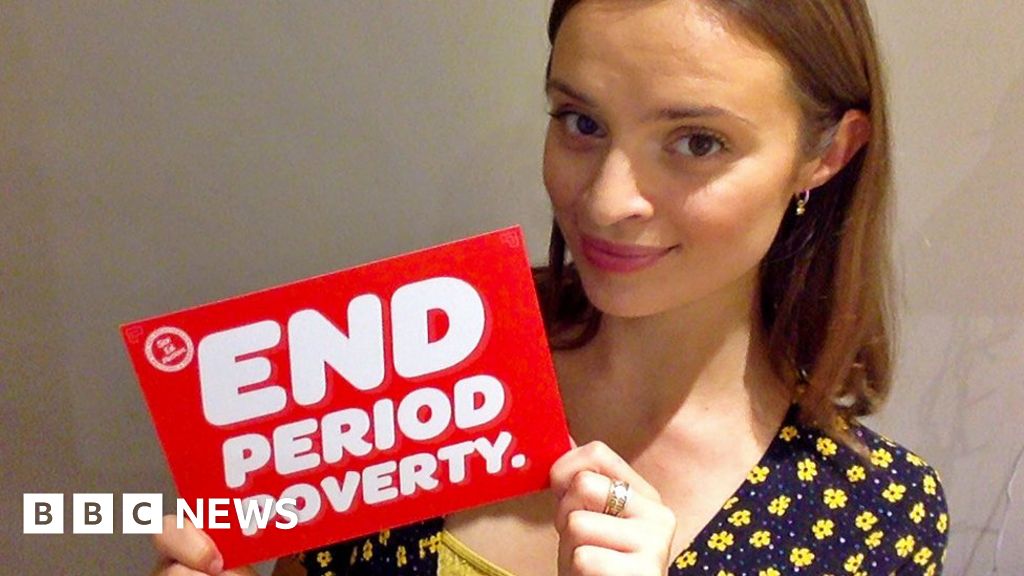
Campaigners welcomed the end to what they called a "sexist tax" with activist Laura Coryton saying it was "about ending a symptom of sexism".
The UK was able to get rid of the tax now because it is no longer subject to European Union rules on sanitary products.
The EU is itself in the process of abolishing the tampon tax. In 2018 the European Commission published proposals to change the VAT rules, which would give countries the right to stop taxing tampons and other period products, but the move has not yet been agreed by all members. The Republic of Ireland has zero VAT on sanitary products as the rate was in place prior to EU legislation imposing the 5% minimum VAT rate on EU members.
Ms Coryton, 27, who began campaigning to end the tampon tax when she was 21, told the BBC the move "challenged the negative message that this tax sent to society about women".
Felicia Willow, chief executive of women's rights charity the Fawcett Society, agreed, saying: "It's been a long road to reach this point, but at last the sexist tax that saw sanitary products classed as non-essential, luxury items can be consigned to the history books."
The Treasury has estimated the move will save the average woman nearly £40 over her lifetime, with a cut of 7p on a pack of 20 tampons and 5p on 12 pads.
It's been a long road to getting the tampon tax abolished in the UK. Campaigning and debates in parliament by then-MP for Dewsbury Ann Taylor led to the Labour government moving sanitary products to a reduced rate of 5% from January 2001- the lowest rate possible under the EU's VAT rules.
And following more campaigning in 2014 by Ms Coryton and lobbying in parliament by former Dewsbury MP Paula Sherriff in 2016, the Conservative government announced that all VAT collected on sanitary products would henceforth be given to charities working with vulnerable women and girls.
At the same time, the government enshrined in legislation that it would abolish the tampon tax.
"I'm just so happy and relieved and excited at the same time for this tax to finally be axed," said Ms Coryton.
"It will mean a reduction in prices for period products, and that reduction in cost will be important for the increasing number of people who are battling with poverty, especially due to the pandemic."
Free period products in school
Gemma Abbott is a lawyer and campaigner with the Free Periods group, which successfully campaigned for the government to provide free sanitary products to schools and colleges across England in 2019. The scheme launched in January.
image copyrightGemma Abbott
"I think it's great news and a real testament to the determined campaigning of many people, like Paula Sheriff and Laura Coryton," she said.
"I think we can agree that any tax that characterises period products as non-essential is absurd and it has no place in a society that is seeking genuine gender equality."
Free Periods is now campaigning to ensure that schools and colleges know that the free sanitary products scheme exists and that they sign up for them.
Ms Abbott said: "The latest statistics we have are from last term - at that point only 40% of schools had signed up for the scheme."
Combating the 'stigma' of periods
Ms Coryton has set up a social enterprise called Sex Ed Matters with her sister Julia, providing talks in schools and toolkits for teachers to help them deliver the mandatory new sex education curriculum for primary and secondary schools issued in early 2020.
They did an online survey of 150 teachers and students across the UK, and 100% of respondents said that there is still a stigma attached to periods.
"If there is a stigma attached to periods, then you're unlikely to speak up when you need period products, or to talk about the free sanitary products scheme that exists," stressed Ms Coryton.
But Free Periods' Ms Abbott is also concerned about the charities supporting women and girls, who will no longer benefit from the proceeds of the previous 5% tax on sanitary products.
"The tampon tax fund has provided much needed support and funding to a chronically underfunded area," she said.
"I'm worried that the removal of the tampon tax will spell the end of the ring-fenced funding for charities to address really vital issues like domestic violence and rape."
From Chip War To Cloud War: The Next Frontier In Global Tech Competition
The global chip war, characterized by intense competition among nations and corporations for supremacy in semiconductor ... Read more
The High Stakes Of Tech Regulation: Security Risks And Market Dynamics
The influence of tech giants in the global economy continues to grow, raising crucial questions about how to balance sec... Read more
The Tyranny Of Instagram Interiors: Why It's Time To Break Free From Algorithm-Driven Aesthetics
Instagram has become a dominant force in shaping interior design trends, offering a seemingly endless stream of inspirat... Read more
The Data Crunch In AI: Strategies For Sustainability
Exploring solutions to the imminent exhaustion of internet data for AI training.As the artificial intelligence (AI) indu... Read more
Google Abandons Four-Year Effort To Remove Cookies From Chrome Browser
After four years of dedicated effort, Google has decided to abandon its plan to remove third-party cookies from its Chro... Read more
LinkedIn Embraces AI And Gamification To Drive User Engagement And Revenue
In an effort to tackle slowing revenue growth and enhance user engagement, LinkedIn is turning to artificial intelligenc... Read more