

Absolutely Fabless: Trump Derails TSMC's China Chip-building Effort
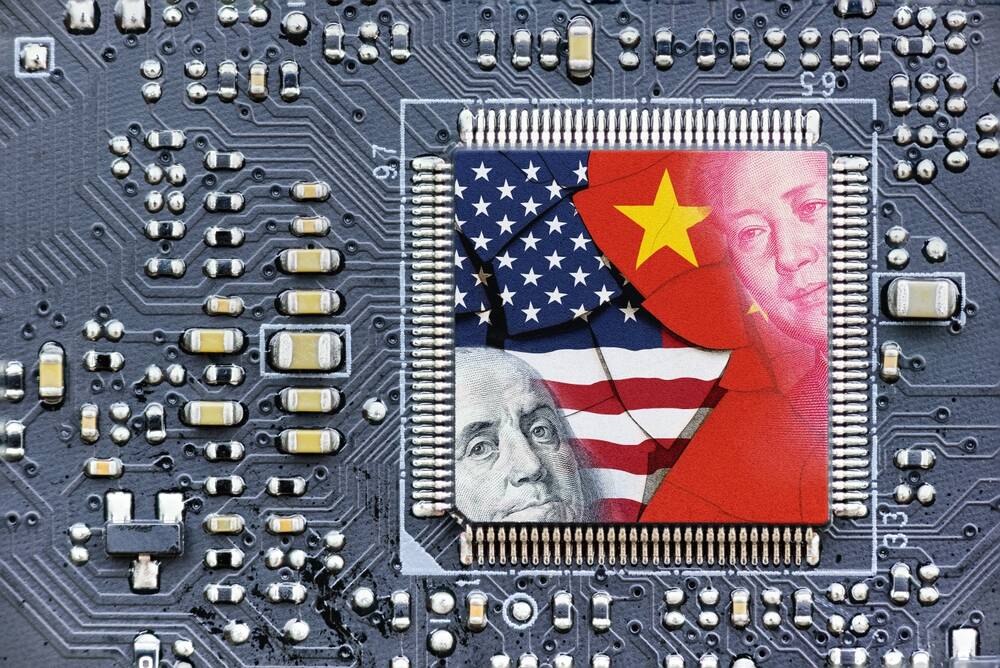
The Trump administration terminated the world's largest foundry operator's validated end-user (VEU) status this week in an apparent bid to push Taiwan Semiconductor Manufacturing Co. (TSMC) out of China.
It seems that committing to $165 billion worth of US fabs, advanced packaging, and research and development facilities hasn't helped the foundry giant escape the US-China trade war.
"TSMC has received notification from the US government that our VEU authorization for TSMC Nanjing will be revoked effective Dec. 31, 2025," the company told The Register in a statement. "While we are evaluating the situation and taking appropriate measures, including communicating with the US government, we remain fully committed to ensuring the uninterrupted operation of TSMC Nanjing."
TSMC operates a pair of fabs in China, with one in Shanghai and another in Nanjing, which produce chips using older, more mature process nodes down to 16 nanometers. That's opposed to the 3nm and smaller process tech used in its Taiwanese fabs to produce chips for the likes of Apple, AMD, and Nvidia.
As a member of the VEU program, TSMC was able to bypass US export controls limiting imports of chipmaking equipment into China to furnish and maintain its fabs in the region.
TSMC now has a matter of months to convince the Trump administration to re-open said loophole, and grant export licenses to continue furnishing its Chinese fab sites with chipmaking kit.
"In 2023, the Biden Administration expanded the VEU program to allow a select group of foreign semiconductor manufacturers to export most U.S.-origin goods, software, and technology license-free to manufacture semiconductors in China. No U.S.-owned fab has this privilege — and now, following today's decision, no foreign-owned fab will have it either," the Bureau of Industry and Security, the division of the US Commerce Department responsible for enforcing US trade policy, wrote in a statement last week.
The impact of the order could be substantial. Despite trade restrictions, China remains a key market for TSMC. Its most recent annual report shows that the Middle Kingdom accounted for 11 percent of the company's net revenues in 2024.
The Trump administration's decision to terminate TSMC's VEU status isn't surprising. Executives had previously warned that the exemptions granted by the program could be terminated at any point.
"The restrictions imposed by the October Rules on advanced computing ICs are further reinforced by the U.S.' new rules issued in January 2025. Under the new rules, TSMC may need to obtain an export license prior to shipping products using 16-nanometer or below process to any global destination unless specific conditions are met," the company's 2024 annual report reads.
- Uncle Sam doesn't want Samsung, SK Hynix making memories in China
- Alibaba looks to end reliance on Nvidia for AI inference
- China turns on giant neutrino detector that took a decade to build
- AI arms dealer Nvidia laments the many billions lost to US-China trade war
The termination comes just days after the Trump administration nixed South Korean memory vendors Samsung and SK Hynix's VEU status as well.
Samsung and SK Hynix are among the largest producers of DRAM and NAND flash in the world. According to local media, as much as 40 percent of both companies' respective NAND and DRAM is produced in China. If those two firms are unable to obtain export licenses from the US Commerce Department, they may be forced to write off their investments in the region.
The Commerce Department has suggested that it may grant licenses to former VEU participants on the condition that they don't expand fab operations in China.
The Register reached out to TSMC for comment; we'll let you know if we hear anything back. ®
From Chip War To Cloud War: The Next Frontier In Global Tech Competition
The global chip war, characterized by intense competition among nations and corporations for supremacy in semiconductor ... Read more
The High Stakes Of Tech Regulation: Security Risks And Market Dynamics
The influence of tech giants in the global economy continues to grow, raising crucial questions about how to balance sec... Read more
The Tyranny Of Instagram Interiors: Why It's Time To Break Free From Algorithm-Driven Aesthetics
Instagram has become a dominant force in shaping interior design trends, offering a seemingly endless stream of inspirat... Read more
The Data Crunch In AI: Strategies For Sustainability
Exploring solutions to the imminent exhaustion of internet data for AI training.As the artificial intelligence (AI) indu... Read more
Google Abandons Four-Year Effort To Remove Cookies From Chrome Browser
After four years of dedicated effort, Google has decided to abandon its plan to remove third-party cookies from its Chro... Read more
LinkedIn Embraces AI And Gamification To Drive User Engagement And Revenue
In an effort to tackle slowing revenue growth and enhance user engagement, LinkedIn is turning to artificial intelligenc... Read more