

Saudi Arabia Turns To HPE For AMD-powered Cray Supercomputer
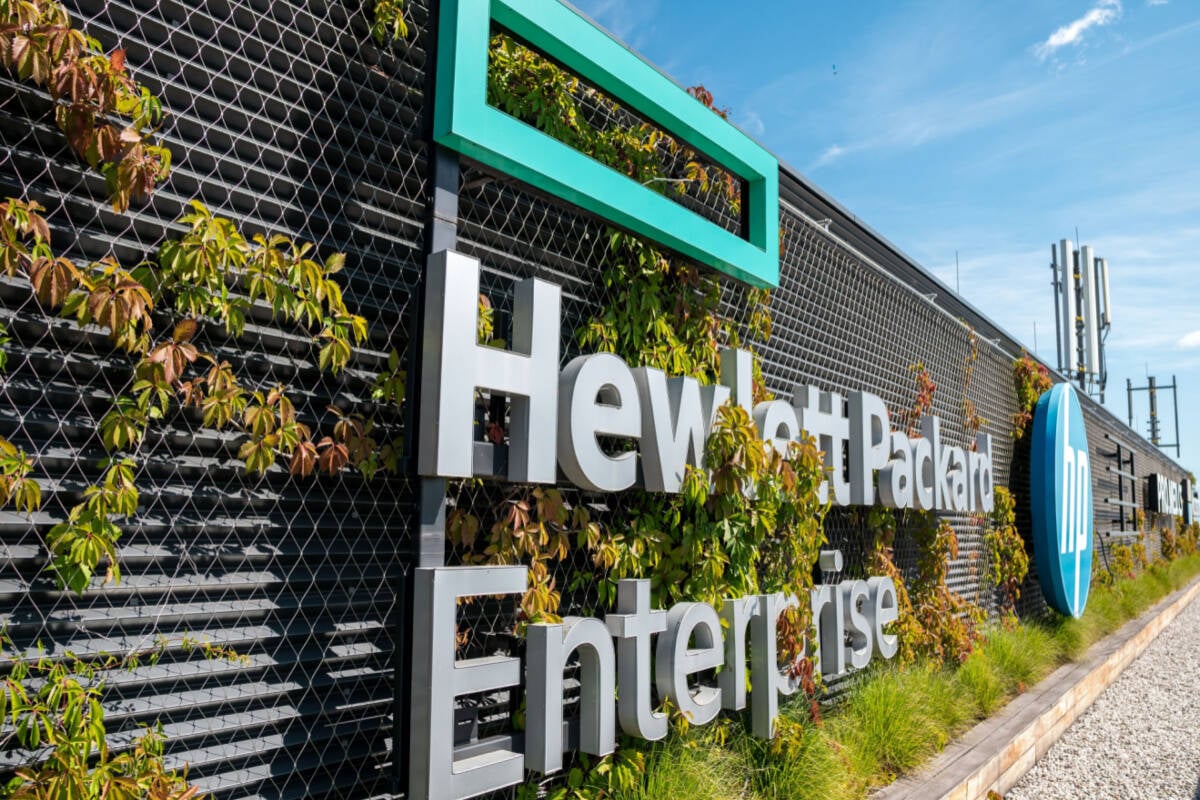
HPE has won a project to build a supercomputer in Saudi Arabia that is expected to be the most powerful in the Middle East, used for advancing research in fields such as food, water, energy and the environment.
The system is to be situated at the King Abdullah University of Science and Technology (KAUST), located in Thuwal on the Red Sea coast. Known as Shaheen III, the HPC will be based on HPE’s Cray EX architecture, which already powers the Frontier supercomputer in the US and the LUMI system in Finland, respectively ranked as the world’s and Europe’s fastest machines.
According to HPE, Shaheen III is set to be used by KAUST to deliver insights in areas of scientific research including clean combustion, Red Sea ecosystems, climate events and the Arabian tectonic plate.
“Shaheen III will significantly accelerate research at KAUST by applying world-leading supercomputing and AI-at-scale capabilities to increase accuracy in analyses and solve complex scientific questions,” said HPE president and CEO Antonio Neri.
It will also be used in line with Saudi Arabia’s Vision 2030 initiative, which is described as a strategic framework to reduce the country’s dependence on oil, diversify its economy, and develop its public service sector capabilities.
“The new HPE Cray EX system will allow us to conduct research on a larger scale, resulting in significant scientific, economic and social advances,” KAUST president Dr. Tony F. Chan said in a statement.
“In line with Vision 2030, we strive to meet the ever-increasing demands of our active and solutions-driven faculty, and also those of external partners, for faster and more efficient computing resources,” he added.
KAUST is said to be building on the success of its first supercomputer, Shaheen I, which launched in 2009. This was followed by Shaheen II, a Cray-based computer claimed to be 25 times faster than its predecessor at 5.54 petaflops.
Shaheen III is expected to be 20 times faster still, and is anticipated to deliver about 100 petaflops of performance when it debuts in 2023. This would place it somewhere between the Summit and Sierra US-based supercomputers in the June 2022 Top500 list, and much faster than other systems in the region such as the Dammam-7 at 22.4 petaflops and Ghawar-1 at 19.26 petaflops, which would seem to justify its claim as the Middle East’s most powerful.
Although Shaheen III is tipped to be fully operational in 2023, HPE told us that KAUST has not signed off on a final design yet. It is expected to comprise 25 Cray EX datacenter cabinets [PDF], 18 of which will hold CPU compute nodes, and 7 will be dedicated to GPU compute nodes.
Each cabinet holds up eight compute chassis, with each chassis fitting eight compute blades. That means a total of 64 compute blades, each of which comprises 4 twin-socket CPU nodes, for a total of 256 nodes and 512 CPUs per cabinet.
The CPUs in this case are planned to be AMD’s next generation Epyc chips, code-named “Genoa”, which are set to have up to 96 cores. That makes for a grand total of 884,736 CPU cores across the entire system.
For the 7 GPU cabinets, these will hold 704 GPU compute nodes, with each node equipped with 4 Nvidia Grace Hopper Superchips, according to HPE.
As with other Cray EX deployments the nodes are linked using HPE’s high-performance Slingshot interconnect technology, and each cabinet uses closed-loop liquid cooling. Storage for the system is expected to comprise Cray ClusterStor E1000 storage system nodes that will add 50 petabytes of storage capacity to the KAUST site.
KAUST is also opting for HPE’s Machine Learning Development Environment to help with the creation and deployment of AI projects using Shaheen III. This is a dedicated framework for model training and development, based on technology HPE gained from the acquisition of Determined AI last year.
According to KAUST, researchers are planning to use these capabilities for a range of applications, including the design of new materials for solar photovoltaics; new industrial catalytic processes to increase energy efficiency and reducing waste; personalized preventative health care and the discovery of new medicines; and increased hydrocarbon recovery with reduced environmental and economic costs.
Also on the cards is research to enhance the drought tolerance and resiliency of plants in desert environments. ®
Gyrostat Capital Management: Why Risk Management Is Not About Predicting Risk
Why Risk Management is Not About Predicting Risk Financial markets reward confidence, but they punish certai... Read more
Gyrostat January Outlook: Calm At Multiyear Extremes
This monthly Gyrostat Risk-Managed Market Outlook does not attempt to forecast market direction. Its p... Read more
Gyrostat December Outlook: The Market Does The Work
Harnessing Natural Volatility for Consistent Returns Markets have always moved more th... Read more
Gyrostat Capital Management: Why Advisers Must Scenario-Plan Both The Bubble And The Bust
The Blind Spot: Why Advisers Must Scenario-Plan Both The Bubble and The Bust In financial m... Read more
Gyrostat Capital Management: The Hidden Architecture Of Consequences
When Structures Themselves Become A Risk In portfolio construction, risk is rarely where we look for it.... Read more
Gyrostat November Outlook: The Rising Cost Of Doing Nothing
Through the second half of 2025, markets have delivered a curious mix of surface tranquillity and instabi... Read more