

NASDAQ Has Finished Consolidating. Now It Needs Permission From Goldilocks NFP

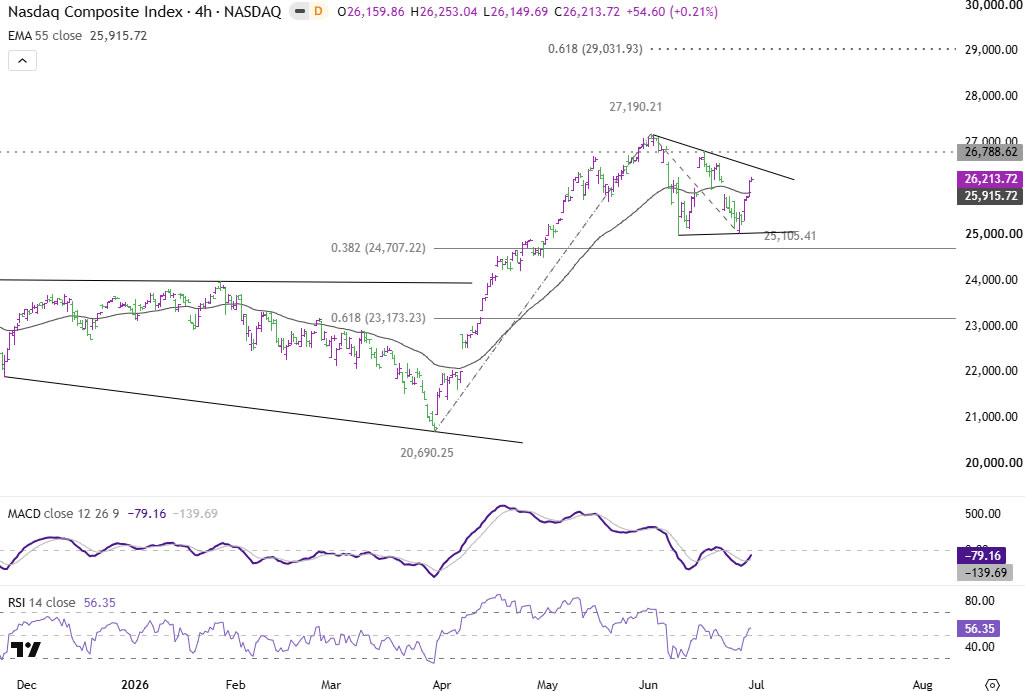
The NASDAQ Composite ended the second quarter with its strongest performance in six years, but the bigger story may be what comes next. After surging 21.41% during the quarter to close at 26,213.72, the tech-heavy index appears to have completed a healthy consolidation following its record intraday high of 27,190.21 on June 1. The market’s attention has now shifted almost entirely to Thursday’s US Non-Farm Payrolls report, which could determine whether the next leg higher begins immediately or is delayed a little longer.
The quarter itself unfolded in two distinct phases. April and May were dominated by a powerful rally in semiconductor stocks, easing oil prices and optimism surrounding the historic SpaceX IPO, which briefly propelled the company to an almost USD 3 trillion valuation. By contrast, June brought a period of consolidation as investors questioned how quickly massive AI infrastructure spending by large technology companies would translate into earnings growth. Capital rotated from the Magnificent Seven into smaller-cap and defensive shares, leaving the NASDAQ down -2.8% for the month before a strong 1.5% rally on the final trading day of the quarter reaffirmed broader bullish momentum.
Technically, June’s price action resembles a textbook bull flag rather than the beginning of a broader correction. The high-volume rebound into quarter-end suggests the consolidation from the June peak may already have run its course, leaving the index well positioned for another attempt at record highs.
Whether that breakout materializes immediately now depends largely on the US labor market. The ideal outcome for equities is a “Goldilocks” payrolls report—job growth close to expectations of around 110k together with 0.3% monthly wage growth. Such a result would reinforce confidence that economic activity remains resilient without reigniting inflation concerns. With one additional Federal Reserve rate hike under Chair Kevin Warsh already largely reflected in market pricing, a balanced employment report would remove a key source of uncertainty for growth stocks.
A materially stronger or weaker report could still trigger a short-term pullback. A hot report would revive speculation of a more aggressive tightening path, while a weak report could fuel concerns about slowing corporate earnings. Even so, unless the data fundamentally alters the macro outlook, either reaction would likely be viewed as an extension of the recent consolidation rather than a reversal of the broader uptrend.
Technically, the immediate focus is on 26,788.62. A decisive break above that resistance would confirm completion of the three-wave correction from 27,190.21 to 25,105.41 and open the way for a retest of the record high. Beyond that, the next upside objective comes at the 61.8% projection of 20,690.25 to 27,190.21 from 25,105.41 at 29,031.93. If consolidation extends instead, downside should be contained around the 38.2% retracement at 24,707.22, where buying interest is expected to re-emerge.
Gyrostat September Retirement Portfolio Resilience Assessment
September Retirement Portfolio Resilience Assessment Markets have fallen. The price of risk has risen. ... Read more
Does The West Have A Problem With Government Bonds
If you have been following the financial pages over the past few weeks, one theme has begun to stand out from the usual ... Read more
August Retirement Portfolio Resilience Assessment
Markets Are Higher. The Price of Risk Is Lower. Retirement invest... Read more
When The Wave Turns
Why Retirement Investing Is Moving Towards Resilience Jeremy Grantham’s latest market warnings have revived an old tru... Read more
Gyrostat Capital Management: July Retirement Portfolio Resilience Assessment
The Market Is Currently Presenting an Opportunity to Strengthen Retirement Portfolio Resilienc... Read more
The Invisible Risk That Decides Your Retirement
Why how investors behave matters more than what markets do and what disciplined port... Read more