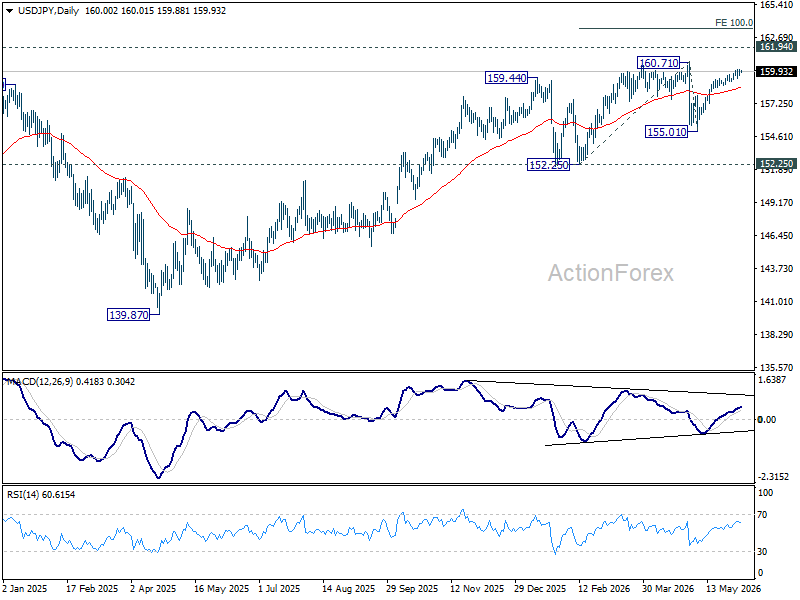
Japan’s latest reserve data have transformed the debate around the Yen. The question is not whether Tokyo is willing to intervene. It already has. The question now is how many times it is willing to do so. Data released on Friday showed Japan’s foreign reserves fell by around USD 75 billion in May. The decline closely matches the Ministry of Finance’s confirmation that Japan spent a record JPY 11.73 trillion, or roughly USD 73.4 billion, intervening in currency markets through May 28.
The figures strongly suggest that Japan financed much of the intervention by drawing down foreign securities, including US Treasuries. While the country’s USD 1.3 trillion reserve stockpile remains enormous, the latest data provide the clearest evidence yet that intervention carries a real financial cost. Markets now have a benchmark for how much Tokyo is prepared to spend defending the currency. That benchmark is substantial, but it has not fundamentally altered the underlying trend. After briefly stabilizing, USD/JPY is once again pressing toward the psychologically important 160 level.
Japanese officials continue to signal readiness to act. Finance Minister Satsuki Katayama reiterated on Friday that authorities would respond “appropriately at any time when necessary” and retain the right to take “decisive action” against excessive volatility. She also stressed that Japan remains in close communication with the United States regarding exchange-rate developments. The verbal warnings have helped slow the pace of Dollar gains, but they have not changed the market’s broader focus on widening policy divergence between the Federal Reserve and the Bank of Japan.
That divergence may face its next major test with the US non-farm payrolls report. A strong employment report, particularly one accompanied by faster wage growth or lower unemployment, could reinforce expectations that the Fed will remain focused on inflation risks rather than labor-market weakness. Such an outcome would likely push Treasury yields and Dollar higher across the board. If USD/JPY surges through 160 again, Japanese policymakers may soon face the same decision they confronted only weeks ago: intervene once more or tolerate further Yen weakness.
From a technical angle, the situation is finely balanced. The current rise from 155.01 is still viewed as the second leg of the corrective pattern from 160.71 high. Under that interpretation, another push higher should eventually be capped below 160.71 followed by a reversa. Firm break below 55 D EMA, currently around 158.62, would strengthen the case that the third leg lower has already begun and bring 155.01 back into focus.
However, the risks are not one-sided. Decisive break above 160.71 would invalidate the corrective view and suggest that the broader uptrend has resumed. Such a move would open the way to a through 2024 high at 161.94 to 100% projection of 152.25 to 160.71 from 155.01 at 163.47.