

Dollar Rises As AI Rout Meets Sticky September Fed Hike Bets
Dollar pushed broadly higher on Tuesday as investors navigated a combination of deteriorating risk sentiment and persistent expectations that the Federal Reserve could still raise rates in September. A sharp selloff across global AI-related technology shares sparked an immediate flight into the greenback, while the continued resilience of Fed tightening expectations prevented Dollar buying from fading even as oil prices extended their sharp correction.
AI selloff sends shockwaves through Asian markets
Asian equity markets absorbed the worst of the selling. South Korea’s KOSPI tumbled -10.84%, its largest daily loss since March 4, after plunging as much as -11.3% intraday, triggering a market-wide circuit breaker and briefly falling below the 6,000 level for the first time since April. Japan’s Nikkei 225 lost -3.95%, ending at its weakest close in more than two months.
The semiconductor sector remained firmly in the spotlight. SK Hynix slid -14.7% after its ADRs posted record lows in New York, while Samsung Electronics suffered its biggest daily decline since 2008, falling -14.4%. Japanese AI-related suppliers were also heavily sold, with Kioxia Holdings dropping as much as -18% and Tokyo Electron, Disco, Nikon and Murata Manufacturing all falling more than -9%.
The latest wave of selling reflects growing investor concerns over Nvidia’s evolving role within the AI industry. Rather than simply supplying chips, Nvidia is increasingly seen as helping finance the very companies buying its hardware. That “circular financing” model has revived memories of vendor-financing practices during the dot-com boom, raising questions about whether parts of the AI investment cycle are becoming increasingly dependent on self-funded demand. Those concerns have triggered a broader reassessment of AI valuations after months of extraordinary gains.
Oil falls, but Fed hike expectations refuse to budge
If risk aversion explained the initial move into the Dollar, interest-rate markets provided the second source of support. Despite Brent crude sliding below $85 after last week’s surge above $100, traders have shown remarkably little willingness to unwind expectations for another Fed hike. Diplomatic developments have continued to point toward de-escalation, with Iranian Foreign Minister Seyyed Abbas Araqchi discussing regional developments with Saudi Arabia and Oman, while President Donald Trump said Washington and Tehran were engaged in “very friendly negotiations.”
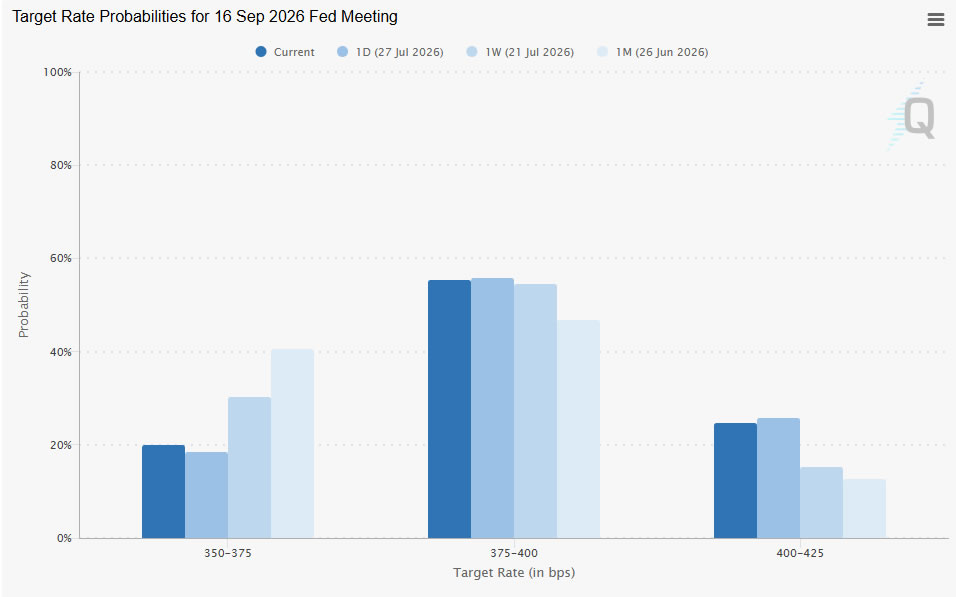
Normally, such a collapse in oil prices would be expected to ease inflation concerns and reduce expectations for tighter monetary policy. Instead, September Fed hike odds implied by futures remain around 80%, barely changed from earlier in the week and still notably higher than before the Middle East conflict intensified. The stability of those expectations despite oil’s decline suggests markets believe the inflationary effects of last week’s price spike have not yet run their course. Higher energy costs typically filter through transport, production and consumer prices with a lag, meaning lower spot crude today does not immediately erase the inflation impulse already created.
FOMC now the next hurdle for Dollar bulls
That backdrop continues to provide fundamental support for the Dollar. Nevertheless, traders remain cautious ahead of Wednesday’s FOMC decision. The greenback has yet to break convincingly higher against either Euro or Yen, while gains against Sterling, Swiss Franc and Canadian Dollar have also been relatively modest. Markets will likely need stronger confirmation from the Fed—either through a distinctly hawkish statement, Chair Kevin Warsh’s guidance, or dissenting votes in favor of an immediate hike—before fully embracing another round of Dollar buying.
Among major currencies, Canadian Dollar outperformed as it recovered part of Monday’s oil-driven losses. Dollar ranked second and remains the week’s strongest performer overall. Australian Dollar underperformed as the regional AI-led equity rout compounded caution ahead of Wednesday’s Australian CPI report. Yen and Swiss Franc also lagged despite the broader risk-off tone, as elevated US rate expectations continued to favor the Dollar over traditional low-yielding defensive currencies.
Key Takeaways
- Oil crashed, but Fed hike bets didn’t move: September Fed hike odds held near 80% even as Brent fell below $85, because energy-driven inflation typically filters through with a lag rather than reversing immediately.
- The AI rout has a financing problem, not just a valuation problem: Nvidia’s circular financing model, where it helps fund the buyers of its own chips, is drawing dot-com-era comparisons and triggering a broad reassessment of AI valuations.
- Dollar rose for two separate reasons at once: Risk aversion from the AI selloff and sticky Fed rate expectations both pushed capital into the greenback, rather than into traditional safe havens like Yen or Swiss Franc.
- The Dollar rally is not yet confirmed: Gains against Euro and Yen remain unconvincing. Markets want to hear a distinctly hawkish signal from Wednesday’s FOMC decision before committing further.
- Watch Wednesday’s Australian CPI and FOMC decision together: Both will test whether this week’s rate-hike narratives, for the Fed and RBA alike, have room to run further.
Related Coverage
- See why the RBA’s hurdle for another rate hike keeps rising, and what Tuesday’s CPI print needs to show for a rangebound AUD/USD to break out: Rangebound AUD/USD Awaits Australia CPI as Bullock Signals Higher Hurdle for RBA Hike
- Read how Nvidia’s financing model is fueling circular-financing fears across the AI trade, and why Bitcoin got caught in the same selloff: Bitcoin Joins Tech Selloff as Circular Financing Fears Hit Nvidia and AI Trade
- See why Governor Bullock says it’s still too early to call the RBA’s tightening cycle finished, despite easing demand and labour conditions: RBA’s Bullock Keeps Rate Hike Option Alive Despite Policy Lags
Frequently Asked Questions
Q: Why didn’t Fed hike bets fall when oil crashed below $85?
A: Higher energy costs filter through transport, production, and consumer prices with a lag, so a drop in spot crude does not immediately erase the inflation impulse already created by last week’s price spike. Markets believe the inflationary effects have not yet run their course, keeping September Fed hike odds near 80% even as oil retreats.
Q: What is circular financing and why is it spooking AI investors?
A: Circular financing describes a model where a chip supplier like Nvidia helps finance the very companies buying its hardware, rather than simply selling to independent customers. This revives memories of vendor-financing practices from the dot-com boom and raises questions about whether AI demand is becoming increasingly self-funded rather than organic. See how Bitcoin joined the tech selloff as circular financing fears spread beyond chipmakers.
Q: Why did the Dollar rise during a risk-off selloff instead of traditional safe havens like Yen or Swiss Franc?
A: Elevated US rate expectations continued to favor the Dollar over low-yielding defensive currencies. While Yen and Swiss Franc are traditional safe havens, the interest-rate differential created by sticky Fed hike bets made the Dollar the preferred destination for risk-averse capital this week.
Gyrostat September Retirement Portfolio Resilience Assessment
September Retirement Portfolio Resilience Assessment Markets have fallen. The price of risk has risen. ... Read more
Does The West Have A Problem With Government Bonds
If you have been following the financial pages over the past few weeks, one theme has begun to stand out from the usual ... Read more
August Retirement Portfolio Resilience Assessment
Markets Are Higher. The Price of Risk Is Lower. Retirement invest... Read more
When The Wave Turns
Why Retirement Investing Is Moving Towards Resilience Jeremy Grantham’s latest market warnings have revived an old tru... Read more
Gyrostat Capital Management: July Retirement Portfolio Resilience Assessment
The Market Is Currently Presenting an Opportunity to Strengthen Retirement Portfolio Resilienc... Read more
The Invisible Risk That Decides Your Retirement
Why how investors behave matters more than what markets do and what disciplined port... Read more