

Brent Oil Holding Below $100 Suggests Markets Still See Room For A US-Iran Deal

The market’s faith in an imminent US-Iran peace breakthrough has clearly weakened today — but it has not disappeared yet. Oil prices jumped again in after fresh military escalation around the Strait of Hormuz reignited fears of prolonged supply disruptions across the Gulf. Brent crude pushed back toward the mid-$90s after new U.S. strikes inside Iran and fresh Iranian retaliation headlines.
Yet the fact that oil still cannot convincingly break above $100 may be the single most important message markets are sending right now: traders still believe diplomacy survives, even if only barely. Markets are just being forced to confront a messier reality: diplomacy may still be alive, but it is unfolding alongside an extremely dangerous military standoff.
For now, markets appear to be interpreting the latest strikes less as preparation for outright war and more as tactical brinkmanship ahead of final negotiations. Both Washington and Tehran still seem invested in reaching some form of interim arrangement, even while using military pressure to strengthen their leverage.
That interpretation helps explain why Brent crude is rising, but not exploding. Oil is effectively acting as a real-time geopolitical probability meter. Below $100, markets are still pricing eventual de-escalation and manageable inflation consequences. A decisive break above that threshold would likely signal that investors are beginning to abandon confidence in diplomacy altogether and move toward pricing a far more dangerous stagflationary scenario.
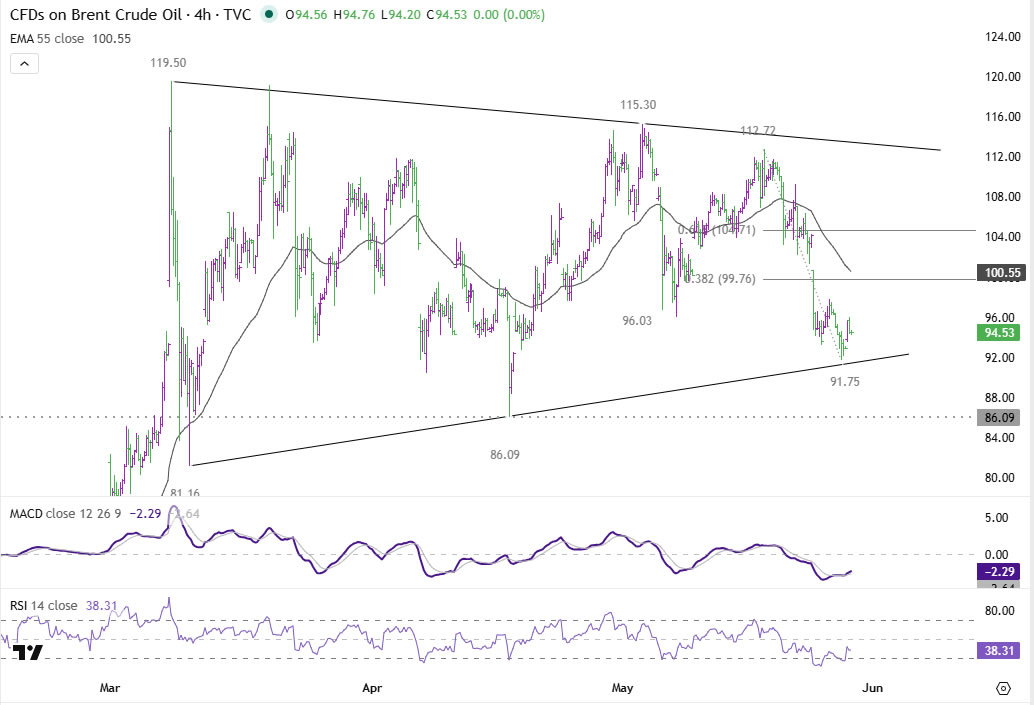
Technically, Brent crude’s earlier selloff, while slightly deeper than expected, remains contained above the lower rising trend line of the converging triangle pattern that has been developing since the March peak at 119.50.
A short-term bottom likely formed at 91.75, suggesting some near-term consolidation may emerge. Bias nevertheless remains cautiously bearish while 38.2% retracement of 112.72 to 91.75 at 99.76 caps upside. That level, sitting just beneath the key $100 psychological threshold, is the market’s critical stress line.
A break below 91.75 would extend recent fall and target major structural support around 86.09.
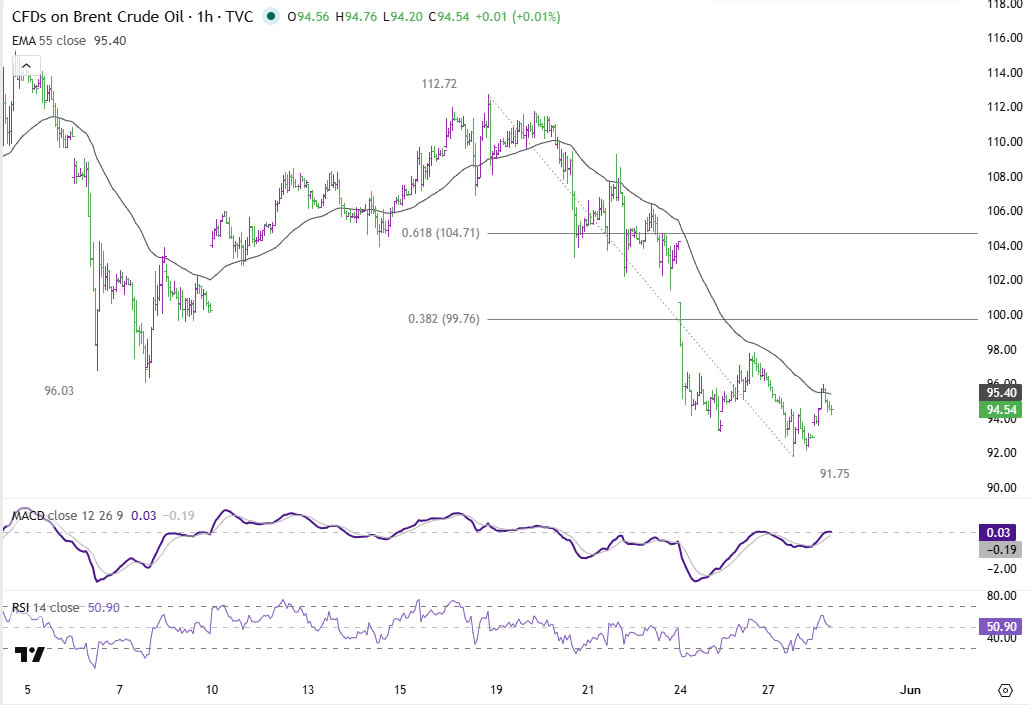
Conversely, sustained break above 100 would likely signal that traders are beginning to price a structurally worse geopolitical and inflationary scenario, opening the door toward a renewed move back toward the 112 region, the falling trendline of the triangle pattern.
Gyrostat September Retirement Portfolio Resilience Assessment
September Retirement Portfolio Resilience Assessment Markets have fallen. The price of risk has risen. ... Read more
Does The West Have A Problem With Government Bonds
If you have been following the financial pages over the past few weeks, one theme has begun to stand out from the usual ... Read more
August Retirement Portfolio Resilience Assessment
Markets Are Higher. The Price of Risk Is Lower. Retirement invest... Read more
When The Wave Turns
Why Retirement Investing Is Moving Towards Resilience Jeremy Grantham’s latest market warnings have revived an old tru... Read more
Gyrostat Capital Management: July Retirement Portfolio Resilience Assessment
The Market Is Currently Presenting an Opportunity to Strengthen Retirement Portfolio Resilienc... Read more
The Invisible Risk That Decides Your Retirement
Why how investors behave matters more than what markets do and what disciplined port... Read more