

Brent Breaks $94, Global Yields Push Higher — But Dollar Refuses To Follow

What’s happening: Brent crude broke above $94 and WTI through $87 today, both fresh highs since late July, after Trump threatened “TREMENDOUS Economic Consequences” against countries helping Iran evade sanctions. That oil breakout is dragging global bond yields higher again, US 10-year toward 4.70%, 30-year toward 5.24%, clawing back much of Wednesday’s Treasury-buyback-driven decline, with German, UK and Canadian yields rising too.
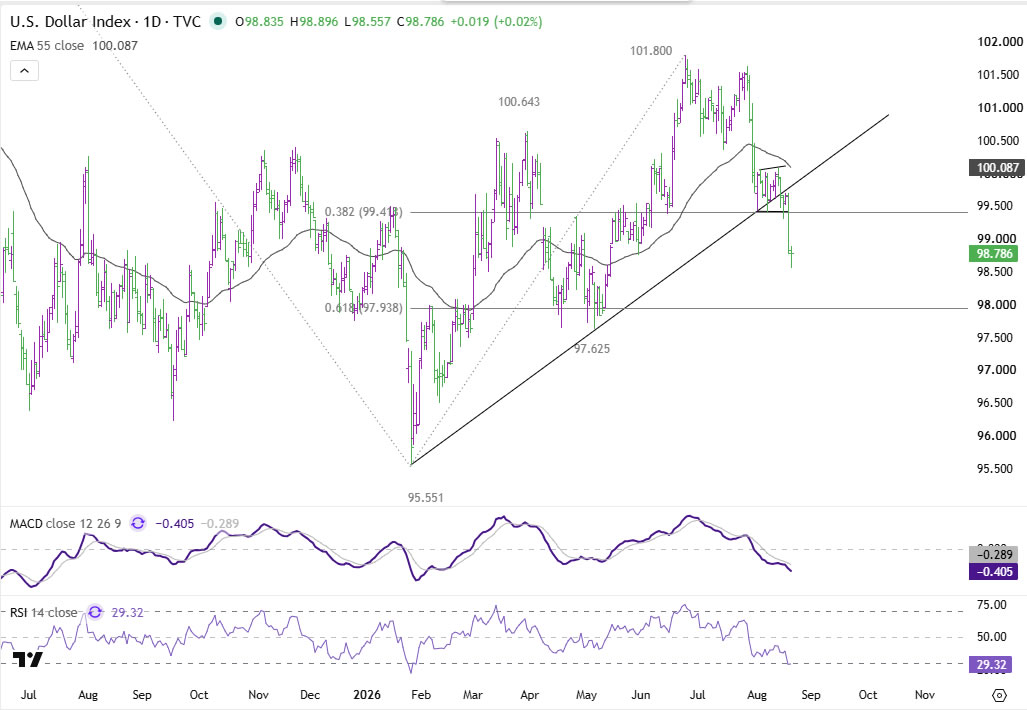
Why it matters: Under normal circumstances, US yields rebounding this much would restore some Dollar support, but DXY is broadly flat. That’s because Thursday’s yield increase is global, not uniquely American, limiting any relative US yield advantage, and DXY has already suffered a technical breakdown. Watch whether yields keep recovering while DXY stays below 100.08, Dollar’s non-reaction becomes the real signal, versus a renewed global yield decline combined with DXY breaking 97.93, which would reinforce the bearish Dollar setup.
Oil Rally Accelerates as Trump Turns Up Economic Pressure on Iran
Brent crude accelerated above $94 today, while WTI pushed through $87, extending both benchmarks to their highest levels since late July. Move marks a fresh phase in oil rally rather than simple consolidation of earlier gains, as markets increasingly price prolonged disruption to Middle East energy supplies and diminishing prospects for a quick US-Iran settlement.
Latest escalation followed US President Donald Trump’s Wednesday warning of an “ECONOMIC D-DAY” against Iran. Trump threatened “TREMENDOUS Economic Consequences” for countries allowing their financial institutions, businesses, airports or government entities to provide Iran with an economic lifeline. Threat extended specifically to channels used to circumvent sanctions, including oil smuggling, swap lines, cash transfers, exchange houses, ship registries and front companies. UAE’s suspension of economic and financial ties with Iran added another layer of pressure.
Iran showed no sign of backing down. Foreign Minister Abbas Araghchi described Trump’s threat as “economic terrorism,” while Deputy Foreign Minister Kazem Gharibabadi argued Washington had turned toward economic warfare after its military campaign failed to achieve its objectives. With Strait of Hormuz disruption already constraining regional trade, increasingly aggressive economic confrontation raises risk that disruption lasts considerably longer than markets initially expected.
Trump’s “Economic D-Day” Threat
- Target: countries allowing financial institutions, businesses, airports or government entities to give Iran an economic lifeline.
- Named channels: oil smuggling, swap lines, cash transfers, exchange houses, ship registries and front companies.
- UAE: suspended economic and financial ties with Iran, adding another layer of pressure.
- Iran’s response: Araghchi called it “economic terrorism”; Gharibabadi said Washington turned to economic warfare after its military campaign fell short.
Brent $94 Adds Another Inflation Problem for Global Bonds
Oil breakout is now spilling back into bond markets. US 10-year Treasury yield rebounded toward 4.70% on Thursday, while 30-year climbed back toward 5.24%, clawing back a substantial portion of Wednesday’s Treasury-buyback-driven decline.
Importantly, move is not confined to US. German, UK and Canadian government yields are also higher. That breadth makes oil a plausible common contributor. A purely US technical reversal following Treasury buyback announcement would not naturally explain simultaneous selling across several major sovereign markets, whereas Brent above $94 raises headline inflation and inflation-expectation risks across energy-importing economies.
Still, oil should not be assigned all of blame. Thursday’s move is better viewed as combination of renewed global inflation concerns and fading relief from Wednesday’s Treasury announcement. Whether breakeven inflation rates begin rising alongside nominal yields will provide an important test of how much of latest bond selloff is actually being driven by oil.
Treasury Buybacks Provided Relief, Not a Fiscal Solution
Wednesday’s dramatic yield decline followed Treasury’s decision to at least double maximum size of long-dated buybacks, particularly in 20- and 30-year sectors. Markets immediately front-ran prospect of greater liquidity support even though enlarged operations do not begin until September 9.
But buybacks did not change underlying fiscal backdrop or broader Treasury financing requirements. J.P. Morgan argued that program “does nothing to address” structural forces driving yields, including unsustainable fiscal deficits and firmer inflation expectations. Standard Chartered’s Eric Robertsen similarly characterized intervention as an attempt to influence natural supply and demand rather than address underlying pressures.
Thursday’s rebound therefore carries an important message. Treasury announcement was powerful enough to trigger an immediate repricing of long-duration bonds, but market has yet to demonstrate that it can permanently suppress structural pressure on long yields. A return by 30-year yield toward this week’s 5.30–5.33% highs would reinforce view that buybacks changed short-term positioning more than long-term equilibrium.
Higher Treasury Yields Fail to Rescue Dollar
Dollar’s reaction is arguably more striking. DXY is broadly flat despite 10-year Treasury yield recovering toward 4.70% and 30-year returning above 5.20%. Under normal circumstances, such a rebound in US yields would be expected to restore at least some support to greenback.
One reason is that Thursday’s yield increase is global rather than uniquely American. German, UK and Canadian yields are rising alongside Treasuries, limiting improvement in relative US yield advantage. Oil itself also produces competing currency effects, supporting some commodity currencies while putting pressure on energy importers.
Oil, Bonds and Dollar Are Not Moving in Lockstep
Three distinct forces are now intersecting. Oil is responding directly to escalation in US-Iran economic confrontation and increasingly persistent disruption around Hormuz. Global bonds are responding both to renewed energy-driven inflation risks and structural pressures that Wednesday’s Treasury buyback announcement did not remove. Dollar, meanwhile, is failing to capitalize on higher US yields because those yields are rising alongside their global counterparts and DXY has already suffered an important technical breakdown.
That makes Dollar’s non-reaction one of most important signals to watch. If Treasury yields continue recovering while DXY remains below 100.08, it would suggest simply restoring higher nominal US yields is not sufficient to rebuild Dollar’s previous support. Conversely, a renewed fall in global yields combined with DXY breaking 97.93 would reinforce bearish Dollar setup. For now, Brent above $94 is again putting pressure on global rates—but unlike earlier phases of yield surge, greenback is refusing to follow.
US Data Deep Dive
- Read why falling initial jobless claims came alongside a rise in continuing claims and a higher four-week average: U.S. Jobless Claims Fall to 206K, but Continuing Claims Rise.
Asia-Pacific Data Deep Dives
- See why Japan’s headline 23.2% export surge overstates the real story, with volumes up only 5.2% once weak Yen and higher prices are stripped out: Japan Exports Surge 23.2%, but Weak Yen and Oil Shock Distort the Headline.
- Read why Australia’s -15.8K July jobs drop and unemployment rising to 4.5% give the RBA clearer evidence the labor market is cooling: Australia Jobs Fall -15.8K as Unemployment Hits 4.5%, Giving RBA More Evidence of Slowdown.
Fed Deep Dive
- See why July’s Fed minutes revealed more hawkish concern than the 9-3 vote suggested, even as the data behind that meeting is already out of date: Fed Had More Hawks Than the 9-3 Vote Suggested — But July Is Already Stale.
Frequently Asked Questions
Q: Why is Dollar not rallying even though US Treasury yields are recovering?
A: Because Thursday’s yield increase is happening globally, not just in the US. German, UK and Canadian yields are rising alongside Treasuries, so the US isn’t gaining a relative yield advantage the way it normally would. DXY has also already suffered a technical breakdown, so a rebound in nominal yields alone isn’t enough to restore Dollar’s previous support.
Q: Why aren’t Wednesday’s Treasury buybacks fully explaining Thursday’s bond selloff?
A: Because the buyback program addresses liquidity, not the structural fiscal deficit and inflation expectations actually driving yields toward two-decade highs, as J.P. Morgan and Standard Chartered both noted. Thursday’s global scope, German, UK and Canadian yields all rising too, wouldn’t be explained by a US-specific technical reversal, which points to Brent’s break above $94 as a more plausible common driver.
Q: What would confirm oil is now driving the global bond selloff rather than something else?
A: Whether breakeven inflation rates start rising alongside nominal yields. If they do, it would support the idea that Brent above $94 is feeding directly into inflation expectations across energy-importing economies. For Dollar specifically, watch DXY against 100.08 and 97.93, staying below 100.08 while yields recover would show Dollar’s disconnect from yields persisting, while a break of 97.93 alongside falling global yields would reinforce the bearish setup.
Key Takeaways
- Brent broke above $94 and WTI above $87 after Trump threatened “TREMENDOUS Economic Consequences” against countries helping Iran evade sanctions.
- The oil breakout is spilling into bonds globally, not just the US: German, UK and Canadian yields rose alongside Treasuries, arguing against a purely US-technical explanation.
- Wednesday’s Treasury buyback relief didn’t fix the structural backdrop: J.P. Morgan and Standard Chartered both said the program doesn’t address the fiscal deficit and inflation expectations driving yields, and Thursday’s rebound is clawing much of that relief back.
- Dollar failed to rally despite recovering US yields: DXY stayed broadly flat even as the 10-year moved toward 4.70% and the 30-year back above 5.20%.
- The disconnect comes from yields rising globally, not just in the US: That limits any relative US yield advantage, and DXY has already suffered a technical breakdown.
- Two levels frame what comes next: DXY staying below 100.08 while yields recover would confirm Dollar’s disconnect from yields; a break of 97.93 alongside falling global yields would reinforce the bearish setup.
What to Watch Next
DXY’s behavior relative to 100.08 and 97.93 is the clearest read on whether Dollar’s disconnect from yields persists or reverses. Breakeven inflation rates will show how much of the bond selloff is genuinely oil-driven, and further escalation in Trump’s economic pressure on Iran, along with the persistence of Hormuz disruption, remains the key upside risk for Brent.
Gyrostat September Retirement Portfolio Resilience Assessment
September Retirement Portfolio Resilience Assessment Markets have fallen. The price of risk has risen. ... Read more
Does The West Have A Problem With Government Bonds
If you have been following the financial pages over the past few weeks, one theme has begun to stand out from the usual ... Read more
August Retirement Portfolio Resilience Assessment
Markets Are Higher. The Price of Risk Is Lower. Retirement invest... Read more
When The Wave Turns
Why Retirement Investing Is Moving Towards Resilience Jeremy Grantham’s latest market warnings have revived an old tru... Read more
Gyrostat Capital Management: July Retirement Portfolio Resilience Assessment
The Market Is Currently Presenting an Opportunity to Strengthen Retirement Portfolio Resilienc... Read more
The Invisible Risk That Decides Your Retirement
Why how investors behave matters more than what markets do and what disciplined port... Read more