

Brent Breakout Raises $100 Risk As Hormuz Talks Hit The Same Old Wall

TL;DR: Could Brent oil actually retest $100? A confirmed technical breakout and a Hormuz negotiation stuck on the same unresolved dispute suggest the risk is rising.
A Rally That Signals a Deeper Shift
Oil prices’ rally accelerated Monday, with Brent and WTI closing up roughly 5%. Both benchmarks advanced for a fourth consecutive session, reaching their highest level in nearly two weeks. The move matters because the market appears to be shifting from pricing whether another Hormuz headline will hit, to pricing how long disruption may actually last.
That’s a more durable source of upside risk. Brent had fallen from $102.00 to $78.11 as hopes grew that a negotiated shipping arrangement could eventually restore flows through the Strait of Hormuz. But the latest developments are making that optimism harder to sustain. Talks aren’t simply progressing slowly — they’re repeatedly colliding with the same underlying dispute that has already caused earlier agreements to fail.
Washington and Tehran Are Still Far Apart
Iran’s outgoing National Security Council secretary laid out six formal conditions over the weekend, including compensation, sanctions relief, an end to the blockade, and an end to military threats. US President Donald Trump responded Monday by hardening rather than narrowing the gap, saying he is “likewise demanding compensation from Iran, for all of the people that they have killed and gravely wounded.”
That exchange matters because compensation is only one part of the disagreement. The US position calls for unrestricted freedom of navigation through the Strait of Hormuz without Iranian tolls, approvals, or controls. Iran’s preferred framework, including its draft arrangement with Oman, builds in exactly those elements.
So while reports that shipping coordinates have been agreed may sound constructive, they don’t resolve the central question: who controls passage through the Strait, and under what conditions? That’s the same fault line that caused the June 17 US-Iran MOU to collapse before fighting resumed. This week’s impasse therefore looks less like a new setback than a repeat of an unresolved structural problem.
This Is Becoming a Two-Chokepoint Story
Physical shipping activity is also reinforcing the concern. Kpler-tracked crossings reportedly fell from 15 on Friday to 11 on Saturday and just 6 on Sunday, suggesting disruption is increasingly visible in actual traffic rather than diplomatic headlines alone.
At the same time, Houthi activity is threatening the Red Sea and Bab el-Mandeb route, while risks have spread toward Saudi domestic infrastructure — making this more than a Hormuz problem. A single disrupted chokepoint can be partly absorbed through rerouting. Two stressed routes are much harder to work around.
Alternative routes only help if they remain sufficiently safe and commercially viable. If Hormuz remains constrained while Red Sea security deteriorates, shipping costs, insurance premiums, and delivery times can all rise together. The market then has to price not just a temporary loss of capacity, but a more persistent deterioration in global energy logistics.
ActionForex’s Technical View on Brent
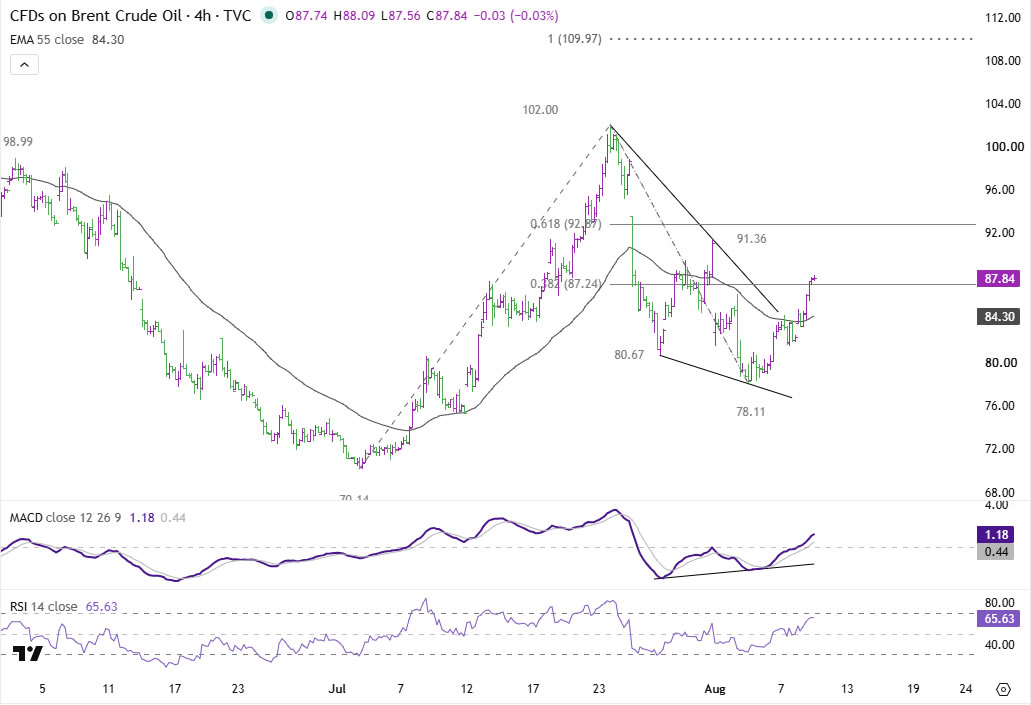
Brent’s chart is starting to reflect that change in expectations. Monday’s move decisively cleared the 38.2% retracement of 102.0 to 78.11. That strengthens the case that the fall from 102.00 was a corrective three-wave decline that has completed. If that interpretation is correct, the broader rise from 70.14 may still be incomplete.
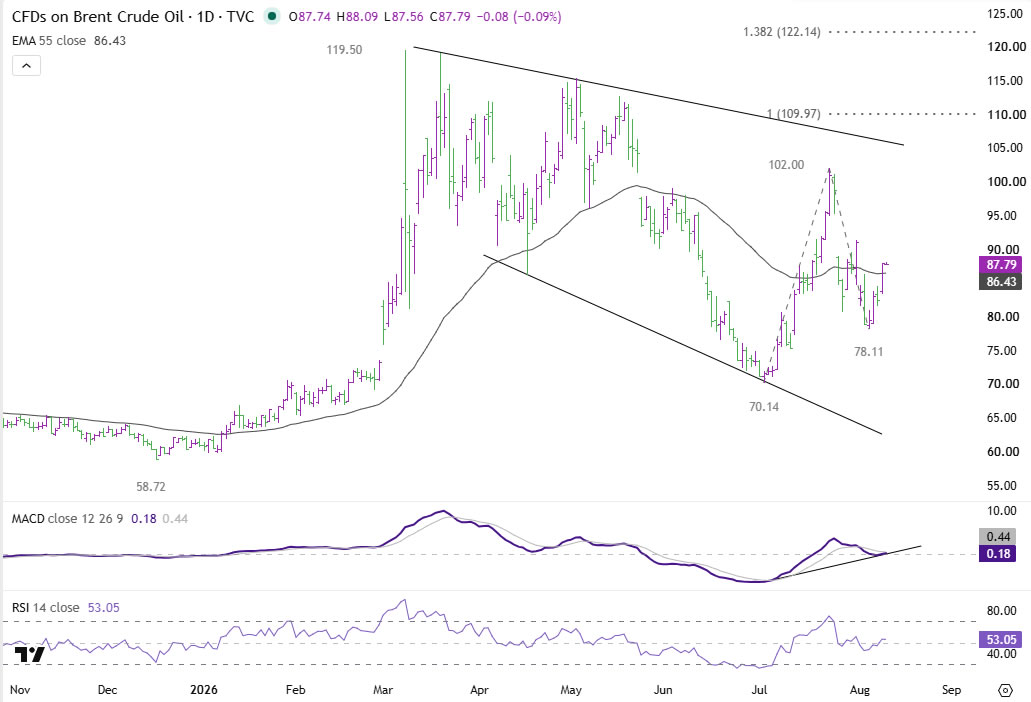
The rebound from 78.11 could either be the second leg of a larger correction below 102.00, or, more bullishly, resumption of that broader advance from 70.14. Either way, the near-term bias now favors further gains while the 55 4H EMA, around 84.30, holds. Brent has also recovered above the 55-day EMA near 86.43, adding further confirmation that recent downside momentum has been broken.
$92.87 Is the Gateway to a Retest of $102
The next major level is 92.87, representing the 61.8% retracement of the 102.00–78.11 decline. That’s where the current rebound faces its first genuinely important test. A rejection there could still leave Brent in a broad consolidation below the July high. But a decisive break above 92.87 would materially increase the probability of a retest of 102.00.
At that point, $100 would no longer be simply a geopolitical scenario attached to worsening headlines — it would become a live technical objective inside the next resistance zone. That’s why the current breakout deserves attention. Brent doesn’t need to reach $100 immediately for the risk profile to have changed; it only needs to keep holding above the broken retracement structure while the diplomatic backdrop continues to deteriorate.
Key Takeaways
- Brent and WTI both closed up roughly 5% Monday, their fourth consecutive gain and highest level in nearly two weeks.
- Talks remain stuck on the same core dispute as the collapsed June 17 MOU: who controls passage through Hormuz and under what conditions.
- Daily Hormuz crossings fell from 15 to 6 over the weekend, while Houthi activity threatens the Red Sea route too, turning this into a two-chokepoint risk.
- Monday’s break above the 38.2% retracement of 102.00 to 78.11 strengthens the case that Brent’s decline has completed as a corrective move.
- A decisive break above 92.87 resistance would materially raise the odds of a retest of the $102 high; a rejection there would instead point to continued consolidation.
Gyrostat September Retirement Portfolio Resilience Assessment
September Retirement Portfolio Resilience Assessment Markets have fallen. The price of risk has risen. ... Read more
Does The West Have A Problem With Government Bonds
If you have been following the financial pages over the past few weeks, one theme has begun to stand out from the usual ... Read more
August Retirement Portfolio Resilience Assessment
Markets Are Higher. The Price of Risk Is Lower. Retirement invest... Read more
When The Wave Turns
Why Retirement Investing Is Moving Towards Resilience Jeremy Grantham’s latest market warnings have revived an old tru... Read more
Gyrostat Capital Management: July Retirement Portfolio Resilience Assessment
The Market Is Currently Presenting an Opportunity to Strengthen Retirement Portfolio Resilienc... Read more
The Invisible Risk That Decides Your Retirement
Why how investors behave matters more than what markets do and what disciplined port... Read more