

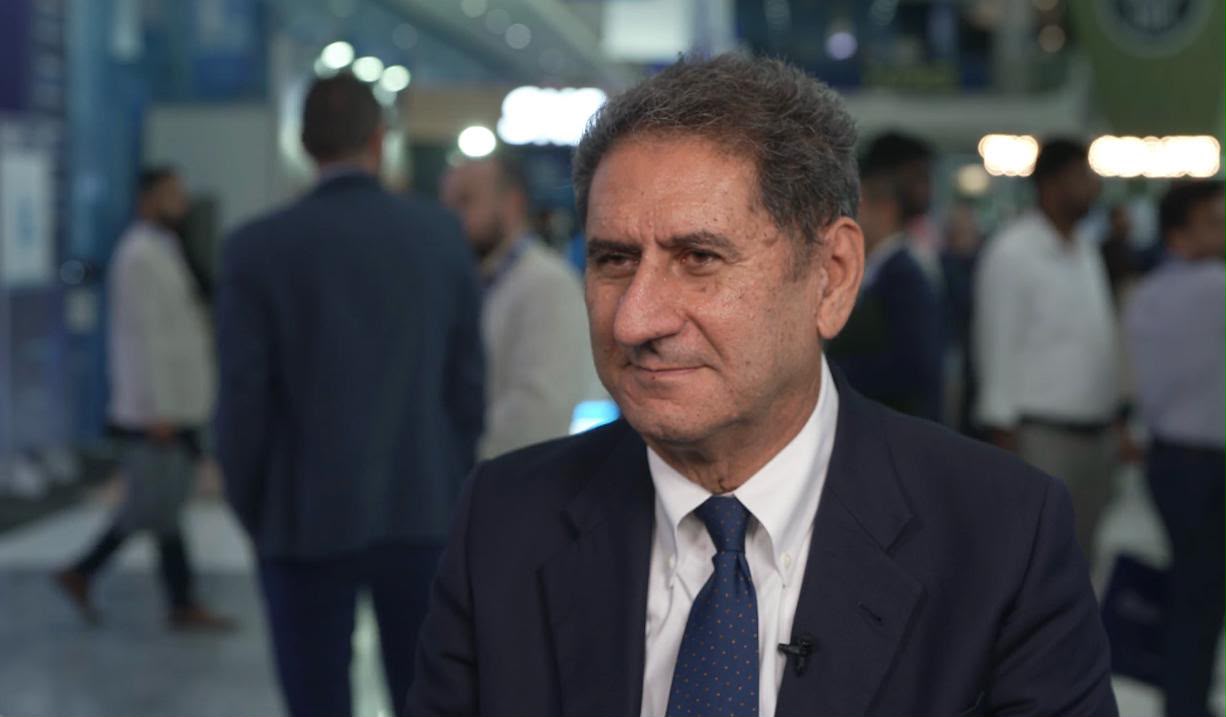
ABU DHABI: Ask the world's top renewables official what is slowing the clean energy build-out and he won't name cost or finance. He'll name grids.
Arab News asked Francesco La Camera, director-general of the International Renewable Energy Agency, whether cost, financing or grids stood most in the way of the roughly 1.2 terawatts of renewables the world must add each year. He answered without hesitation.
"The main bottleneck for the speed and scale of the transition is the infrastructure that can sustain the system," he said on the sidelines of ADIPEC in Abu Dhabi. He added that IRENA has been sounding the alarm for seven years.
His prescription is a system that works as one. Grids should be interconnected, flexible and balanced. They should be backed by storage and by what he called "natural batteries," such as hydropower and geothermal.
Without that, he said, the world cannot reach the pace the Paris Agreement demands.
Not oil by another name
Critics argue that the transition swaps dependence on oil for dependence on critical minerals. La Camera dismissed the comparison.
"It's completely different," he said, adding that new technology can already recover and recycle 90 percent to 92 percent of the minerals in solar panels, storage and batteries.
He accepted that mineral supply carries risk and needs policy attention. He also said the market is adapting on its own.
Batteries are already shifting from lithium to sodium, he noted. "When the price of one mineral goes up, they find other solutions," he said.
The Gulf's next frontier
La Camera said the UAE is investing in renewables at home and in more than 45 countries abroad. He said Saudi Arabia is highly competitive and is expanding in wind and solar.
The region's next test, he said, is to link that capacity across borders.
"Infrastructure is becoming the key, both globally and in this region, to unlock the enormous potential here," he said.