

Climate Change Risk Will Have Transformative Effect On Energy Sector – Willis Towers Watson
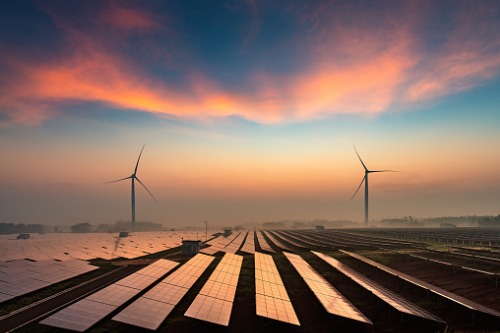
Climate change and environmental social governance (ESG) will transform the energy industry risk landscape, Willis Towers Watson said in its annual Energy Market Review report. The recent oil price war and the reduction in the demand for hydrocarbons as a result of the COVID-19 outbreak will also have a significant impact on future energy industry risk management strategies, Willis Towers Watson said.
The report found that achieving a satisfactory ESG rating will be critical in enabling energy companies to attract and maintain the support of key stakeholders.
Other key findings included:
- Capacity: The upstream market is bucking the general market trend, with theoretical amounts at a record $8.73 billion, up from $8.1 billion last year. Capacity in the downstream market has declined for the second consecutive year, down to $5.978 billion from $6.428 billion in 2019.
- Losses: The upstream market posted only three losses in excess of $100 million in 2019. The downstream market, however, showed a significant number of losses over $100 million, with one major loss “significantly above” $1 billion, according to Willis Towers Watson.
- Rating levels: Rating increases are still modest (2.5%-5% on average) compared to downstream, which featured increases in excess of 20% for nearly every type of program, and significantly more for refinery and petrochemical business, the report said.
- Profitability: The upstream market remains profitable in overall terms. However, premium income levels are low by historical standards, Willis Towers Watson reported. Some subsectors of the market, including offshore construction, have suffered attritional losses. Downstream and liability insurers’ portfolios are still in the red, “and the long road back to profitability is uncertain,” Willis Towers Watson said.
“In these unprecedented and uncertain times, there is no denying that the last 12 months have been challenging ones for the energy industry,” said Graham Knight, head of Global Natural Resources at Willis Towers Watson. “However, it is the issue of climate risk and wider ESG factors that will have a significant impact on the future shape of the industry. In short, today’s energy businesses must commit to incorporating ESG standards into their risk mitigation strategies in order to ensure a sustainable future.”
Knight added that the industry should not underestimate the impact of COVID-19 and the recent oil price war.
“While it is still too early to forecast exactly how these twin factors will play out in the months ahead, the potential effects on the energy industry are obvious: reduced capital expenditure, a reduction of exploration and production activities, lower refining margins and lower business interruption valuations,” he said. “It will also have a knock-on effect on premium income levels for an insurance market that remains unprofitable for most lines of business.”
People Power: Building The Future Of Insurance One Career At A Time
The insurance industry is at a pivotal point. As emerging technologies reshape underwriting, claims processing, and cust... Read more
Private Equity's Great Divide: Is The Future Insurance-Funded Or Fee-Driven?
A fundamental shift is taking place at the top of the private equity industry. While firms like Blackstone remain commit... Read more
Japan's Next Battleground: The Insurance Sector Under Activist Pressure
Farallon’s push at T&D Holdings marks a shift in focus for activist capital targeting Japan’s untapped insurance... Read more
Cover And Conflict: Tensions Rise Between Insurers And Litigation Funders
Burford’s clash with Chubb signals a deeper rift in the legal-financial ecosystem A high-profile dispute between li... Read more
Underwater And Uninsured: How Climate Risk Is Reshaping The US Mortgage Market
As climate change intensifies, its effects are no longer confined to coastlines or news reports on extreme weather. In t... Read more
When The Raters Get Rated: What The Fitch–Kroll Feud Says About Oversight And Accountability
In a rare and unusually public confrontation between two of America’s credit rating agencies, a recent feud between Fi... Read more