

 ADVERTISEMENT
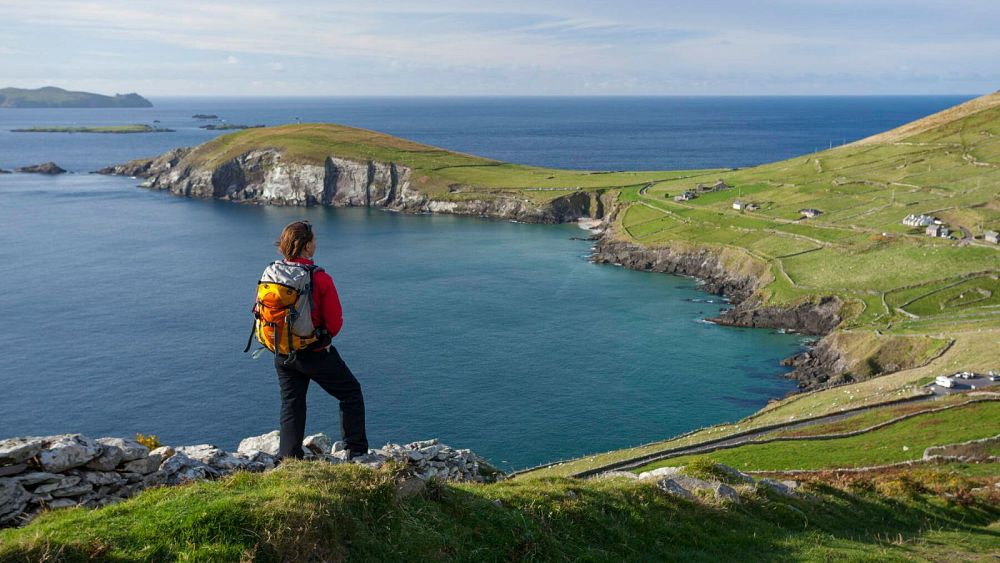
Spanning 2,500 kilometres of green, luscious coastline from Donegal to West Cork, the Wild Atlantic Way is one of the world’s most legendary road trips. It’s also the best way to discover Ireland away from the crowds in Dublin.
Launched in 2014, the coastal route is celebrating its 10th anniversary this year.
Whether you choose to do the trip with a modern EV, a motorcycle or a vintage caravan, the experience will bring you right to the centre of Ireland’s green heart and the fabled landscapes that live rent-free in our collective imagination.
Endless green fields on rolling hills, rugged cliffs, hidden bays, sandy beaches, sleepy towns, and the ruins of ancient castles dot the route. Look out for seabirds, grey seals, sheep, donkeys and ponies along the way - and, for fans of Irish folklore, perhaps even leprechauns, banshees and kelpies.
Travelling the Wild Atlantic Way gives you a chance to discover what the Irish are most proud of about their country - its stunning nature.
“The Irish countryside is unmissable,” Alice Mansergh, Chief Executive Designate of Tourism Ireland, tells Euronews Travel.
“When you think about the Ireland that you’ve seen in movies from the 1950s, or even 200 years ago - the little stonewalls, the rugged mountains, the sheep, the thatched cottages. That’s the kind of scenery that you get when you’re on the Wild Atlantic Way.”
Where to start on Ireland’s Wild Atlantic Way
There’s only Wild Atlantic Way, but just as many journeys as travellers on its road. At every fork and crossroad, and for every detour and break, the journey can take a different direction and shape - so it’s up to you to choose your own adventure.
The route connects the northern tip of the country to its southern tip, stretching across its western coast.
The official route starts at Malin Head in County Donegal and ends in Kinsale in County Cork, the culinary capital of Ireland.
Many people start from the south, in West Cork or Kinsale off to the other side of the coast, or you can do the reverse course, from Donegal in the north - a good starting point if you flew to Belfast - down to Sligo and Mayo.
When is the best time to visit Ireland?
The Wild Atlantic Way is beautiful at all times of the year - but every season brings something different to the journey.
“Spring, which is the season of green, has a special place in my heart,” Mansergh says. But autumn and winter also have their perks, she adds. “You have those warm autumn colours, the cosiness of having a glass of whiskey by the fire, having your seaweed bath.”
While summer is also a popular choice, Mansergh recommends doing the trip in either spring or autumn, “slightly quieter times of the year” and “wonderful times,” she says. “You get that mix of outdoor scenery - the ruggedness of the landscape - and the cosiness that comes with the seasons.”
How long does it take to do Ireland’s Wild Atlantic Way?
According to Mansergh, this is a “very personal” question that every traveller should find their own answer for.
If you’re in a rush, you can do it all in one go, whereas if you have more time, you can break it down and embrace a slower pace.
“Some people will come in for four or five days, others will spend three or four weeks doing the whole thing,” Mansergh says.
“I think it’s about researching what your own personal must-visit places and must-do experiences are. There are some nice slow tourism experiences around there, you can fit in islands, beaches, sheep and donkeys - all of those things.”
ADVERTISEMENTWhat to see and do on Ireland’s Wild Atlantic Way
While every traveller can choose the pace and direction of their own journey, there are some iconic places along the way you shouldn’t miss, Mansergh says.
“A lot of people know about the Cliffs of Moher, for example, and Connemara, and those are beautiful, must-see places. But actually, often there are other hidden gems nearby that are worth a visit.”
There’s a locally-run cave and bird sanctuary called Aillwee Burren, Mansergh says, and you can get a boat to the Aran Islands to experience a unique landscape and lifestyle in remote places like Inisheer.
The local village of Doolin - a bit over halfway along the Wild Atlantic Road - has traditional music almost every night, as do most traditional pubs dotted along the road.
A favourite at the moment among travellers seems to be sheepdog demonstrations, where visitors are asked to test themselves at a sheep farm to see if they can herd the sheep with a sheepdog.
ADVERTISEMENT“And it’s a lot harder than you might think,” Mansergh says, laughing.
The main stops along the way normally include West Cork, Kerry, Clare, Galway, Mayo, Sligo and Donegal. To create your own tailored journey, check out Tourism Ireland’s official Wild Atlantic Way page.