

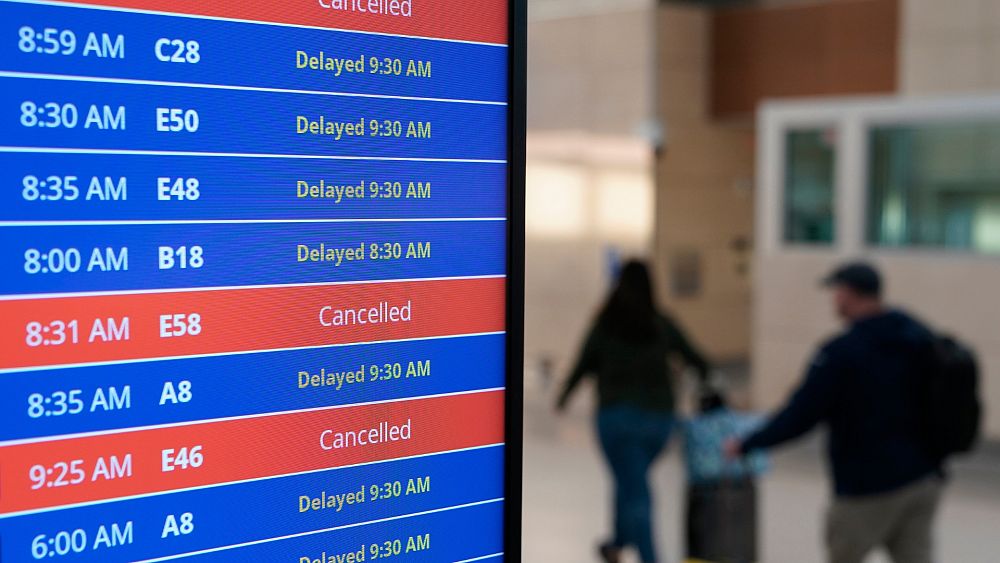
Passengers in the US could soon be paid in cash if their flights is delayed or cancelled
The Biden administration announced on Monday that it wants to introduce a new rule that would require airlines to give cash payments rather than just refunds in the event of travel disruption - even when the airline is responsible.
There aren’t any details yet on how much compensation passengers will be entitled to but the proposal resembles rules already in place in the European Union which give up to €600 for delayed or cancelled flights.
The US proposal would also require airlines to cover expenses caused by delays or cancellations - though many already do - and provide timely customer service.
“When an airline causes a flight cancellation or delay, passengers should not foot the bill,” Transportation Secretary Pete Buttigieg said in a statement.
“This rule would, for the first time in US history, propose to require airlines to compensate passengers and cover expenses such as meals, hotels, and rebooking in cases where the airline has caused a cancellation or significant delay.”
While announcing the proposal, he also acknowledged how frustrated passengers are with the service they get from US airlines.
The US Department of Transportation (DOT) has also launched an online dashboard that shows what types of compensation, if any, are already offered by airlines. It allows you to check each carrier’s policies on refunds and compensation and reveals that some provide frequent flier miles, travel credits or vouchers.
But the tool shows that “virtually no airlines offer compensation on top of refunds or amenities”.
The DOT also believes that the new rule - and a clear definition of a “controllable cancellation and delay” - could help to improve the number of flights that arrive and depart on time.
This proposal is the latest effort aimed at improving the flying experience in the US ahead of the busy summer season. It comes after the Biden administration saw significant backlash from the travel chaos seen last year.
Earlier this year, the DOT took aim at ‘junk fees’, putting forward a rule that would require airlines to provide passengers with certain information upfront. This would include any fees to sit with your child, for cancelling or changing your flight and extra costs for checked or carry-on bags.
Buttigieg also pressed airlines to commit to fee-free family seating that would guarantee parents or caregivers could sit next to children aged 13 or under without paying extra. Three airlines have already committed to introducing this policy and another new rule is being proposed to make it mandatory.
New measures to improve passengers’ experiences on US airlines could also include refunds for services that were paid for but not received - like WiFi - and other stricter rules around refunds for flights.