

 ADVERTISEMENT
Denmark and Germany are one step closer to being linked by the world's longest underwater rail and road tunnel.
Danish King Frederik X inaugurated the first element of a future 18-kilometre tunnel under the Baltic Sea on Monday. It will link southern Denmark to northern Germany and contribute to the transport sector's green transition.
The Fehmarnbelt link, which is expected to open in 2029, will also cut travel from the present 45-minute ferry crossing to as little as seven minutes by train.
It will link Roedby on the Danish side to Puttgarten in Germany, with onward connections by road and rail to central Europe and the Nordic countries.
First section of Fehmarnbelt tunnel ready to be submerged
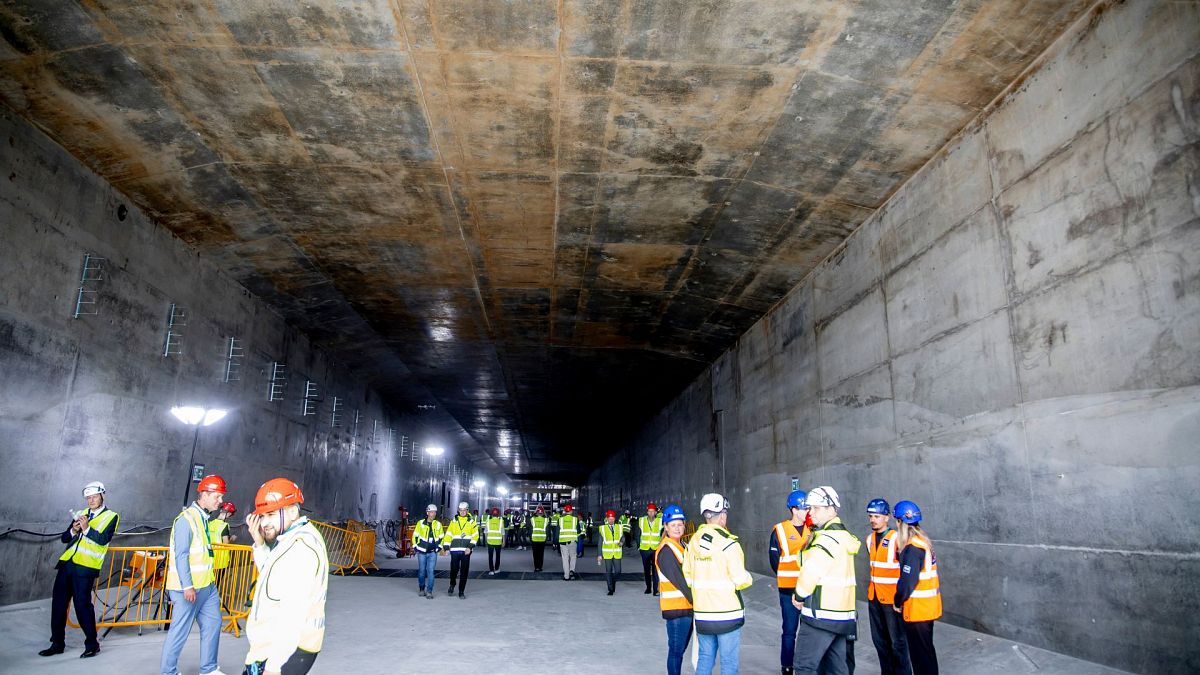
Frederik unveiled a plaque at the entrance of the first 217-metre section of the tunnel, which will be submerged into a seabed trench on the Danish side later this year. He dropped a coin at his effigy into a time capsule containing objects donated by those who built the concrete elements.
Sund & Baelt, the company building the Fehmarn link, claims it will be the longest submersible tunnel. It will also include an electrified train track. Cars are expected to be able to cross the Baltic Sea in 10 minutes on the four lanes and trains will do that in seven minutes.
In 2011, it was decided that a link between the southern Denmark island of Lolland and the northern German isle of Fehmarn should be built as an immersed tunnel. Work on the Danish side was commissioned in July 2022, and on the German side exactly a year later.
How much will the Fehmarn link cost?
The tunnel will consist of 89 concrete elements which are being constructed at a special facility in Roedbyhavn on Lolland, dubbed North Europe's largest construction site. In May, the first of the elements was cast.
The Fehmarn link will cost 55.1 billion kroner (€4.8 billion) and will be paid by users in Denmark. The Danish government will decide the toll charge for the tunnel at a later stage.
In recent years Denmark has built road-and-rail links to neighbouring Sweden and between two major Danish islands.
In 2000, a bridge-and-tunnel link across the Oresund strait connected Copenhagen to Sweden's third largest city Malmo, and in 1998, road traffic opened between the islands of Funen, where Odense - Denmark’s third largest city - is located, and Zealand, where Copenhagen sits. Train traffic there started a year earlier.