

 ADVERTISEMENT
A rise in dengue fever cases across Europe isn’t the most comfortable pre-holiday news but there are ways to reduce the risk of infection.
New data from the European Centre for Disease Prevention and Control (ECDC) shows that both locally-acquired and imported cases of dengue soared last year as hotter temperatures aided the spread of disease-bearing mosquitoes.
Climate change is making summer holiday planning ever-more unpredictable, with flooded airports and heatwaves among the biggest challenges that tourists have to navigate.
Mosquitoes might seem like a small annoyance, but these pesky insects are yet another obstacle to a safe and happy holiday that is being turbocharged by climate change.
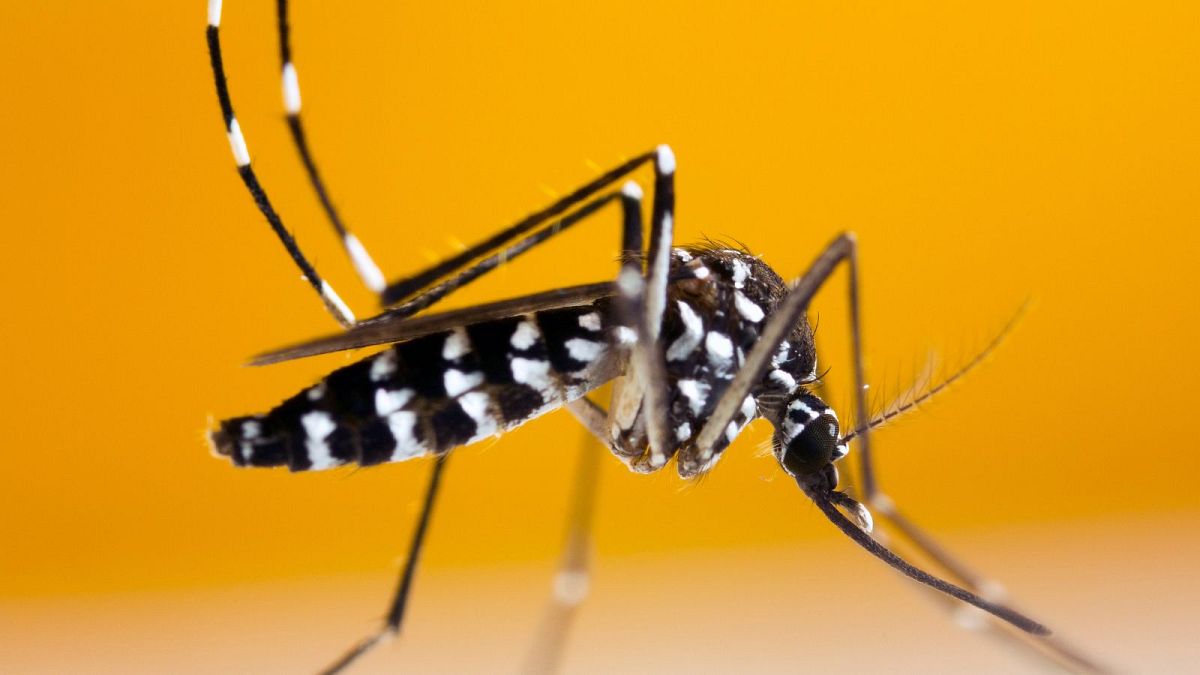
Dengue-carrying tiger mosquitoes are now established in 13 European countries: Austria, Bulgaria, Croatia, France, Germany, Greece, Hungary, Italy, Malta, Portugal, Romania, Slovenia and Spain. This list includes many of the continent’s most popular holiday destinations.
Here’s what you need to know about the risk and how to protect yourself abroad.
What are the symptoms of dengue fever?
Most people who catch dengue don’t experience symptoms.
If you do, they tend to show between four and 10 days after infection, and last for two to seven days.
Some of these are similar to flu, such as a high temperature, severe headache, pain behind your eyes, and muscle and joint pain.
In some cases, the latter is so bad it has earned dengue the nickname ‘break bone fever’. For up to five per cer cent of people, the disease can develop in a severe and potentially fatal way.
Dengue is more common in tropical areas of the world like parts of Africa and Asia, Central and South America, the Caribbean, the Pacific islands and some southern areas of North America.
You can read more about the geographical hotspots here.
How can you protect yourself from mosquitoes?
There are simple personal protective measures you can take to reduce the risk of mosquito bites while abroad.
These include covering up, ideally in lighter-coloured clothing as dark materials tend to attract them more. Wearing mosquito repellent is a must. Those containing DEET, IR3535 or Icaridin are advised over essential oil based options.
Mosquitoes carrying the dengue virus bite during the day, but it’s worth taking precautions at night too.
Aim for a mosquito bed net or window and door screen, the EDCD advises, and sleep in an air conditioned room. Strong fans can disorientate the insects and make it harder for them to land.
Since mosquitoes breed in stagnant water - don’t give them the opportunity. Even something as small as a bottle cap of water is enough for their larvae to develop in so clear away what you can, and keep an eye on gardens or balconies in the property where you’re staying.