

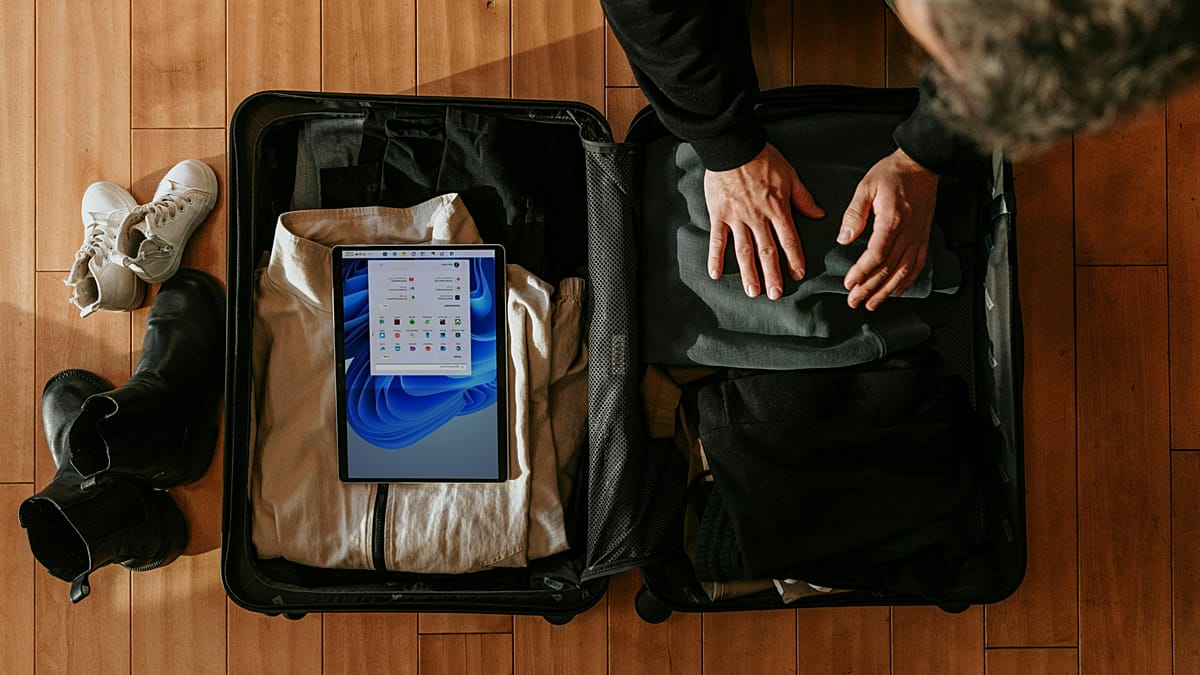
Airlines mishandled approximately 33.4 million pieces of luggage in 2024, including those delayed, damaged or lost.
 ADVERTISEMENT
ADVERTISEMENT
ADVERTISEMENT
Although data shows that baggage handling is improving, it still ranks as a top frustration for flyers.
According to Flight Centre's Global Survey, 47% of travellers worldwide named lost luggage or baggage issues as one of their major concerns when flying.
That puts it just behind flight delays and cancellations (55%) as a leading source of travel stress.
In recent years, airlines and airports have doubled down on baggage system advances. Experts say automation and data are doing the heavy lifting, from self-service bag drops to real-time tracking.
Now, a new feature from Google means data from travellers themselves can help airlines trace waylaid luggage.
“Airlines are operating in an environment where passengers expect visibility of their baggage at every step of the journey,” said Nicole Hogg, Portfolio Director, Baggage at aviation technology company SITA.
Travellers can share luggage location with airlines
One of the most recent notable innovations was the integration of Apple’s Share Item Location feature with SITA’s lost or delayed baggage tracking system. It allows passengers to share their AirTag location directly with airlines.
British Airways, Lufthansa, Qantas, Cathay Pacific, and Virgin Atlantic were among the early adopters.
Now, Google has rolled out a new feature for Android users in Find Hub, letting flyers share the location of a Find Hub-compatible tag or network accessory with airlines.
Using the Find Hub app, you can generate a secure link to your lost bag’s location and share it directly by copying and pasting it into your airline’s mobile app or website so they can see the item’s location as it updates.
You can immediately stop sharing your item’s location at any point from the app, and sharing is disabled as soon as your phone detects the item is back with you.
Global baggage-tracing system incorporates sharing technology
More than 10 major global airlines – including Ajet, Air India, China Airlines, the Lufthansa Group (Lufthansa, Austrian Airlines, Brussels Airlines, and Swiss International Airlines), Saudia Airlines, Scandinavian Airlines and Turkish Airlines – now accept Find Hub locations as part of their baggage recovery process.
Others, like Qantas, are expected to incorporate the system in the near future, Google says. Both SITA and software company Reunitus have integrated the technology into WorldTracer and NetTracer, the industry’s leading baggage-tracing systems. These platforms power the recovery operations for hundreds of airlines at thousands of airports worldwide.
Google says it is also working with luggage company Samsonite to embed Find Hub technology directly into its latest designs.