

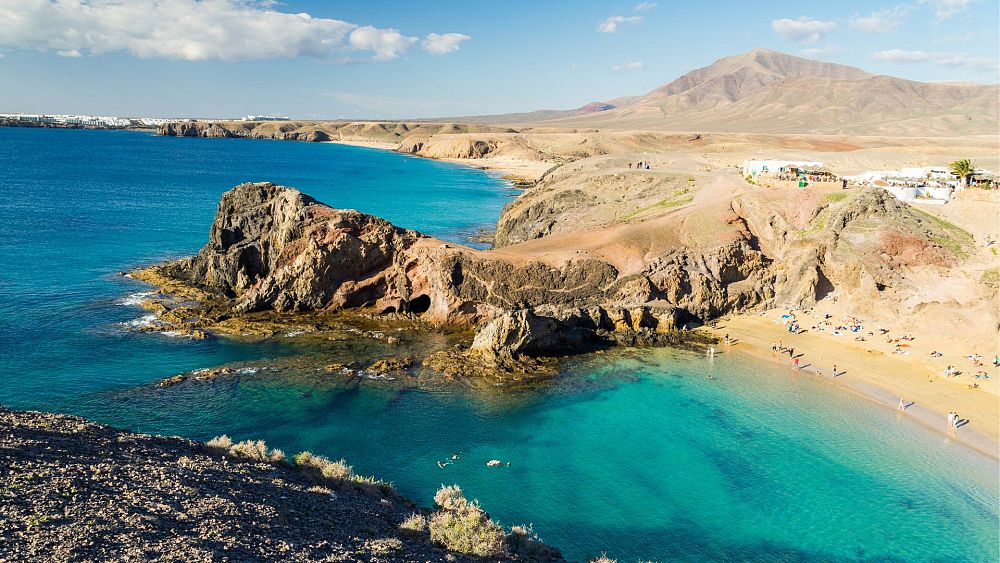
The Spanish island of Lanzarote wants fewer British tourists.
The popular holiday destination in the Canary Island has declared itself a “tourist-saturated area” and is now considering ways to limit the number of UK visitors it receives.
The new strategy is a bid to “reduce dependence on the British market”.
More than 50 per cent of visitors to the Island currently come from the United Kingdom. Some of these tourists have a reputation for rowdy behaviour.
Overcrowding is an existential threat to the island, said Lanzarote’s President María Dolores Corujo.
“We are going to continue to promote the debate on the limits to growth even though they try to gag us with the ghost of fear of damage to the image of Lanzarote,” she insisted.
The local opposition party has condemned the plan which they claim will drive prices up for locals and devastate the local economy.
How is the island planning to prevent overtourism?
The plan has a clear intention - reducing the number of British holidaymakers.
However, authorities haven’t hammered out details on how this will be achieved.
There is no detail of an official ‘limit’ yet, but the council website indicates that the tourism authorities will soon start targeting marketing toward other European countries.
"In Madrid, we once again highlighted our firm commitment to sustainability and excellence, and this also means aspiring to receive fewer tourists, with more spending at the destination so that they generate greater wealth in the economy as a whole,” a statement on the council website reads.
"That growth is expected in French, Italian, Netherlands or mainland Spain markets and we hope that it will continue to have a direct impact on the increase in tourist spending in the destination."
Which other Spanish destinations are limiting overtourism?
Lanzarote is the latest of several Spanish islands to express dissatisfaction with high numbers of tourists.
Last month, the government of the Balearic Islands - an archipelago which includes Mallorca, Menorca, and Ibiza - announced plans to cap tourist numbers.
In 2022, more than 16 million holidaymakers visited the islands. Officials have indicated that this will be the ‘absolute ceiling’ in future.
"The number of visits reached this year is a maximum that should not be exceeded but should tend to decrease. There must be a clear trend towards the reduction of tourist places,” said Balearic Islands tourism minister Iago Negueruela
The islands were historically hotspots for so-called ‘party tourism.’
But last year, authorities imposed tough regulations targeting drunken revellers.
Many all-inclusive resorts in Magaluf, El Arenal and Ibiza imposed a drink limit.
New rules also banned happy hours, pub crawls, two-for-one drink offers, and the sale of alcohol in shops between 9:30pm and 8am.
Playa de Palma - one of Mallorca’s most popular party resorts - banned people from wearing football shirts in restaurants as well.