

 ADVERTISEMENT
Venezuela has lost its last glacier, making it the first nation in modern history to hold this unenviable record.
At least five other glaciers have disappeared in the South American country within the last century as climate change drives up temperatures in the Andes. The country lost 98 per cent of its glacial area between 1952 and 2019, research shows.
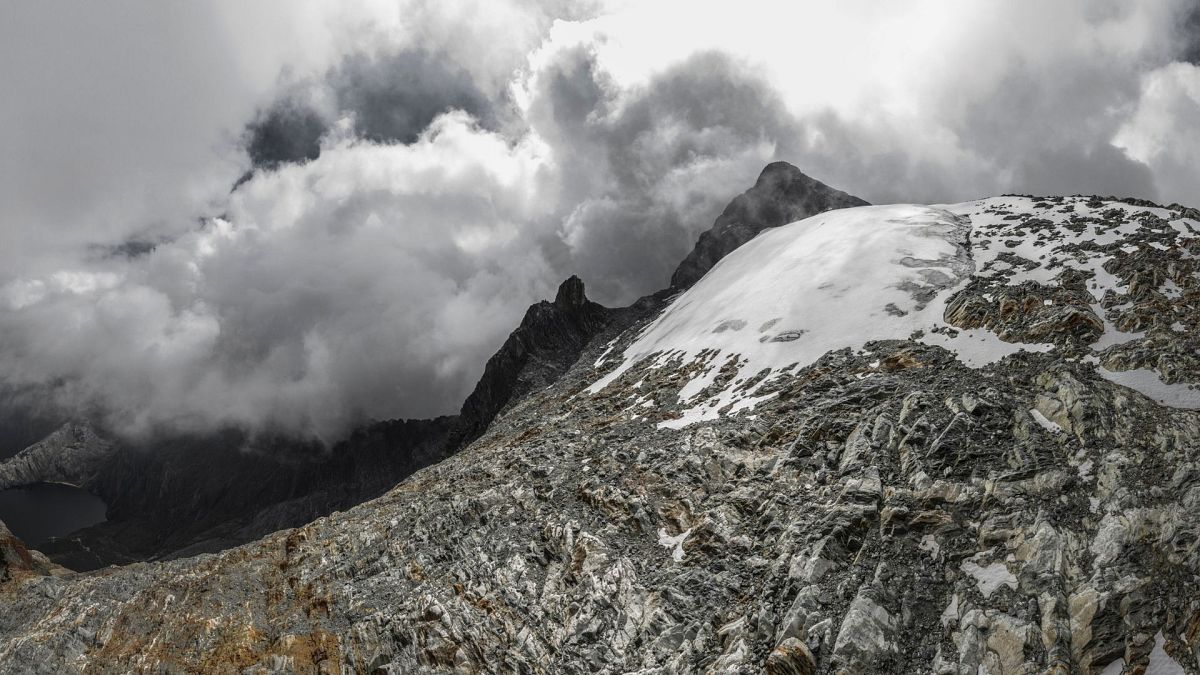
As of 2011, the Humboldt - also known as La Corona - stood as Venezuela’s last remaining glacier. It has now shrunk so much that climate scientists have reclassified it as an ice field, UK newspaper The Guardian reports.
What exactly is a glacier?
Glaciers are thick masses of frozen ice that move slowly downhill under their own weight, eroding the surrounding land. They are formed when snow gets compacted into ice over many centuries.
Most of the planet's ice is stored in the polar regions, but there are glaciers in some mountainous regions of the tropics - primarily in South America.
The International Cryosphere Climate Initiative (ICCI), a network of experts and researchers, tweeted this week that the Humboldt has become “too small to be classed as a glacier.”
While there is no universal standard to determine how large a mass needs to be to count as a glacier, it is widely accepted that they should cover a minimum of 10 hectares.
Why have Venezuela’s glaciers vanished?
Temperatures are warming faster at the Earth's higher elevations than in lowlands. This has caused Venezuela’s last glacier to decline more quickly than anticipated.
Back in 2019, scientists predicted that the Humboldt could be gone within two decades, but it has already reportedly shrunk to less than two hectares.
The ice sheet is perched within the Sierra Nevada National Park at nearly 5,000 metres above sea level.
Monitoring it has been difficult in recent years due to Venezuela’s tumultuous political situation, with blackouts and gas shortages common and equipment scarce.
But some hardy scientists have taken it upon themselves to maintain data records and monitor how temperatures and plant life are changing in the region.
“The páramos [zone between 3,000 and 4,500 metres of elevation in the Andes] are heating up, climate change is real and we have to document it,” Alejandra Melfo PhD, physics teacher at University of the Andes, said on a research trip in March 2019. “The glacier will disappear and we have to be there when it does.”
What’s the impact of Venezuela’s lost glaciers?
Glacier loss could have a devastating impact on mountain ecosystems.
On the rocks left behind as the Humboldt has retreated, scientists think that a new ecosystem resembling the Páramos - a mist-covered mountain grassland that lies between the top of the treeline and the bottom of the glacier - may eventually begin to develop.
“Temperatures are rising, and vegetation is slowly colonising,” Luis Daniel Llambí, a mountain ecologist at the University of the Andes in Mérida, said on the 2019 research trip.
“There's a race going on between global warming and the vegetation's ability to colonise these high areas. So the high areas of Mérida's mountain range should be number one priority for conservation.”
Between that visit and his last trip in December 2023, the Humboldt shrunk by half.
ADVERTISEMENTSimilar to those used in Austria and Switzerland in recent years, giant thermal blankets were draped over the glacier by the government in late 2023 in a final attempt to save it, but it was too late.
It is yet to be seen how quickly new soil can form where the ice has melted, and whether plant and animal species will be able to adapt to changing temperatures and potentially having to live at higher elevations.
Though it is a lesser problem in Venezuela, glaciers are also an important source of water in other South American nations.
Indonesia, Mexico and Slovenia could be the next countries to lose their final glaciers, climatologist and weather historian Maximiliano Herrera told The Guardian.