

 ADVERTISEMENT
The Central Apennine ridge, the middle section of Italy’s mountainous backbone, is a wilderness of limestone peaks, ancient beech forests and plunging canyons.
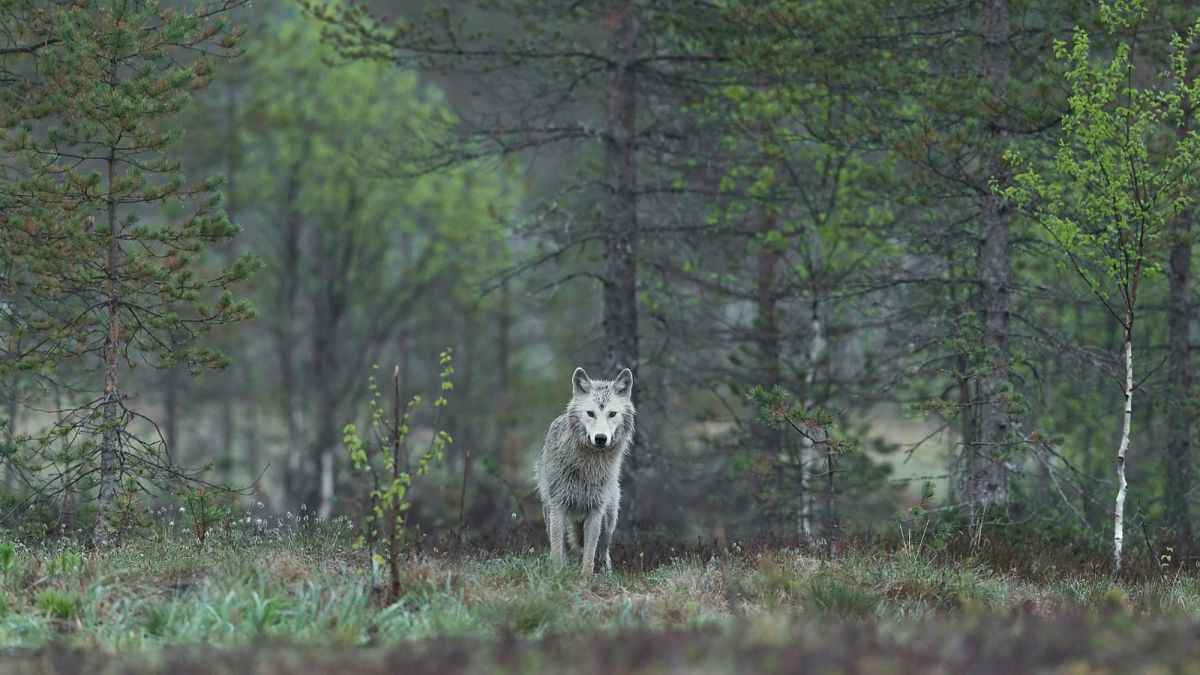
The untamed idyll hides half a dozen wolf packs - likely the highest population density of any area in Europe - who have teetered back from the brink of extinction in the last few decades.
Visitors to the mountainous national park in the region of Abruzzo can now take trekking trips to track these free-ranging wolves.
In the French Alps, Sweden and Romania’s Transylvania, operators offer similar hiking excursions to observe the animals.
Organisers say these wildlife experiences benefit wolf conservation by teaching about peaceful coexistence and habitat preservation.
‘Total immersion in the world of the wolf’
Travel company Wildlife Adventures runs wolf-tracking long weekends in Abruzzo between November and April.
The trips are intended as an introduction to the complexity of human-animal relationships within wolf territories, including visiting mountain communities that work to achieve peaceful coexistence with returning wildlife.
Over three days, participants delve into the wilderness of the Abruzzo National Park, hiking around seven to 10 kilometres a day.
Founder of Wildlife Adventures and nature guide Umberto Esposito calls the experience “an activity of total immersion in the world of the wolf”.
Alongside direct observation of these free-ranging animals, expert wildlife trackers demonstrate how to search for signs of their presence, like their hand-sized pawprints.
They teach the same techniques biologists and wildlife managers employ to obtain data on the frequency and habits of the predator in a given area.
And as guests drift off to sleep in mountain huts, distant howls are a nocturnal reminder of their presence.
Can wolf-tracking holidays help protect wildlife?
Esposito says that responsible nature-based tourism can be highly beneficial to wolf populations by increasing knowledge about animals, which are often victims of prejudice.
Most of the time, he hosts people who do not live in mountainous areas and only learn about wolves through “distorted news, as we see it in the media”.
“Tourism activities that respect the environment and wildlife can contribute to wolf protection by reducing human-wolf conflicts and supporting conservation projects,” he says.
ADVERTISEMENT“Furthermore, when wolves become a valuable asset for tourism, local communities may begin to view them as something to be protected rather than a threat.”
Revitalising rural areas with a new kind of tourism
Sustainable tourism in rural areas can also bring economic benefits to local communities themselves, Esposito adds.
It creates new employment opportunities in hospitality, leading guided tours, and selling handicrafts and typical products.
“It can also encourage environmental protection and the revitalisation of rural or mountain areas that are otherwise at risk of being abandoned or, worse still, of being ‘valorised' exclusively through the creation of ski resorts,” Esposito says, “which in most cases will soon fail due to climate change.”
ADVERTISEMENTWolf-tracking experiences are on the rise in Europe
Other wolf-populated regions of Europe have also seen the potential benefits of teaching tourists about coexisting with the creatures.
In Romania’s rugged Transylvania region, dedicated forest and wildlife management has led to some of the healthiest forests and the largest populations of wolves, bears and lynx in Europe.
“All these [are] in close coexistence with traditional human activities, which makes this place a real model for conservation activities on a national scale,” Dan Marin, an expert wildlife guide who leads animal-tracking experiences, writes on his website.
Marin’s offers day-walks in several wolf-populated areas, including along shepherds' trails in the forested foothills of the Bucegi Mountains and through the alpine meadows of Ciuma Peak.
ADVERTISEMENTTour organiser Much Better Adventures offers an excursion in central Sweden to search for wolves in their natural habitat, where they roam free among moose, lynx and beavers.
Participants learn about the important role wolves play in rewilding as a keystone species, the Scandinavian Wolf Project and conservation efforts that are currently in place.
With Undiscovered Mountains, participants head into the French Alps, where wolves, which were wiped out in France at the beginning of the 20th century, have returned after migrating from Italy.
During the trips, all significant signs of wolf activity - including sightings and recorded howling - are sent to the official 'wolf network', who monitor the colonisation of wolves in the French Alps to help in their research.
ADVERTISEMENT