

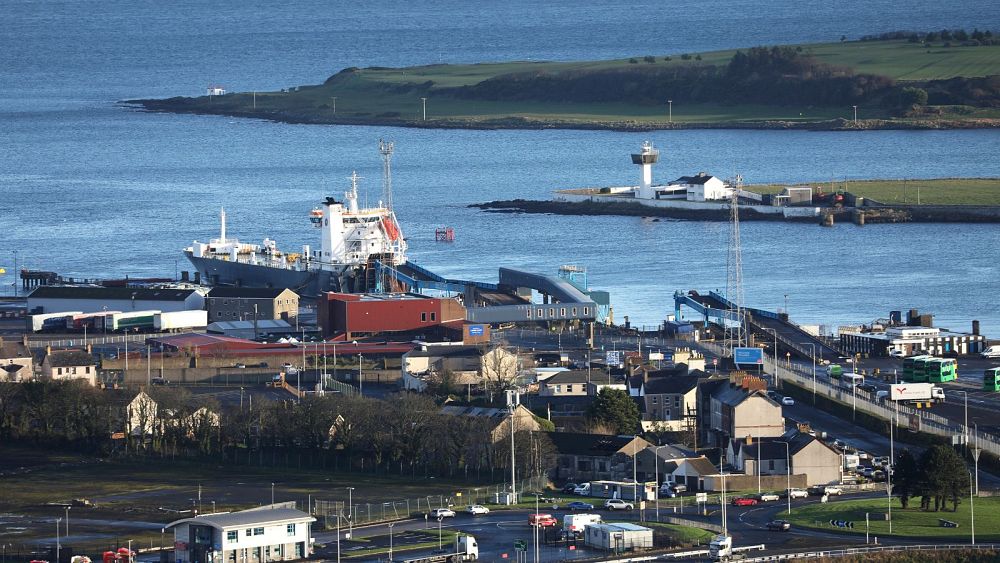
P&O Ferries has splashed out more than €260 million on hybrid ships that can’t be charged at their French or UK ports.
The two new superferries are supposed to be “the most sustainable ships ever to sail on the English Channel,” according to bosses.
But Dover and Calais electricity grids don't have capacity for the partially-electric boats, so they will run on diesel when they are delivered later this year, the UK’s Telegraph reports.
“You just don’t order ships without consulting with the port?” one source told the paper.
The ferry operator previously found itself in hot water after firing 800 workers at short notice - some via video call - and replacing them with cheaper overseas agency crews.
Months later, its Dubai-based parent company DP World announced record profits. Its decision to continue with the purchase of the superferries, first announced in 2020, has also proved controversial.
Why did P&O buy electric ferries it can’t charge?
Reports point to a baffling level of miscommunication between P&O Ferries and authorities in Dover and Calais.
The company did not consult with authorities at the two ports over charging points, causing confusion among senior port officials, sources told British newspaper the Telegraph. They added that Dover does not have enough power capacity to recharge the ferry batteries and meet its other electricity needs.
P&O Ferries has disputed this, with sources close to the company insisting that it has “engaged at length with both ports about the electricity requirements for our new ships”.
A spokesperson added that, “In light of current shore power capacity, our new hybrid ships were never designed to operate on a complete zero emission basis and be ‘charged up’ in-port.”
How sustainable are P&O’s new ships?
P&O boasts a range of eco-friendly features for its superferries, named Pioneer and Liberte and built in China.
These include “the ability to cut fuel use by 40 per cent through a combination of fuel and battery propulsion,” and a heat-recovery system. A double-headed design means the ships can dock at either end rather than needing to turn around, saving seven minutes of journey time and one tonne of fuel.
It deferred to the future to see its most ambitious claims realised. “The ship is designed with the capacity to be carbon neutral in the future on the twin assumptions that there are more electric shore charging stations in ports and batteries,” the company said at the time.
Some of the ships’ more efficient features (like it being double-headed) have raised concerns that more job cuts are on the way, but P&O says such speculation is “categorically false.”
“We are 100 per cent focused on making P&O Ferries the best ferry company in Europe, with the best ships on the best routes,” it added.
Though it remains to be seen how sustainable their journeys are, at 230 metres long Pioneer and Liberte are set to be the largest ferries to sail across the Channel.