

 ADVERTISEMENT
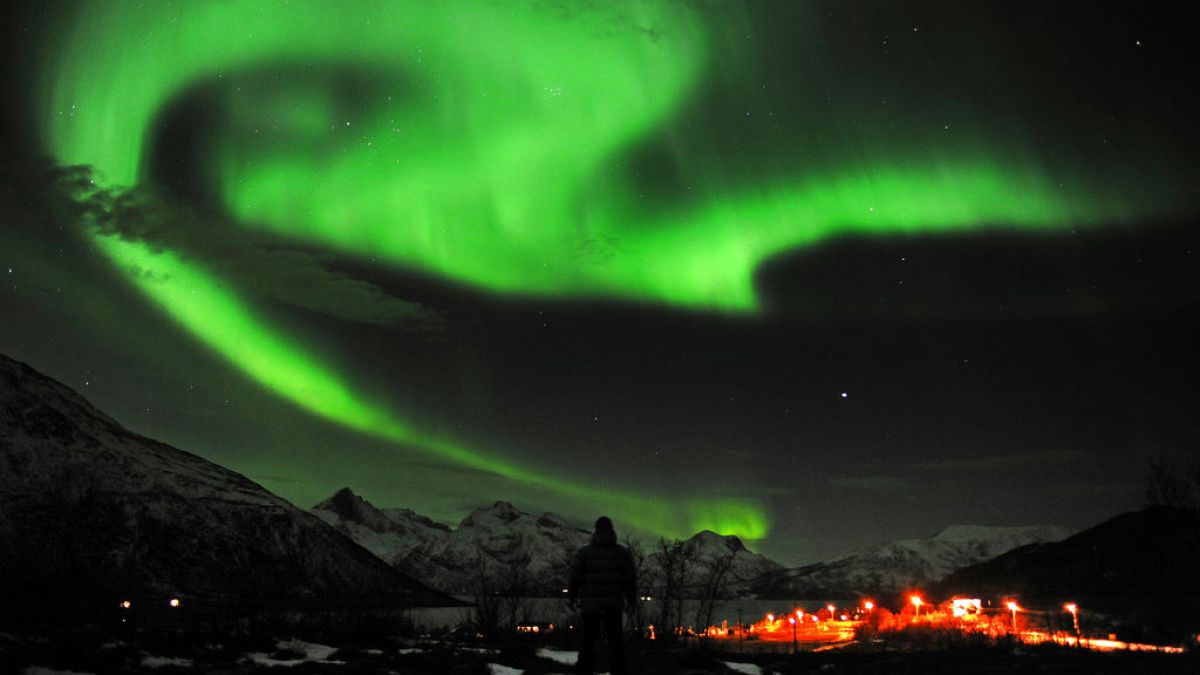
Skies above the UK could soon be filled with the dancing Northern Lights thanks to a period of extreme space weather in the coming weeks and months.
The Aurora Borealis, also known as the Northern Lights, is a captivating natural phenomenon that illuminates the night skies in high-latitude regions of the Northern Hemisphere.
This celestial spectacle is caused by the interaction between charged particles from the sun and the Earth's magnetic field.
The Met Office Space Weather Operations Centre has forecast increased activity in the sun's 11-year activity cycle – known as a solar maximum, meaning the northern lights will be stronger in 2024 than in at least a decade.
What is solar maximum?
Solar maximum is a phase in the solar cycle characterised by a period of heightened solar activity.
During the solar maximum, the sun experiences a higher frequency of sunspots, solar flares, and coronal mass ejections (CMEs), all manifestations of solar activity.
"In 2024, the sun is hitting the peak of its 11-year activity cycle," says Megan Eaves, the London Delegate for DarkSky International.
Eaves explains that because of the increased activity, there will be more intense and frequent auroras in both hemispheres, including the UK.
With the increase in aurora activity this year, Eaves thinks that more travellers will visit UK dark sky areas to take advantage of their lack of light pollution to witness the Northern Lights.
Eaves adds, "The UK's certified International Dark Sky Places, such as Parks and Reserves, are especially important as they offer protected darkness within the auroral zone to view the Northern Lights."
Thanks to these protected places, if conditions are right, anyone who can't travel farther afield, such as to the Arctic Circle, to see the Northern Lights might still be able to see the aurora from the UK.
Where can you see the Northern Lights in the UK?
Your best chance to see the Northern Lights in the UK is to head to areas with the lowest light pollution.
The UK has a network of protected International Dark Sky Reserves and Dark Sky Parks alongside smaller Dark Sky Discovery Sites, where you can seek starry skies over beautiful landscapes.
Dark Sky sites have been officially recognised for their low levels of light pollution and good public access, and should provide your best chance of seeing the Northern Lights this year.
Here are some locations in the UK where you might catch a glimpse of this natural phenomenon - and take enviable snaps for social media.
Cairngorms National Park, Scotland
As one of the largest national parks in the UK, Cairngorms National Park in the Scottish Highlands has an expansive wilderness area with minimal light pollution, providing excellent stargazing opportunities and Northern Lights potential.
Tomintoul and Glenlivet, in particular, have been awarded the prestigious status of ‘International Dark Sky Park, ' making them the most northerly park of their kind in the world.
Ynys Enlli, Wales
Found two miles off the Llŷn Peninsula in northwest Wales, Ynys Enlli's remote location and geographical features make it one of the UK's darkest places – perfect for viewing the Northern Lights.
ADVERTISEMENTKnown primarily for its birdlife and ancient Celtic monastery, rugged Ynys Enlli (Bardsey Island in English) suddenly garnered global interest when it received International Dark Sky Sanctuary certification from the International Dark Skies Association (IDA) in February 2023, joining 17 other sites worldwide, becoming Europe's first with such a designation.
South Downs National Park, England
In 2020, South Downs National Park in southeastern England became the world's newest International Dark Sky Reserve.
The popular park, which encompasses rolling hills, chalk cliffs, and picturesque landscapes, offers clear views of starry skies, planets and the elusive Northern Lights - if you’re lucky.
Elan Valley, Wales
The Elan Valley, located in the Cambrian Mountains region of Wales, is renowned for its Victorian reservoirs, woodlands and expansive open spaces. In 2015, it was designated an International Dark Sky Park, making it one of the prime locations for stargazing in Wales.
The valley's remote location, minimal light pollution, and easy access offer excellent opportunities to observe the wonders of the Celestial sky.
ADVERTISEMENTNorthumberland International Dark Sky Park, England
Northumberland International Dark Sky Park, situated in the northernmost county of England, is the largest Dark Sky Park in Europe.
Encompassing areas such as Kielder Water & Forest Park and Northumberland National Park, this site offers impressive night sky views and opportunities to witness astronomical events and increased solar activity.
Isle of Skye, Scotland
The Isle of Skye, situated off the northwest coast of Scotland, is renowned for its rugged landscapes, dramatic cliffs, and dark skies.
The island's remote location and minimal light pollution make it one of the prime spots in the UK for observing the Northern Lights, especially during periods of heightened solar activity.
Carrick-a-Rede, County Antrim, Northern Ireland
Carrick-a-Rede is a scenic coastal area in County Antrim, famed for its rope bridge that links the mainland to the tiny island of Carrickarede.
ADVERTISEMENTWhile sightings of the Northern Lights from this location are less common than in more northern regions, such as Scotland, the relatively dark skies and northern latitude might increase your chances during strong geomagnetic activity.
How to increase your chances of seeing the Northern Lights
While sightings of the Northern Lights in the UK are relatively rare compared to higher-latitude regions, you can take some steps to better your chances of witnessing the shimmering Aurora Borealis.
Choose Dark Sky locations: Opt for destinations with minimal light pollution, such as national parks, coastal areas, and remote islands.
Check the weather forecast: To maximise your chances of seeing the Northern Lights, plan your trip during periods of low cloud cover and minimal rain. Websites like the Met Office provide detailed weather forecasts for specific regions across the UK.
Keep an eye on solar activity: Stay informed about solar activity, as geomagnetic storms triggered by solar flares and coronal mass ejections increase the likelihood of auroral displays. SpaceWeatherLive.com and the NOAA Space Weather Prediction Centre offer real-time data and forecasts on solar activity and geomagnetic conditions.
ADVERTISEMENTDownload Aurora tracking apps: Use Aurora tracking apps to receive alerts and updates on potential Northern Lights sightings. Apps like My Aurora Forecast and AuroraWatch UK provide notifications based on geomagnetic activity levels and aurora forecasts.