

 ADVERTISEMENT
Turbulence left one man dead and several other severely injured earlier this year. And now it's to blame for a menu change on an Asian airline.
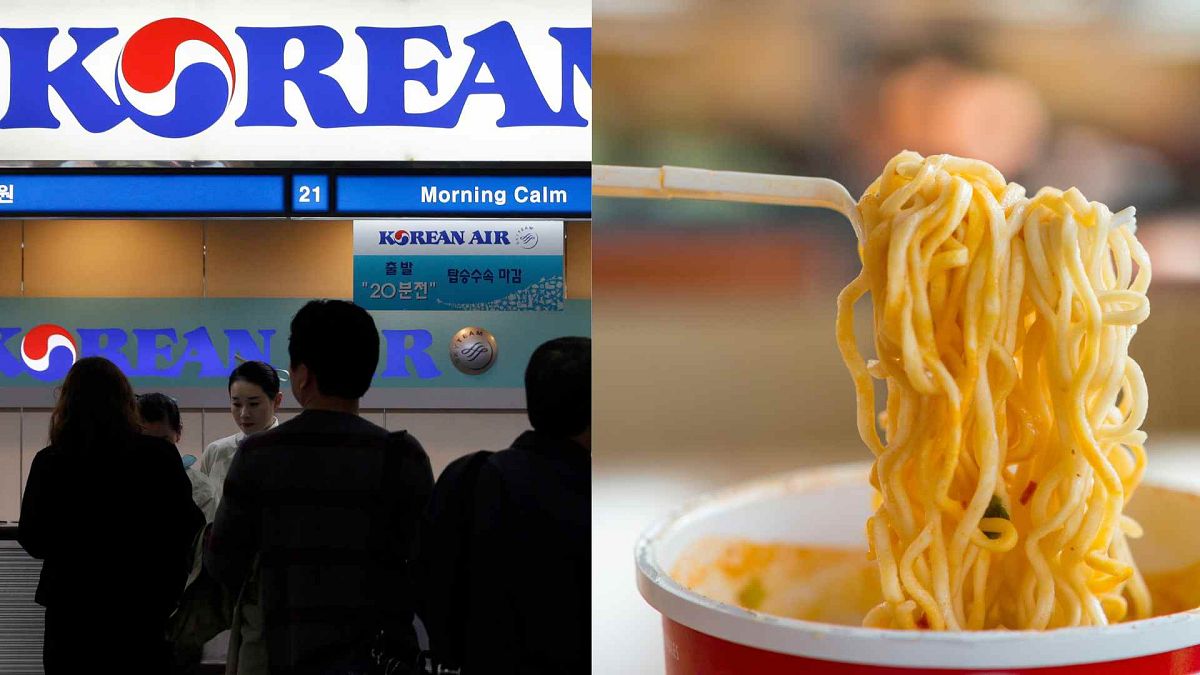
Korean Air has announced that Shin Ramyun instant noodles will no longer be available to economy passengers. But those who have paid for business or first class seats will still be able to enjoy the popular snack.
“This decision is part of proactive safety measures in response to increased turbulence, aimed at preventing burn accidents,” the Seoul-based airline said.
Why are the noodles only banned in economy?
The instant noodles are currently part of Korean Air's in-flight snack service, which is a self-service bar in addition to the meals available to economy passengers on long-haul trips.
In this week's announcement, the carrier added that it had “renewed” economy's snack options to instead include offerings like sandwiches, corn dogs and hot pockets.
But business- and first-class passengers will still get their noodles. Korean Air told the BBC that the noodles are brought individually to business- and first-class travelers, reducing spill risks.
Turbulence and hot food go way back
Concern about the dangers of serving hot food and liquids on aeroplanes isn't new.
Over the years, several carriers have faced lawsuits from customers who say they suffered serious burns after having hot coffee, for example, spilled on them during a flight.
And, while legal precedent may vary around the world, the European Union’s highest court ruled in 2019 that an airline can be held liable if a passenger is injured in this way, even if turbulence or other flight-related factors didn’t cause the spill.
But turbulence, of course, still adds to risk. Flying through unstable air can make balancing something like soup or a hot beverage in-flight all the more precarious.
Numerous turbulence-related injuries have been reported over the years, but most incidents are minor - and airlines have made steady improvements in reducing accident rates. Those include suspending cabin service when needed or taking extra caution when distributing certain refreshments.
Still, rough air might be getting harder and harder to avoid. Some meteorologists and aviation analysts note reports of turbulence encounters are on the rise, pointing to the potential impacts climate change may have on flying conditions.