

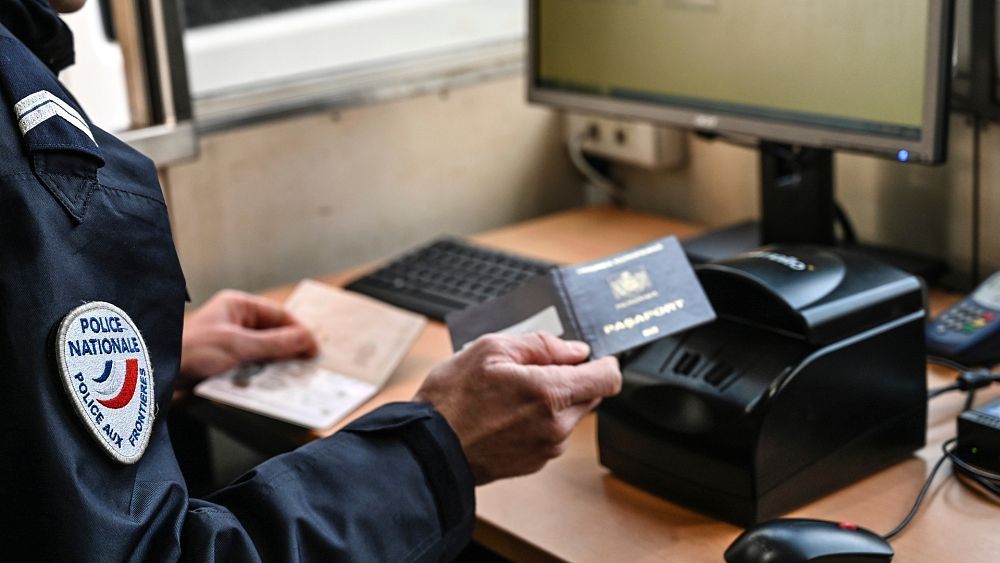
Entering the European Union is about to get more complicated for non-EU nationals from next year.
A new Entry Exit System (EES) is set to come into effect from November 2023.
This is part of the European Travel Information and Authorisation System (ETIAS) that will be implemented in 2024.
It will require visitors from outside the EU to apply and pay for a visa waiver before entering a country in the Schengen zone.
Here’s how European countries are preparing for the changes and how you might be able to avoid visa fees.
What are the EES and ETIAS?
The EU’s new EES will register additional information about non-EU travellers to the bloc.
Beyond passport details, automated barriers at borders will take and store biometric data including fingerprints and facial images.
Passport stamps will be scrapped. Instead, the system will automatically register when someone enters or leaves an EU country.
This will make it easier to flag someone who has overstayed their time in the EU.
Non-EU citizens, which includes UK nationals post-Brexit, can only stay 90 days in the EU before requiring a visa.
The EES does not apply to EU citizens or to people travelling between Schengen zone countries.
How do you apply for the ETIAS?
The wider ETIAS will come into effect in 2024. This will require non-EU nationals to pay €7 per person to visit most European countries.
The visa permits non-EU citizens to stay in the EU and Schengen zone for 90 days. Once a traveller has had their visa approved, they do not need to apply again for three years.
The visa will not be required for the Republic of Ireland as it is in the Common Travel Area.
This is a zone of open borders comprising the United Kingdom, Ireland, Isle of Man, and the Channel Islands.
Travellers will have to complete an online application before they go and pay the €7 fee if they are between 18 and 70 years old.
Although the exact launch date is unclear, the EU has previously indicated that it will be introduced five to six months after EES. There may be an implementation period where it is gradually introduced alongside the Entry-Exit System.
Do I need a visa if I have a European identity card?
Non-EU nationals who have official residency in an EU country may be exempt from the EES and ETIAS.
You need to have a biometric identity card, such as the carte de séjour in France or the carta di soggiorno in Italy.
These mean that you are also exempt from the 90-day limit.
However, no information has been released on how the automated barriers at borders would identify a traveller as an EU resident when using a non-EU passport.
What will the EES barriers look like?
EU countries are preparing to install automated barriers to carry out the EES checks.
France will install self-service kiosks at airports where travellers can pre-register their biometric data and personal details. They will then present themselves to a border guard for verification.
Germany and Austria have confirmed a similar system will be installed at airports.
For visitors arriving by car at France’s land and sea borders, tablet devices will be available to register your details.
Italy has said it will increase the number of automated gates in all its main airports as well as adding around 600 self-service kiosks.
Norway, on the other hand, will trial “automated camera solutions” operated by the border guards.
Will EES cause border delays?
As the EU prepares to introduce the digital barrier system, there are fears it will cause disruption at borders.
Several countries have said they feel there is insufficient time to test the more rigorous checks before they come into force.
Even travellers with EU residency may find themselves caught up in delays.
A document released by the EU council in late 2022 shared comments from various EU nations about the new system.
Austria and Germany were particularly concerned that border wait times could rise.
“The additional tasks resulting from the EES regulation will lead to a sharp increase in process times,” Austrian authorities said.
“Currently, we expect process times to double compared to the current situation.”
How will the EES impact British travellers?
In the UK there is "widespread concern" about the EES, according to the British travel association ABTA.
UK nationals will have to spend "several minutes" longer when they first arrive in the EU providing biometric data compared to current passport checks, according to the association's director of public affairs, Luke Petherbridge.
He said that this will slow the process of moving passengers and "dramatically increase processing time for UK tourists."
The problem is likely to be worst at ports like Dover where there is less space to accommodate travellers compared to airports.
EU authorities will also be able to automatically see if UK nationals are spending more than 90 days out of every 180 in the bloc. It could cause problems for those who have second homes abroad and seasonal workers such as ski guides and travel reps.
Will EU countries be ready for the EES?
Questions have also been raised about whether the physical infrastructure of the barriers will be installed in time.
The EES was initially meant to launch in May 2023. However, it has been delayed until November 2023 due to a lack of preparedness. The ETIAS launch, meanwhile, has been pushed from November to an undefined date in 2024.
Several countries still say they feel there is insufficient time to test the system before it comes into force. Many are concerned that border wait times could rise as a result.
How to avoid ETIAS scams
European Union authorities have already issued a warning to non-EU nationals to be aware of fraudulent websites offering ETIAS visas.
They say scammers may make copycat websites or offer intermediary services.
These websites would defraud users by falsely charging an additional administration fee.
EU officials stress that travellers should only use the official ETIAS site.