

 ADVERTISEMENT
Sarah and Sonia pile out of a rain-smattered train at Berlin Central Station, surprised they feel so rested after sleeping on Europe's newest night train service, but also over an hour late.
"When you see the beds, they don't look like the most comfortable ones," says Sarah, a midwifery student from Belgium. But, pulling on their rucksacks after their journey from Brussels, the friends feel ready for a weekend of sightseeing.
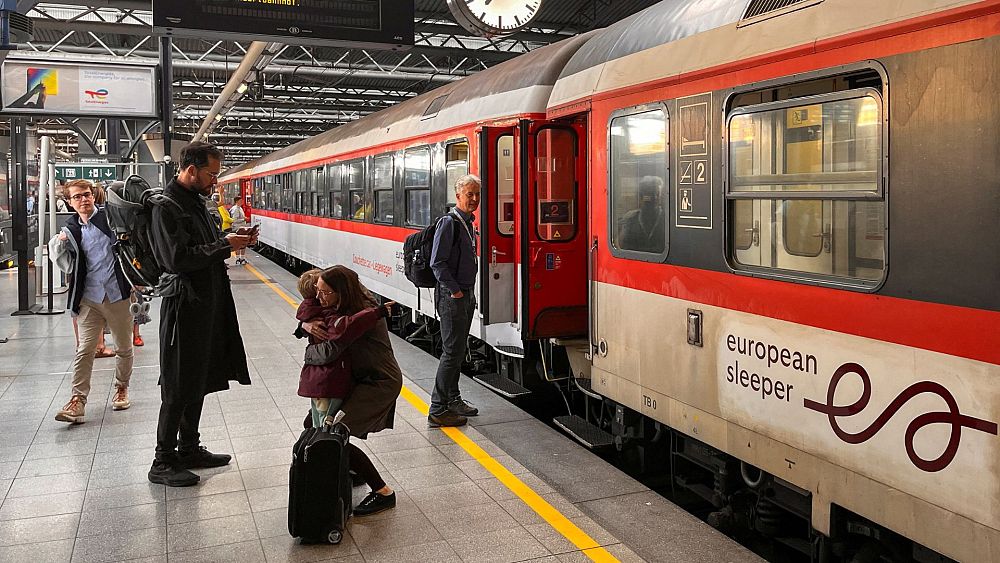
They travelled with European Sleeper, a Dutch-Belgian startup whose launch in May is part of a renaissance of night train travel.
The company says there's demand for such services, which offer a lower-emissions alternative to airplanes for climate-conscious travellers, while bringing back some of the romance of an older and slower form of travel.
But the revival faces many obstacles, from securing funding and profits amid cut-throat competition from low-cost airlines, to running reliable services on Europe's overcrowded and ageing rail network.
What's holding Europe's sleeper train renaissance back?
Sarah and Sonia's train is a case in point. European Sleeper said it endured a time-consuming back and forth with national train operators to agree on timetables for its Brussels-to-Berlin service.
"It's very bureaucratic and complicated," Chris Engelsman, European Sleeper's co-founder, told news agency Reuters.
The company also spent a year-and-a-half scouring Europe for second-hand sleeper train coaches to rent. The refurbished couchettes in off-white and faded red had cases of faulty power sockets and broken toilets as they transported more than 20,000 people over European Sleeper's first summer season.
In extreme cases, last-minute technical faults forced the company to downgrade some passengers to overnight seats or cancel their tickets altogether.
"The main investment that we are looking for at the moment is in the rolling stock, because that is such a critical part of the whole business," Engelsman said.
The company is hoping to raise €40-60 million to buy its own coaches, 10 times the amount it has raised so far from investors and crowdfunding.
Other operators are backed by government money, with Austria's OBB leading the charge.
It is expanding its Nightjet network, which transported 1.5 million passengers last year, with sleeper carriages often booked out weeks in advance. Two new routes connecting Berlin with Paris and Brussels start from December.
OBB spent €720 million on 33 next-generation night trains, developed with Siemens Mobility.
"There is higher demand," said Alberto Mazzola, executive director of the CER lobby representing European rail companies.
"But the main challenge is the business plan."
Night trains face tough competition from low-cost airlines
Years of decline in Europe's night train network coincided with the rise of low-cost airlines.
Today, a night train from Berlin to Zurich costs around €160 and takes over 12 hours. An easyJet flight between the two cities is much quicker, even including airport security, and costs less than half that.
ADVERTISEMENTCalculations by the Norwegian government underscore the profitability challenge. Last year it dampened hopes for a new route from Oslo to Copenhagen, saying it would have to spend up to €3.8 million a year in subsidies to offer tickets at a rate that travellers are prepared to pay.
"It's not easy and it's not our aim to become rich," European Sleeper's Engelsman said.
His company is nevertheless planning to expand, starting with the long-delayed extension of its line to Prague from March 2024. It is also eyeing an Amsterdam-to-Barcelona route.
Supporters of night trains are pushing for more state help to compete against budget airlines, such as a value-added tax exemption on cross-border routes and lower track access charges.
France said in September it would seek support for a minimum price on flights in the European Union to try to reduce airlines' contribution to climate change, which could also help.
ADVERTISEMENTCost pressures aside, night train operators must navigate Europe's ageing network of mismatched gauge systems and different languages.
At night, trains compete with freight traffic and construction works, and during the busy morning hours they vie for arrival slots at stations with commuter services.
Sarah and Sonia's train, European Sleeper's ES453 service, pulled in at 7.57am, one hour and nine minutes late.
Sonia didn't mind, though: "We could sleep a bit longer."