

 ADVERTISEMENT
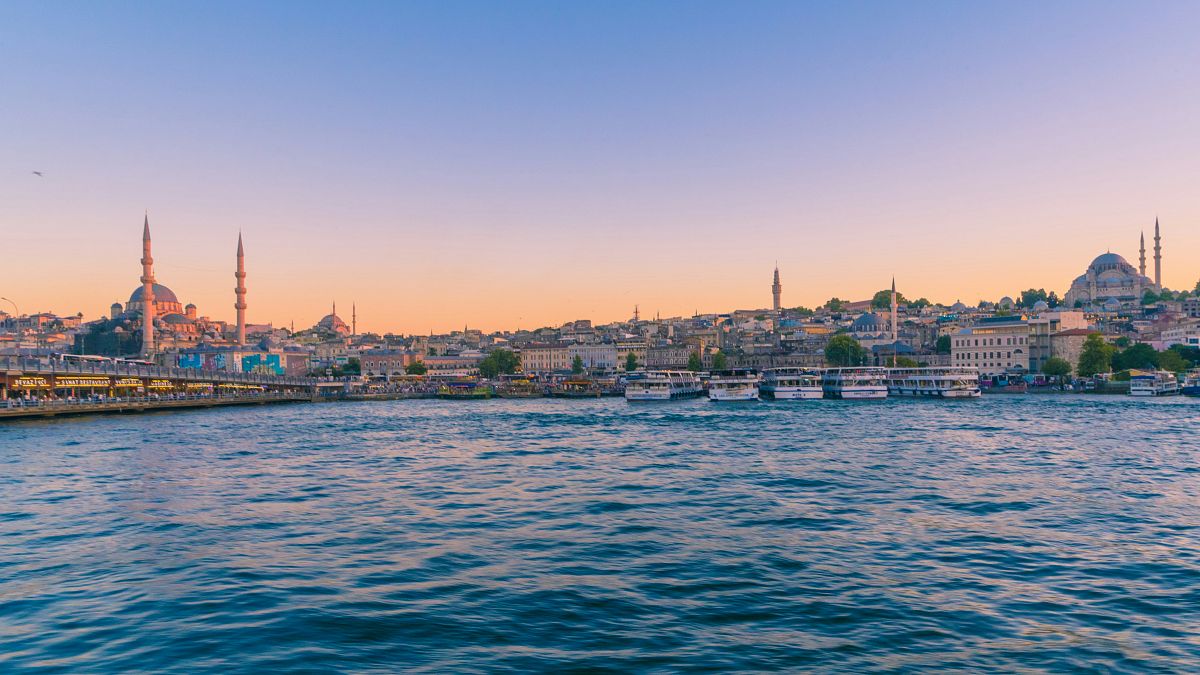
Istanbul, a cacophonous metropolis that straddles East and West, is home to more than 3,000 mosques.
One of these, Hagia Sophia, is the city’s star attraction. It began life as a Christian church, was converted into a mosque in 1453, to a museum in 1935 and then again to a mosque in 2020.
Until this week, entry to the mosaic-spangled religious building was free. Now, authorities have introduced a €25 fee to help fund its conservation.
While Hagia Sophia, a microcosm of the city’s history, should still be on your travel itinerary, the new charge could be motivation to explore some of Istanbul’s lesser-visited mosques.
Why should you visit Hagia Sophia?
The approach to Hagia Sophia is underwhelming: heavy anti-terrorism barricades and security scanners obscure the view of the building while an entry queue snakes around the square in front.
But the time taken waiting can be well spent swatting up on the structure’s aeons of history. When Emperor Constantinople made Istanbul (then christened Constantinople) his Byzantine capital in 330AD, he brought with him Christianity.
The emperor’s first church and a second church on the site perished, but the third church dating from 537AD is the basis of what remains today.
With the Ottoman conquest of the city in 1453, the Orthodox church was converted by Sultan Mehmed II into a mosque with mainly superficial alterations.
The essential structure - a vast domed central space flanked by semi-domes - was preserved. It became an architectural paradigm emulated in Ottoman mosques for a millennium after.
The swathes of glittering mosaics depicting figures from the Bible were plastered over while those outside in the vestibule were left uncovered.
Upon conversion to a museum under the new secular Turkish Republic in 1935, elements including the marble floor decorations and mosaics were brought to light again.
Much of the interior’s original mystique has been erased by modern electric lighting. The scent of incense is replaced by socks ripe from a day of sightseeing. The sacred space’s tranquillity is interrupted by the crush of visitors.
But there is still wonder to be found in the soft golden tiles overhead, radiant from the sunlight that streams through the forty small windows encircling the base of the dome.
The lower portions of the walls are enriched with panels and pillars of sumptuous green, dark red and grey veined marble.
The 1,500-year-old building, which is a designated World Heritage Site, has suffered over the centuries from earthquakes, poor conservation and now some 3.5 million annual visitors.
Turkish authorities say the new entry fee - as well as the installation of security cameras, fire detection and emergency communication systems - are part of recommendations by UNESCO to ‘streamline’ visitor numbers.
The best alternative mosques in Istanbul
Like Hagia Sophia, other mosques in the city have the power to transport visitors to Istanbul’s past.
On a similar scale of grandeur is the Süleymaniye Mosque, built in the mid-16th century to reflect the eminence of patron Sultan Süleyman the Magnificent. The colossal pale stone structure sits on a scenic vantage point above the Bosphorus strait surrounded by serene gardens.
ADVERTISEMENTRenowned architect Mimar Sinan built the dome 26 metres in diameter and 53 metres high - taller than the Arc de Triomphe in Paris. The light-filled interior is decorated by intricate painted patterns while in the courtyard outside, the sultan’s tomb is housed in a jewel box of a building with ivory inlaid tiles.
Not all mosques stand so spectacular on the skyline, but they still hide surprising treasures. Rüstem Pasha Mosque lies near the Spice Bazaar and is accessed via an unassuming, covered stone staircase.
However, the 16th-century Sinan-designed structure gives the Blue Mosque - famed for its tilework - a run for its money.
Both outside and in, the building is clad in deep blue, cobalt and vibrant turquoise tiles from the famed pottery-making region of Iznik. Studied up close, each handpainted ceramic tile is an exquisite rendering of stylised tulips, carnations and rosettes (and dozens of variations of each).
Many of Istanbul’s thousands of mosques date from much later periods, too.
ADVERTISEMENTŞakirin Mosque was built in 2009. It is not only notable for its space-age, metallic domed form but also because its interior was designed by Zeynep Fadıllıoğlu - reportedly the first woman to design a mosque in modern Turkey.
The light-flooded interior features a futuristic gold and turquoise mihrab (prayer niche) and a chandelier of blown-glass droplets recalling a prayer that Allah's light should fall on worshippers like rain.