

 ADVERTISEMENT
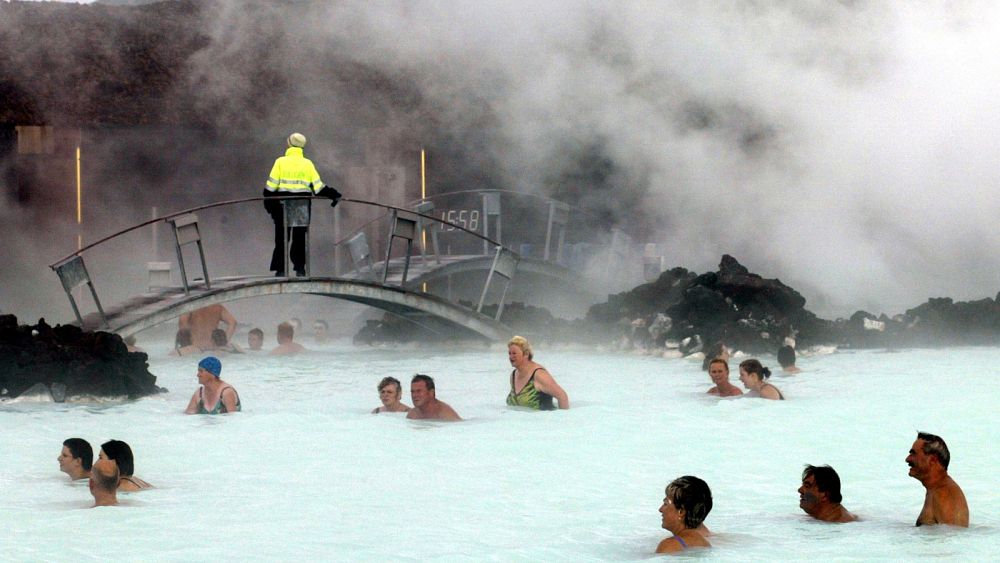
The Blue Lagoon geothermal spa - one of Iceland’s biggest tourist attractions - has been closed temporarily as earthquakes put the country on alert for a possible volcanic eruption.
Guests rushed to leave the spa’s hotels in the early hours of Thursday, after they were rattled awake shortly before 1am by a magnitude 4.8 quake, the strongest to hit the region since the recent wave of seismic activity began on 25 October.
Bjarni Stefansson, a local taxi driver, described a scene of confusion when he arrived at the Retreat Hotel, where lava rocks had fallen on the roadway and the parking lot was jammed with 20 to 30 cabs.
“There was a panic situation,” Stefansson told news agency the Associated Press. “People thought a volcanic eruption was about to happen.”
Could earthquakes in Iceland cause a volcanic eruption?
The area around Mount Thorbjorn on the Reykjanes Peninsula - the island nation’s most populated region - has been shaken by hundreds of small earthquakes every day for more than two weeks. This is due to a buildup of volcanic magma some 5 kilometres underground.
Land in the region has risen by nine centimetres since 27 October, according to the Icelandic Met Office, without showing imminent signs of eruption.
Scientists are closely monitoring the situation for any indication that the seismic activity is getting closer to the surface, which could be an indication that the magma is breaking through the earth’s crust, the Met Office said.
“Presently, there are no signs that earthquake activity is becoming shallower,” the agency said on its website. “However, the situation could change quickly, and it is not possible to exclude a scenario involving a lava-producing eruption in the area northwest of Thorbjorn.”
Iceland, which sits above a volcanic hotspot in the North Atlantic, averages an eruption every four to five years. The most disruptive in recent times was the 2010 eruption of the Eyjafjallajökull volcano, which spewed huge clouds of ash into the atmosphere and led to widespread airspace closures over Europe.
Which areas could be affected by a volcanic eruption in Iceland?
The Reykjanes Peninsula on Iceland’s southwestern coast is includes a volcanic system that has erupted three times since 2021, after being dormant for 800 years.
Previous eruptions occurred in remote valleys, without causing damage. While scientists say that is the likely outcome of the current activity, the magma storage chamber currently building up again could erupt less than 3 kilometres from the Blue Lagoon.
In the worst-case scenario, lava would threaten the town of Grindavík and the Blue Lagoon, along with the pipelines channeling hot water to thousands of homes that are heated with geothermal energy.
“We need to be prepared for the worst,” volcanologist Thorvaldur Thordarson said. “Magnitude 5 earthquakes, such as the one last night, are known to precede eruptions.”
When will Iceland's Blue Lagoon reopen?
The Blue Lagoon, where tourists bask in pools of seawater naturally heated deep underground, said it decided to close temporarily due to the night’s “disruption of the guests’ experience” and the prolonged stress on employees.
The resort will remain closed until 16 November, the company said in a statement. It had been criticised for not acting sooner.
Spokeswoman Helga Arnadottir said that close to 30 guests left the resort following the earthquake, but most belonged to one group traveling together.
The Met Office reported that the peninsula was shaken by about 1,400 quakes in the 24 hours through midday Thursday.
At Grindavík, a fishing town of 3,400 people, residents have experienced a series of seismic episodes since the Reykjanes Peninsula began to rumble three years ago. But last night’s quakes were stronger.
ADVERTISEMENTRetired beautician Hildur Gunnarsdóttir, 68, said she spent the night cruising around in her Volkswagen Passat to “get a break from feeling the earthquakes.”
Gunnarsdottir tracks seismic activity on a phone app called My Earthquake Alerts.
“I turned off notifications days ago,” she said. “The phone was vibrating constantly.”