

 ADVERTISEMENT
As the end of the year approaches, thoughts begin to turn to plans for next summer and a welcome getaway to another country. Travelling by ferry is a popular option, with the European ferry sector transporting some 794 million passengers a year.
Ferry route-finding site FerryGoGo has crunched the numbers to find out what we could be paying for our ferry trips in 2025. On average, a crossing with two people and a car in the high season will set travellers back €1,017, slightly less than the €1,097 evaluated in 2024.
Part of this is down to the inclusion of eight new routes in the study this year, some of which are shorter and therefore cheaper. Co-founder of FerryGoGo, Jan Willem van Tilburg, noted that, although the overall average cost has reduced, value for money is getting worse.
He tells Euronews Travel, “The price per mile has increased by seven cents per mile, likely due to inflation and the inclusion of shorter routes. For instance, routes such as Portsmouth to Caen and Portsmouth to Jersey are cheaper overall because they cover fewer miles, but they are less efficient and therefore more expensive per mile. A similar pattern is seen with routes like Barcelona to the Balearic Islands.”
What is the most expensive ferry crossing in Europe?
According to the study, the most expensive ferry crossing in Europe in 2025 is from Denmark to Iceland. Priced at €2,222 for two people, a cabin and a car on a round-trip itinerary in high season.
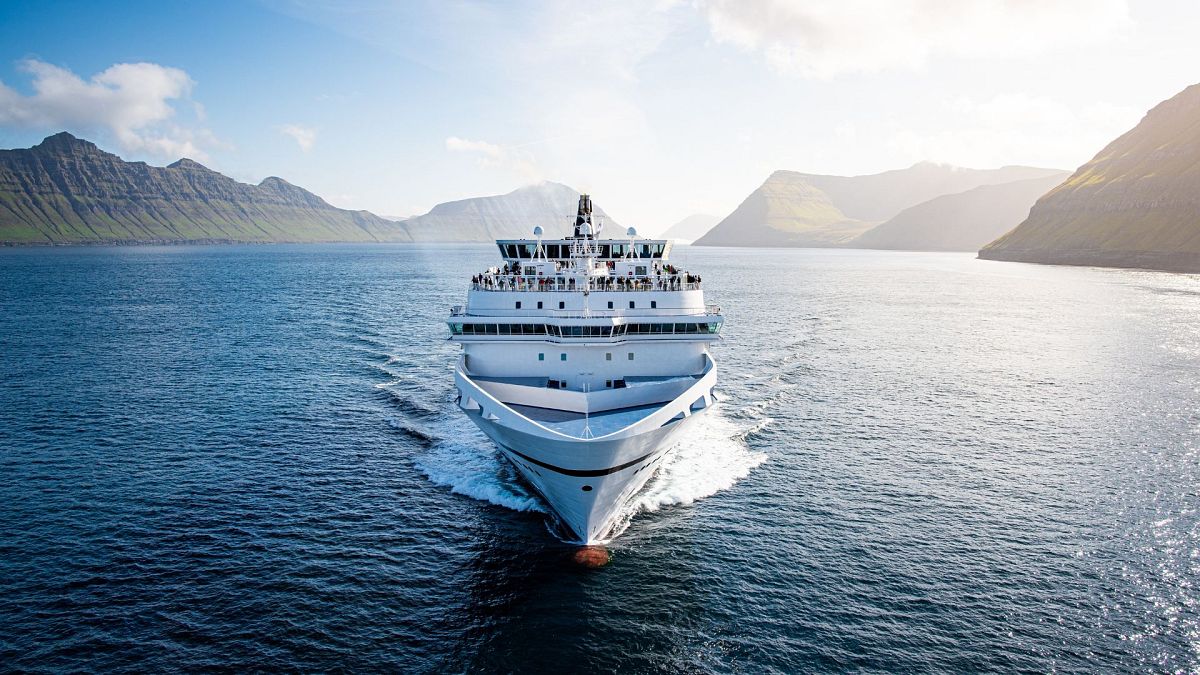
Sailing just once per week, Smyril line sails the M/S Norrona from the Danish fishing town of Hirtshals, passing the Shetland Islands and docking briefly in Torshavn on the Faroe Islands. The final leg sees the ship arriving in the small Icelandic town of Seydisfjordur a whole 66 hours after leaving Denmark.
Onboard are the usual ferry amenities, such as cinemas, a children’s playroom and a gym. In addition, the Norrona offers an indoor pool, open deck hot tubs and a football pitch, as well as a multitude of decent restaurants to choose from.
Although the cost for this crossing is still the highest in Europe, on a per kilometre basis, it’s actually very good value. FerryGoGo pointed out that, per hour, this mini-cruise costs under €17 per person, or €0.73 per kilometre.
Compared to 2024, the cost of the Hirtshals-Seydisfjordur crossing has decreased by 19.7 per cent - down €546 from this year’s price of €2,768.
The best and worst value ferry crossings in 2025
In terms of bang for your buck, the best value to be had for the distance travelled is the 854 km route from Barcelona to Rome. Costing €755 return for two and a car, it works out at just €0.44 per kilometre.
Other crossings that come in at great value, all under €0.70 per kilometre, include the 40-hour trip from Sete in southern France to Nador in Morocco, Germany’s Travemunde to Helsinki and Bilbao in France to Rosslare in Ireland. All three of those crossings are over 1,000 kilometres long, requiring one, maybe two nights on board too.
“In general, we’ve observed that the longer the crossing, the cheaper it is per mile,” explains van Tilburg.
“For example, crossings from Ireland and the UK to Spain are relatively cheap when you consider the cost per mile. Similarly, the crossing from Barcelona to Civitavecchia-Rome is one of the most cost-effective crossings per mile.”
In terms of the worst-value crossings, the most expensive per kilometre is the popular route from Barcelona to Palma, Mallorca. Covering just 270 km and costing over €1,000, it works out to a fee of €1.89 per person, per kilometre. Up there with the expensive trips is also Barcelona-Ibiza and the shortest route on the list, the six-hour hop from Rostock in Germany to Trelleborg in Sweden.
The Harwich to Hook of Holland ferry has seen the biggest price increase
Across the surveyed routes, some services had largely remained at a similar price to 2024, but many did not. Almeria to Nador was the service with the biggest fall in price, dropping 29 per cent to €586 this year.
ADVERTISEMENTTravemunde-Helsinki and IJmuiden-Newcastle also dropped in price by around 20 per cent, while Hirtshals-Seydisfjordur and Bilbao-Rosslare are around 15 per cent cheaper this year.
Of the routes where price rises have been seen, the most dramatic increase is on the Harwich to Hoek van Holland service, where prices are up almost 60 per cent. From a cost of under €400 last year, this year’s report puts the fare at €620.
The Liverpool to Belfast ferry also increased in price substantially, going from €500 to €768. Other routes had moderate rises of around 20 per cent, although van Tilburg noted that the use of dynamic pricing means prices may still go up.
Dynamic pricing is widely used in transportation and works by increasing the fares on particular services as more of the seats sell out. January is a key month for ferry bookings, therefore the prices quoted in the report could well change in the new year, says van Tilburg.
ADVERTISEMENT“If you’re travelling with a car, it’s best to book early,” he notes. “Parking decks on ferries tend to fill up quickly as the season approaches, leading to rapid price increases. Booking before January can also help you save - Stena Line, for example, often offers discount codes."