

 ADVERTISEMENT
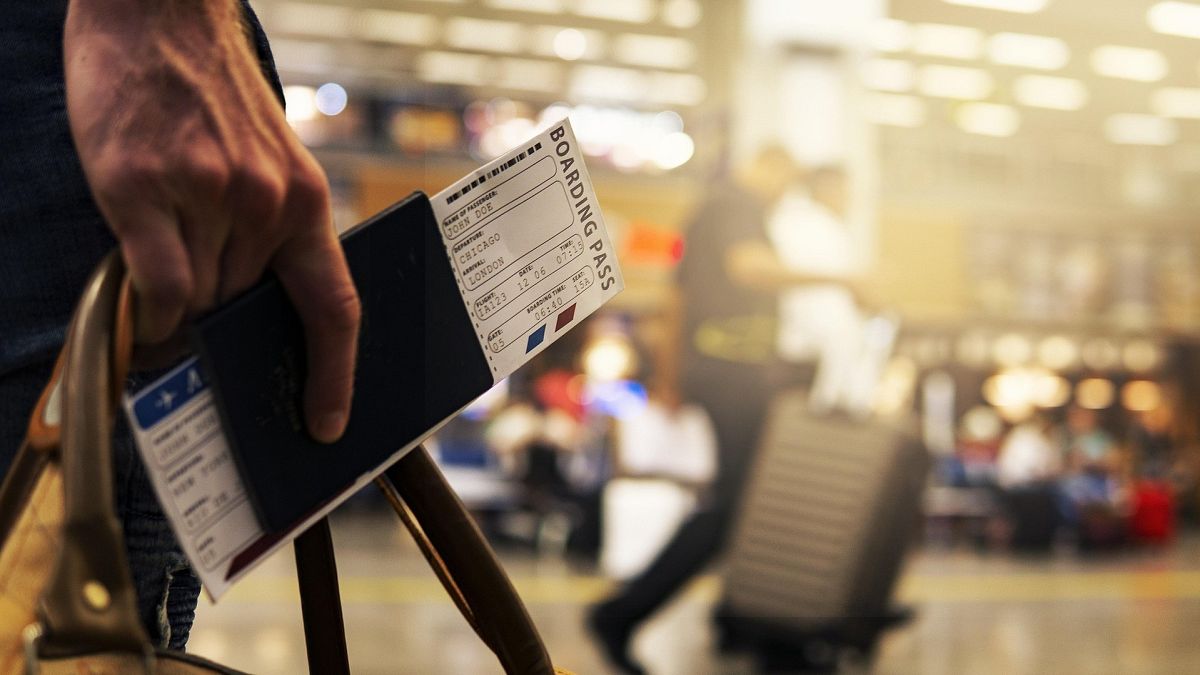
If a ground-breaking proposal comes to pass, you may soon be saying bon voyage to boarding passes.
In one of the most significant shake-ups to air travel in decades, the International Civil Aviation Organisation (ICAO) has announced plans to eliminate paper boarding passes and check-in as we know it.
Instead, passengers could use a digital travel credential - stored on their smartphones - to move through airports using facial recognition.
A digital ID to pilot the future of travel
Developed by the ICAO, the UN agency that sets global aviation standards, the digital credential would be used alongside facial recognition to replace physical documents throughout the airport, from bag drop to the boarding gate.
Travellers would download a “journey pass” that updates automatically if any changes occur, such as a flight delay or cancellation.
Trials of these novel solutions are already taking off.
Countries such as Finland have already launched a DTC pilot programme, while airports have experimented with the use of this emerging technology. Singapore’s Changi has expanded its biometric lanes, and in 2019, Amsterdam’s Schiphol introduced facial recognition technology for boarding on select flights.
Airlines have also begun to embrace digitalisation. As soon as November this year, Ryanair has announced plans to scrap paper boarding passes.
Why now?
The plan comes as airlines and airports seek to streamline operations and reduce costs, especially as global travel continues its post-pandemic rebound.
According to the International Air Transport Association (IATA), the number of air passengers is expected to double to eight billion by 2040. That surge will place pressure on airports to process passengers more efficiently. Digital IDs are seen as a key solution to that growing challenge.
But there’s another motivator: security. The ICAO says the new system could help crack down on identity fraud and human trafficking by providing a more robust way to verify who’s flying.
By relying on biometric data, which is unique to each person, the system promises greater accuracy than paper-based documentation can provide on its own.
Privacy, please
Valérie Viale, director of product management for travel technology company Amadeus, told The Times that these changes could be the most consequential since the adoption of e-ticketing in the early 2000s.
“The industry has now decided it’s time to upgrade to modern systems that are more like what Amazon would use,” she said.
If the plans develop as the ICAO envisions, boarding passes are only the beginning. Even passports could become a thing of the past in the future.
ADVERTISEMENTDespite digitalisation being a boon to traveller convenience, not everyone is on board. Critics have voiced concerns about privacy, surveillance and data breaches. Others have decried the lack of transparency around the technologies being deployed.
For its part, Amadeus has sought to reassure travellers. The company has said that its newly developed system will wipe passenger data within 15 seconds of contact with any “touchpoint,” such as baggage drop or pre-security checks.
And the ICAO insists that developing a digital travel credential remains optional for every nation.
That means you can keep your passport and boarding passes on hand for now. But don’t be surprised if your smartphone or face soon becomes your ticket to fly.
ADVERTISEMENT