

One airline is turning to AI to help it predict when turbulence is going to hit its flights.
Turbulence can often be difficult to avoid because it doesn't show up on the weather radar in the flight deck or because it is too localised for most weather models to calculate.
Given that experts say climate change is making the skies bumpier, airlines are looking for ways to ensure passengers’ safety and comfort.
Fatalities and serious injuries from turbulence are very rare, but last year, it caused one death on a Singapore Airlines flight from London and several injuries on a Qatar Airways flight to Dublin.
Climate change is making turbulence worse
Turbulence is the primary cause of non-fatal injuries to passengers and crew, according to the International Air Transport Association.
While deaths and severe injuries on large aircraft don’t occur often, between 2009 and 2021, 146 passengers and crew were seriously hurt in incidents of turbulence, according to the Federal Aviation Administration.
Last year, a study by meteorologists at the University of Reading in the UK found that skies are up to 55 per cent bumpier than four decades ago due to climate change.
Warmer air resulting from carbon dioxide emissions is altering the air currents in the jet stream, exacerbating what is known as clear-air turbulence in the North Atlantic and globally.
At a typical point over the North Atlantic, one of the world’s busiest flight routes, the total annual duration of severe turbulence increased by 55 per cent between 1979 and 2020, the scientists found.
While the North Atlantic has experienced the largest increases, the new study found that other busy flight routes over the United States, Europe, the Middle East and the South Atlantic have also seen a significant rise in turbulence.
Emirates uses AI to predict turbulence
“Airlines will need to start thinking about how they will manage the increased turbulence, as it costs the industry $150 to $500 million [€134 to €465 million] annually in the United States alone,” Mark Prosser, a meteorologist at the University of Reading, told Euronews Travel last year.
“Every additional minute spent travelling through turbulence increases wear-and-tear on the aircraft, as well as the risk of injuries to passengers and flight attendants.”
Current weather models and radars struggle to predict when bumpy conditions will hit because they are often caused by small-scale eddies that are too localised to pick up.
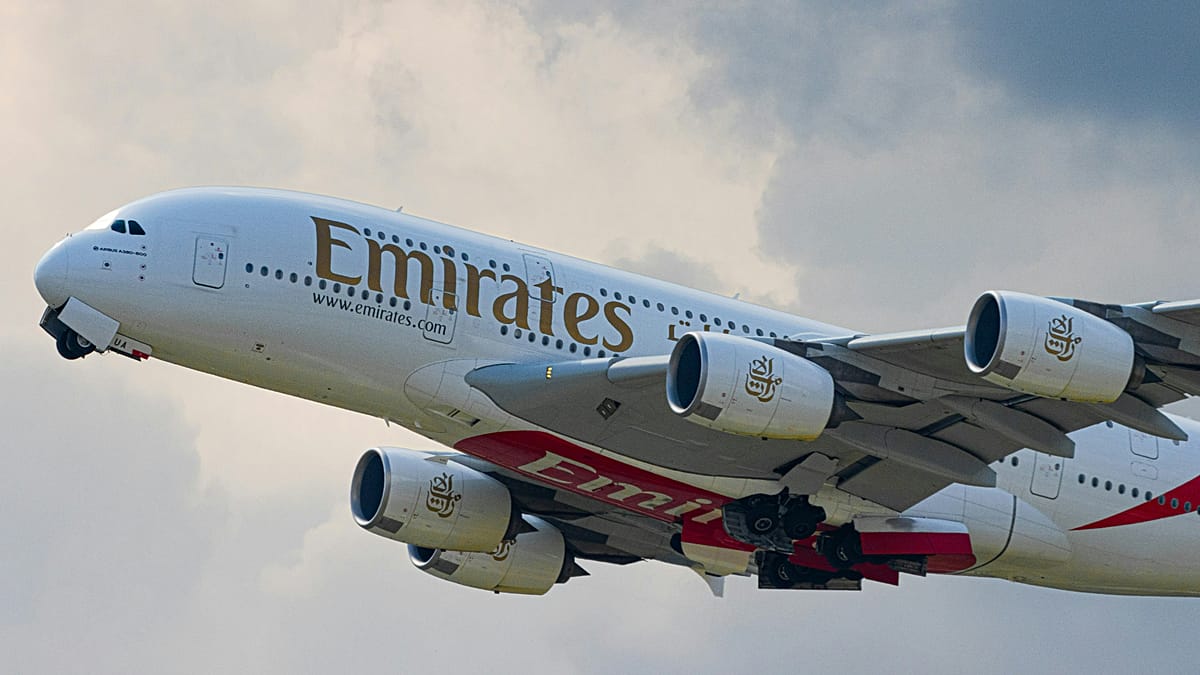
Now, Emirates, the largest airline in the Middle East, is looking to AI to improve its ability to predict turbulence on flights.
The company says the new technology can generate “real-time data”, which signals areas of turbulence on flight paths to its pilots.
The system uses “machine-learning, crowd-sourced turbulence data and pilot reports” and provides the cockpit with “live, in-situ turbulence visualisations”.
Emirates has said the new strategy has already resulted in a reduction of unexpected severe weather encounters.
“While we are still in the early stages, we are already seeing validation of the potential benefits these systems can deliver,” Captain Hassan Alhammadi, Emirates’ divisional senior vice president of flight operations, said.
He added that while the airline cannot guarantee turbulence-free flights, the technology has contributed to a “significant reduction” in incidents of unexpected severe turbulence over the past year.