

 ADVERTISEMENT
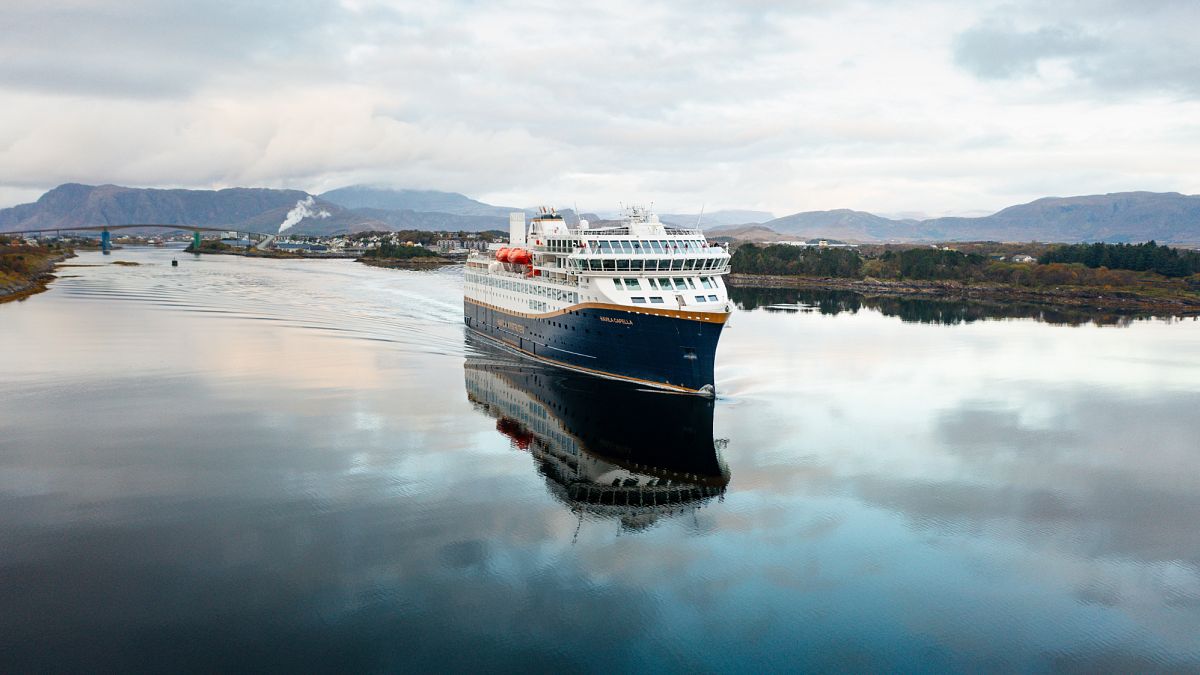
Norwegian cruise line Havila Voyages has revealed plans to launch what could become the world’s longest climate-neutral cruise as early as this autumn.
The proposed 12-day voyage will follow the coastal route from Bergen to Kirkenes and back, covering a distance of 9,260 kilometres.
The climate-neutral cruise is part of a collaboration between Havila Voyages and marine technology provider HAV Group. The goal is to eventually achieve zero emissions.
“Right now, we are in the planning phase to test a full round voyage on the coastal route this fall, using biogas in combination with our large battery packs,” Bent Martini, CEO of Havila Voyages, said at the annual Arendalsuka political conference in Norway last week.
“We are in dialogue with suppliers to secure sufficient volumes to be able to fill the tanks 100 per cent with biogas, and we believe we will succeed.”
If these plans are successful, the cruise ship in question could sail the entire coastal route from Bergen to Kirkenes and back.
What is a climate-neutral cruise?
Havila Voyages’ says its ships can already sail emission-free for four hours using battery packs. The upcoming test will use a combination of biogas - a renewable fuel derived from organic waste - and battery storage to achieve climate neutrality along the entire route.
Climate neutral means offsetting or balancing the total greenhouse gas emissions of the voyage, whereas emissions-free would mean no emissions at all from the journey.
The company aims to make its full 12-day Bergen–Kirkenes–Bergen itinerary emission-free by 2030.
Cruise lines double down on sustainability
Havila Voyages’ initiative comes amid intensifying pressure on the cruise industry to decarbonise. Cruise ships are among the highest-emitting modes of transport, with emissions per passenger kilometre that exceed planes, ferries and trains.
According to the International Council on Clean Transportation’s global shipping emissions inventory, the world’s biggest and most efficient cruise ships emitted approximately 250 grams of carbon dioxide per passenger-kilometre in 2022.
A long-haul flight emits around 80 grams of carbon dioxide per passenger-kilometre, a national rail service 41 grams and ferries around 19g.
This has led to rising calls from governments, passengers and lobby groups for cruise ships to develop more environmentally-friendly solutions. In response, cruise companies are developing new technology in an attempt to clean up their act.
Norwegian firm, Hurtigruten, is developing a zero-emission cruise ship due to launch in 2030, which will use a 60-megawatt battery pack.
Similarly, Viking is currently building the world’s first hydrogen-powered cruise ship, called Viking Libra, in partnership with Italian shipyard Fincantieri, which will be delivered late next year.
Martini urged stronger environmental regulation from Norwegian authorities to accelerate the green transition on the Bergen–Kirkenes–Bergen route.
“If Norwegian authorities are serious about their environmental ambitions, the ships on the coastal route can be a beacon for the green transition in shipping and create synergies for other parts of the industry,” he said.
“Technology exists, and the opportunities are there. It’s about the willingness to make the necessary investments. With strict environmental requirements from the authorities, those who want to operate the coastal route will be forced to deliver.”