

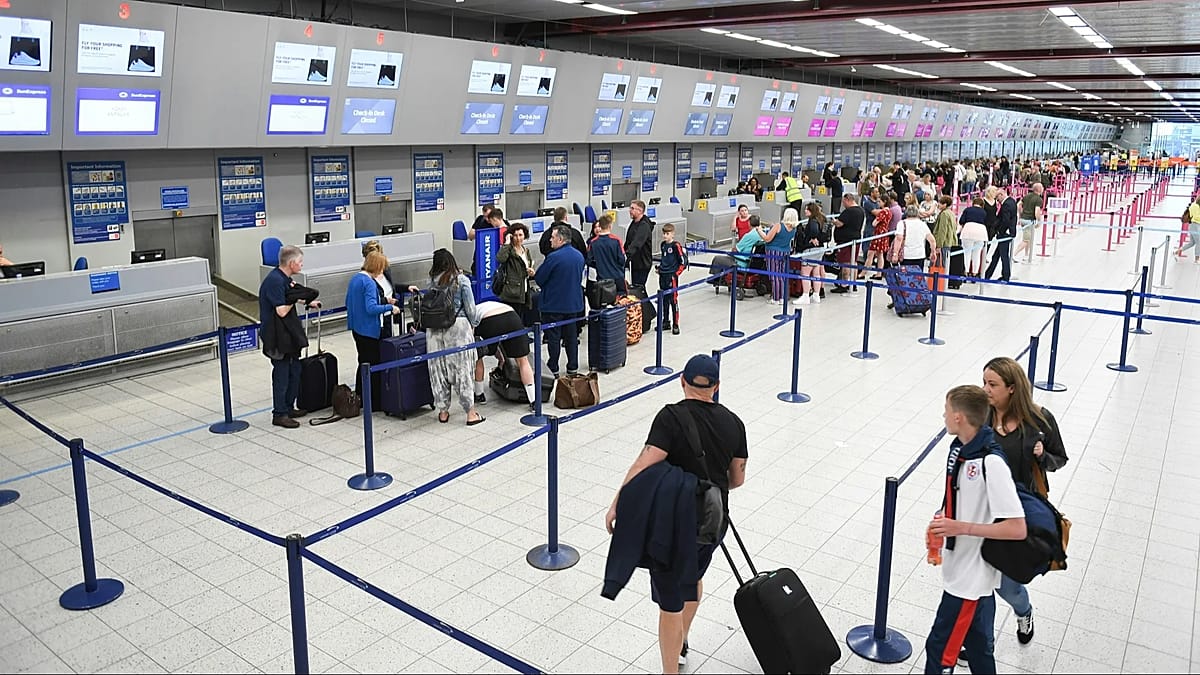
European travellers are the “most cautious” when it comes to adopting digital travel technology, according to the International Air Transport Association (IATA) 2026 Global Passenger Survey.
 ADVERTISEMENT
With results based on more than 10,000 responses from 200 countries, the survey found that Europeans are the least willing, at 70%, to share biometric data for airport processes. This is compared to the global average of 78%.
Of all the regions, Middle Eastern and African travellers showed the most willingness, at 84% and 82% respectively.
European travellers are also less enthusiastic about using a digital passport for online check-in, with 79% expressing interest, compared with 84% globally.
Concerns about data handling may explain this caution. Overall, 59% of respondents said they worried about data breaches. While 49% were concerned about their information being shared with other organisations and 41% cited a lack of clarity on how their personal details are handled.
Despite these concerns, IATA found that biometrics have become a “mainstream” part of the travel experience, with 58% of passengers overall reporting having experienced biometrics at least once in the past 12 months. This is up from just 34% in 2022.
“More passengers are experiencing biometrics during their travels. They like it and want more," Nick Careen, Senior Vice President, Operations, Safety and Security at IATA, said.
“That’s good news because the benefits are substantial – smoother journeys for passengers and more efficient, secure processes for governments and airlines.
"To make biometrics the norm for international travel, governments must agree a framework for issuing and accepting secure digital passports – or Digital Travel Credentials."
IATA found that as many as 82% of respondents would share a digital passport with an airline at booking and after payment to receive personalised services, including information on visa requirements.
Also, 82% would use a smartphone combining a digital wallet, digital passport and loyalty cards to book, pay and navigate airport processes at departure and arrival.
Is AI changing the way we travel?
AI is becoming a more prominent tool for people’s travel plans.
The survey’s findings point to 49% of travellers saying they have used AI for their planning. This includes 21% who have used it to search for flights to a specific destination, while 19% say they used it to look for the cheapest flights. Lastly, 17% of respondents used it for their travel inspiration.
"People are using AI to plan their travel,” Careen added. “It’s important for airlines not only to ensure their offerings show up in AI, but also to develop convenient links to convert an AI conversation into a real booking.”
Immigration rules are a barrier to travel
Despite new technologies designed to make journeys easier, immigration requirements remain a growing barrier to travel – discouraging as many as 43% of global travellers from visiting a destination, up from 33% in the 2025 survey.
This is the case for 52% of African travellers – more than any other region. Comparatively, entry requirements discouraged 38% of Europeans.
For those put off by immigration requirements, 53% said the process was too complex, while 17% were discouraged due to cost, and a further 17% because of privacy.
For a quicker experience, however, 86% said they would be likely to share immigration information digitally before departure. While 45% would prefer to complete immigration procedures before arriving at the airport, and 60% saying they would prefer to have their visas processed online, compared to 25% who would prefer the application be done in person at a consulate or embassy.
"Passengers want to apply for visas online and complete immigration procedures before they reach the airport,” Careen said. “E-visas can deliver that, but airlines can only verify them efficiently if governments use common standards.
“More than 100 countries issue e-visas, yet there is little consistency in how they are checked. The tools to fix that already exist, and governments should adopt them."