

 ADVERTISEMENT
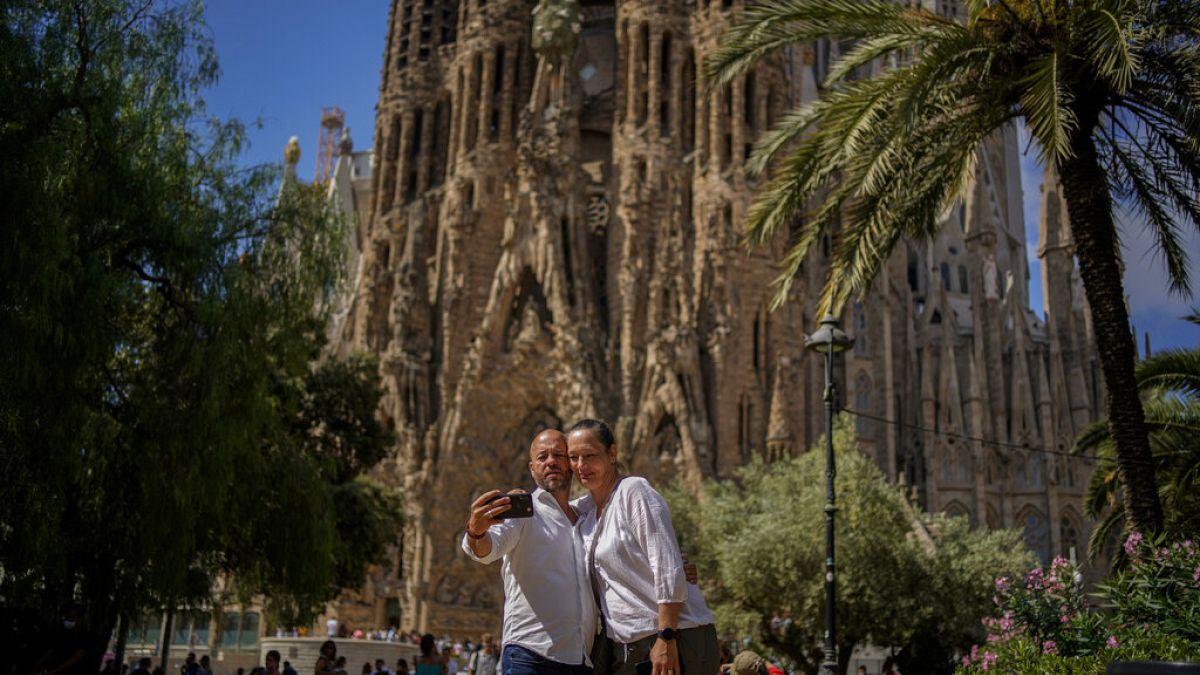
In front of Barcelona’s Sagrada Familia, gaggles of tourists pose for selfies. They crowd the pavement before the famous Gaudí-designed basilica and even step into the road for a better angle.
This quest for an Instagram-worthy photo comes at the expense of residents' daily lives.
For over a decade, locals have lambasted the crowds of visitors that obstruct the passage of pedestrians and hold up traffic around the religious site.
Barcelona city authorities have now unveiled plans to corral selfie-snapping visitors into a dedicated area to ease the congestion.
As one of Spain’s hotspot destinations, it is the latest measure from officials to regulate tourism in the city.
Sagrada Familia selfie space will ‘reconcile tourists and the neighbourhood’
Barcelona city council has announced it will construct a special zone beside the Sagrada Familia where visitors can take a breather - and a selfie - before entering the church.
The 6,200-square-metre ‘anteroom’ will be located between the Nativity façade of the basilica and Plaça Gaudí on Carrer de la Marina.
Until recently, Plaça Gaudí had been exploited by tourists for a TikTok trend that caused considerable disruption.
It involved visitors balancing their phones on metro escalators to film themselves while the iconic monument appeared in the background. The trend led to tourists clogging station exits and was eventually banned.
“The new project helps to resolve a space where it is difficult to reconcile uses between visitors to the temple and the neighbourhood,” the city council said in a press release.
Construction on the gathering zone is scheduled to begin after the summer and be finished by April 2026 to coincide with the 100th anniversary of Gaudí’s death.
The €2.7 million project is part of a wider €15.5 million plan to improve infrastructure and visitor management around the sacred site.
The Sagrada Familia attracts 4.7 million visitors a year and is the second most visited site in Spain, after the Alhambra in Granada.
‘Tourism needs to be serving the city’s model’
Now drawing 32 million visitors a year, Barcelona has previously introduced several measures to curb overtourism.
In 2024, the city launched a €44 million plan to regulate crowds in 16 tourist hotspots by deploying more cleaners and police officers to maintain order and safety.
ADVERTISEMENTLast July, the city abandoned its ‘Visit Barcelona’ slogan of 15 years in favour of the new ‘This is Barcelona’, marking a rebranding which shifts the destination away from mass tourism.
Barcelona has also pledged to ban short-term apartment rentals to tourists by 2028 and cap cruise ship disembarkations.
Speaking after the announcement last year, the city’s mayor Jaume Collboni said the decision came in response to the risk of Barcelona becoming a "theme park" devoid of residents.
"Tourism needs to be serving the city's model, not the opposite," he added.
ADVERTISEMENT