

Will Crypto Markets Crash If US Strikes Iran Within Hours?

Crypto markets are flashing deep stress signals as geopolitical tensions surrounding a potential U.S. strike on Iran intensify and liquidity continues to drain from the system.
Summary
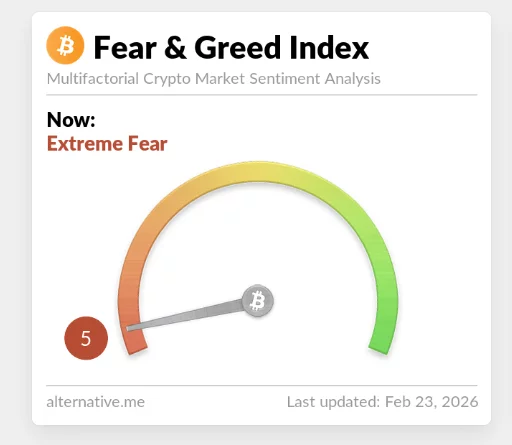
- The Crypto Fear & Greed Index has plunged to 5, signaling extreme panic as geopolitical tensions around a potential U.S. strike on Iran intensify.
- Bitcoin has dropped below key technical levels, while the broader crypto market has erased over $2.22 trillion — down more than 50% from its peak, marking one of the largest drawdowns in history.
- Despite the selloff, shrinking USDT supply down over $3 billion in 60 days suggests liquidity contraction that has historically appeared near late-stage market bottoms.
The Crypto Fear & Greed Index has plunged to 5 — “Extreme Fear”, one of the lowest readings in years, showing panic-level sentiment. Historically, such extreme readings have only appeared during major market dislocations, including the 2020 COVID crash and the 2022 bear market lows.
The collapse in sentiment mirrors Bitcoin’s sharp drop below key technical levels, reinforcing the view that traders are positioning defensively amid geopolitical uncertainty.
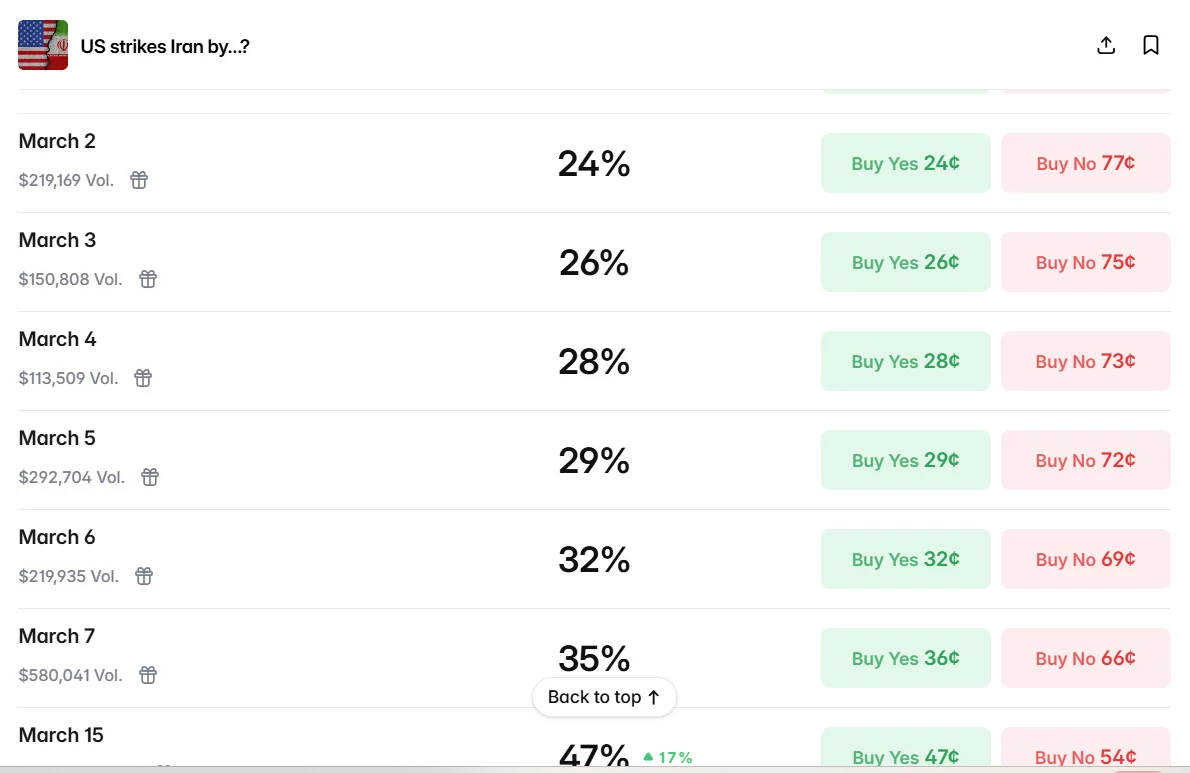
At the same time, prediction market Polymarket shows rising bets on possible U.S. military action in early March, with probabilities climbing steadily day by day, reflecting growing geopolitical uncertainty priced into markets.
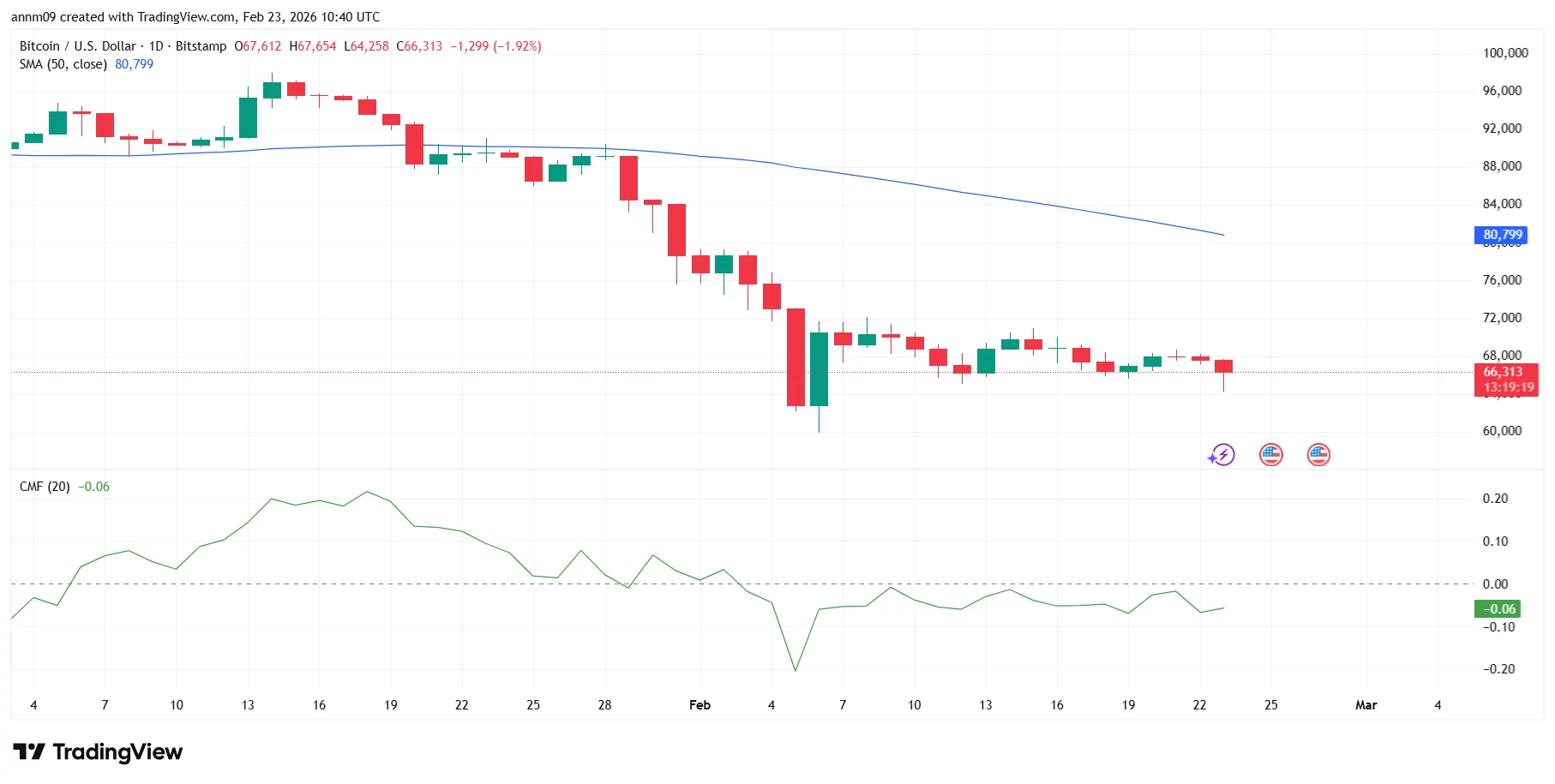
Meanwhile, price action mirrors the anxiety. Bitcoin has fallen sharply from recent highs and is trading well below its 50-day moving average, while the broader crypto market has shed more than $2.22 trillion, down over 50% from its peak.
In a widely shared post, Coin Bureau warned that “CRYPTO MAY BE HEADING TOWARD ITS LARGEST CRASH EVER,” noting that the current drawdown is now the second-biggest dollar loss in history, just $60 billion shy of the all-time record.
Yet liquidity data suggests a more nuanced picture. Another Coin Bureau analysis highlighted that USDT supply has fallen by more than $3 billion in 60 days, a contraction last seen during the FTX collapse.
Historically, shrinking stablecoin supply signals capital leaving the market but similar conditions in 2022 marked Bitcoin’s cycle bottom.
Ultimately, while a potential U.S. strike on Iran could trigger another wave of short-term volatility, the data suggests markets may already be pricing in extreme risk. With sentiment at capitulation levels, over $2.22 trillion erased, and stablecoin liquidity contracting to levels previously seen near cycle lows, the conditions resemble late-stage selloffs more than the early phases of a collapse.
Bitcoin Suisse Turns Regulation Into Growth
For much of crypto’s short history, growth was measured in trading volumes, token prices and the number of customers w... Read more
Circle Wins Landmark US Banking Licence
Circle Internet Group has finally secured the regulatory prize it has been chasing for more than a year, with the Office... Read more
Crypto Treasuries Chase A New Kind Of Capital
There is a peculiar irony at the heart of the crypto treasury movement. Companies that staked their futures on digital a... Read more
What Strategy's Bitcoin Sale Really Tells Us
There is a moment in every bull run when the narrative starts to fray. Not with a crash, not with a scandal, but with so... Read more
The Clock Is Ticking On UK Stablecoins
The world is not waiting for Britain to make up its mind. While the United States and the European Union have spent the ... Read more
From Cypherpunk To Citadel
How Crypto Moved from the Wild West to the Mainstream Financial SystemA long-form analysis of Bitcoin's journey from fri... Read more