

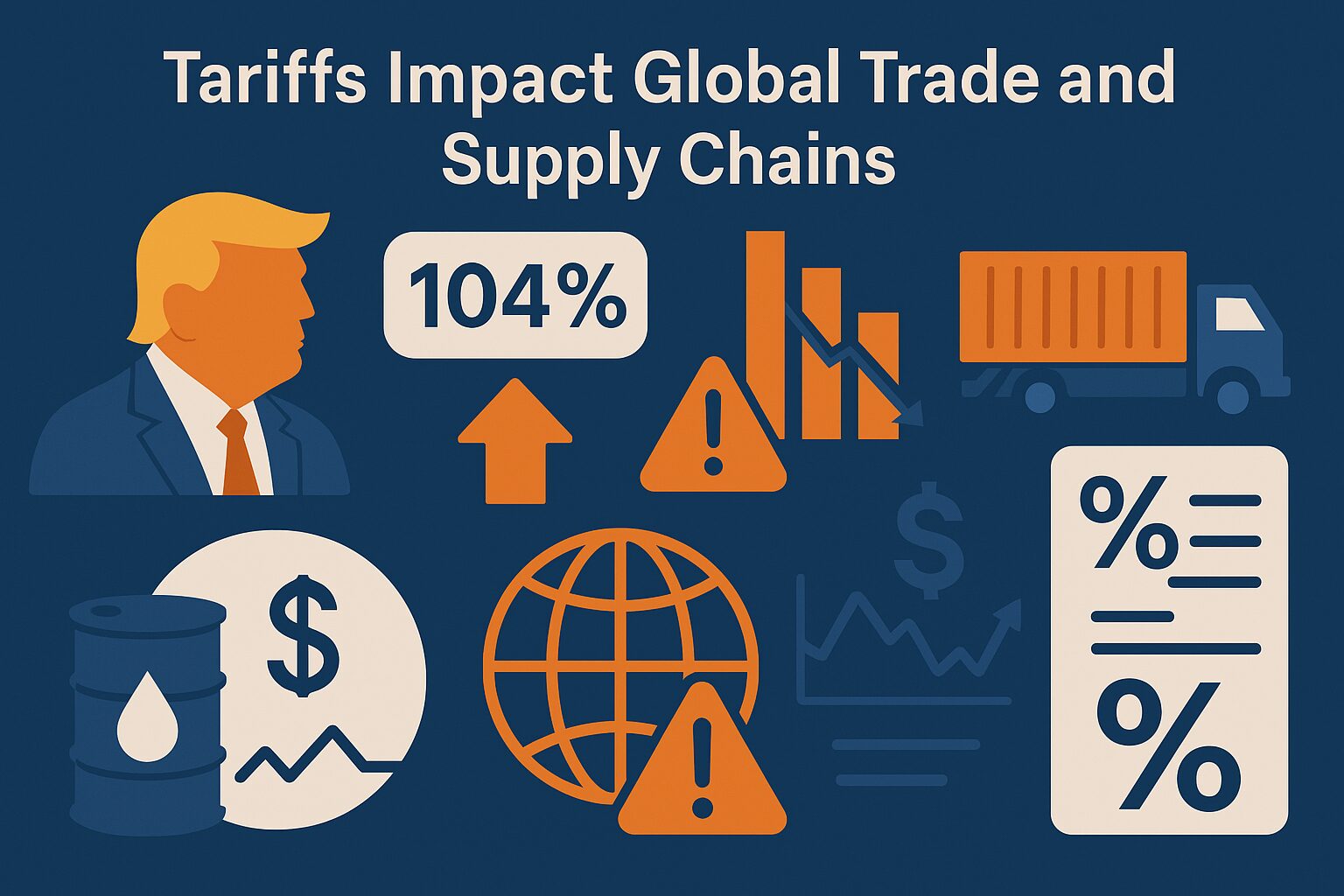
 In a significant escalation of trade tensions, President Donald Trump’s newly implemented tariffs took full effect just after midnight Eastern Time, sending immediate ripples through financial markets and global supply chains.
Key Developments in the Last 24 Hours:
Tariffs Now Active – Up to 104% on Key Imports
The U.S. has officially imposed massive “reciprocal” tariffs on imports from China, Japan, Vietnam, India, and other countries. These duties, reaching 104% on some goods, apply across a broad swath of products—from electronics and automotive parts to textiles and industrial machinery.
Markets React Swiftly but Show Fragile Resilience
Stock futures plunged in premarket trading, with the Dow and S&P 500 falling over 2% before partially recovering. The Nasdaq 100, sensitive to global tech trade, wavered at the flat line. The short-lived rebound was attributed to China’s decision to avoid immediate retaliation, instead publishing a white paper calling for “dialogue and consultation.”
Global Supply Chain Disruptions Begin to Materialize
Freight forwarders and procurement managers are reporting early signs of supply reallocation efforts, as importers scramble to reroute orders through lower-tariff regions like Mexico or Eastern Europe. Some U.S. ports have flagged increased inquiries about customs reclassification and bonded warehousing strategies.
Oil Prices Sink Below $60 – A Mixed Signal for Logistics
Crude oil dropped to its lowest level since 2021, closing below $60 per barrel, as fears of a global slowdown weighed on demand forecasts. While this drop could ease transportation fuel costs, it is also seen as a signal of deteriorating trade health.
Fed and CPI Data Laster Today
Minutes from the Federal Reserve’s March meeting, due later today, and tomorrow’s Consumer Price Index report are now in sharper focus. Stakeholders are looking closely for signs of stagflation—a toxic mix of inflation and slow growth—that could arise from trade-related cost shocks.
What This Means for Supply Chain Leaders:
- Expect Near-Term Volatility in Freight Volumes and Pricing
As buyers accelerate shipments or divert goods from tariffed routes, logistics providers may face congestion, imbalanced flows, and urgent capacity demands. - Revise Risk Assessments and Trade Compliance Strategies
Regulatory teams should immediately audit sourcing exposure to newly affected countries and reassess trade route viability. - Watch for Delayed Retaliation
China’s pause in retaliation may be strategic. Prepare for countermeasures that could hit key U.S. exports like agriculture or semiconductors.