


In this week’s update, the global trade landscape takes center stage as a landmark U.S.-India agreement promises to slash tariffs and reshape sourcing strategies by March. Domestically, the push for resilience is accelerating through massive infrastructure investments, from Eli Lilly’s new $3.5 billion pharmaceutical hub to the launch of “Project Vault,” a $12 billion critical minerals reserve. As legal wins for offshore wind projects further signal a shift in energy logistics, the underlying challenge remains data orchestration; we look at why unifying fragmented systems is now the baseline for navigating these complex market fluctuations.
India and the U.S. Make Trade Announcements, Resulting in Reduced Tariffs
 The recent trade announcement between the U.S. and India represents a significant shift in strategic intent, with Indian Trade Minister Piyush Goyal confirming on February 5, 2026, that a formal deal is expected to be signed in March. While the proposed reduction of U.S. tariffs on Indian goods from 50% to 18% and India’s potential pivot from Russian oil to at least $500 billion in American energy and technology purchases offer major competitive implications, the deal currently lacks the granular detail required for immediate execution. A joint statement is expected within days to outline the first official timeline, yet for supply chain professionals, uncertainty remains regarding specific HS code tariff schedules and rules of origin. Until formal documentation is finalized next month, logistics leaders should treat these developments as strategic options, focusing on scenario modeling and monitoring regulatory updates before committing to structural shifts in sourcing or manufacturing.
Unifying Real-Time Data for End-to-End Supply Chain Orchestration with Intersystems
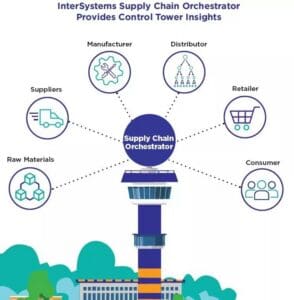 Achieving true end-to-end supply chain orchestration requires overcoming the persistent barrier of siloed and fragmented data. A recent survey of 450 supply chain practitioners highlights that nearly half of organizations struggle with little to no integration across disparate systems, leading to significant gaps in visibility and operational transparency. To move beyond traditional management silos, many leaders are turning toward an “ultimate control tower” approach, which utilizes real-time data and predictive modeling to synchronize planning, sourcing, and logistics. By adopting a framework that emphasizes seeing, understanding, and optimizing data before acting, companies can gain the agility needed to respond to market fluctuations and disruptions. Ultimately, unifying data across multi-tier networks allows for faster decision-making and improved margins without the need to replace existing legacy systems.
Eli Lilly and Company Announces Multi-Million Dollar Facility for Next Gen Weight Loss
 Eli Lilly and Company has announced a $3.5 billion investment to build a new injectable medicine and device manufacturing facility in Lehigh Valley, Pennsylvania. This site, the tenth U.S. manufacturing facility announced by the company since 2020, will focus on producing next-generation weight-loss therapies, specifically the investigational triple hormone receptor agonist retatrutide. The project is expected to create 850 high-value permanent roles and 2,000 construction jobs, with operations slated to begin in 2031. To ensure a resilient and modern supply chain, Lilly plans to integrate advanced technologies such as AI, machine learning, and real-time data analytics. This expansion not only bolsters domestic production of essential medicines but is also expected to drive significant local economic activity, further strengthening the regional life sciences infrastructure.
 The administration has launched “Project Vault,” a $12 billion initiative to establish a U.S. Strategic Critical Minerals Reserve aimed at reducing dependence on foreign supply chains for essential materials. This public-private partnership is backed by a $10 billion loan from the U.S. Export-Import Bank and $2 billion in private sector financing, with initial participation from major OEMs like General Motors, Boeing, and Western Digital. Designed to protect industries such as defense, energy, and automotive from supply shocks, the reserve functions similarly to the strategic petroleum reserve by stockpiling minerals vital for national security and economic stability. For supply chain managers, this project represents a long-term effort to stabilize the domestic industrial base and mitigate risks associated with foreign-controlled materials, supported by ongoing federal efforts to bolster mining and processing operations within the U.S.
Judge Lifts Ban on Another North East Offshore Wind Project
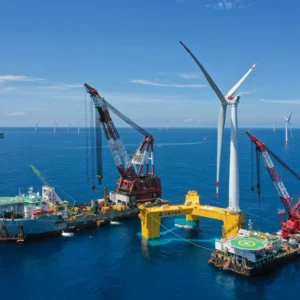 A federal judge on Monday allowed the 924-megawatt Sunrise Wind project, located off the east coast of New York, to resume construction after it was halted by a sweeping stop-work order issued by the Trump Administration in December. The project, which is nearly halfway complete, was expected to begin producing electricity this year before the order. The December order had cited “ambiguous national security concerns” as the reason for stopping Sunrise Wind and other offshore wind farms. However, Judge Royce Lamberth of the U.S. District Court for the District of Columbia reviewed the classified report detailing those threats and found the justification insufficient. He granted project developer Ørsted a preliminary injunction, allowing work to proceed while the legal complaint is processed.
Song of the week: