

How NACFE Is Clarifying Long-Haul Powertrain Tradeoffs With Fleet Data

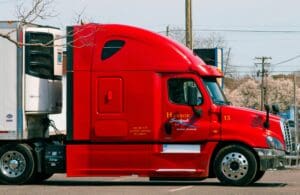 Long-haul trucking sits at the center of the industry’s decarbonization challenge. Multiple powertrain options are now technically viable, but their operational fit varies widely depending on duty cycle, route structure, fueling access, and fleet economics. The result for many fleets is uncertainty rather than clarity.
NACFE has taken a deliberately empirical approach to this problem by grounding analysis in real-world fleet operations rather than models or projections. Its recent long-haul research focused on Class 8 sleeper and day cab trucks operating under return-to-base and over-the-road conditions, capturing how different powertrain technologies perform in live commercial service.
The work examined four propulsion categories: diesel and renewable diesel, natural gas and renewable natural gas, battery electric, and hydrogen fuel cell. Participating vehicles were already deployed in revenue service and instrumented with standardized telematics, allowing NACFE to compare performance using consistent metrics while preserving operational context. This combination of quantitative data and qualitative fleet insight is central to NACFE’s approach.
Fleet selection also mattered. NACFE evaluated a broad pool of candidates and narrowed participation based on practical criteria, including trucks in active operation, willingness to share data transparently, and openness to on-site engagement. The resulting mix avoided technology advocacy in favor of representation across powertrains, geographies, and operating models.
Rather than positioning one solution as dominant, the findings highlight tradeoffs. Diesel and renewable diesel continue to offer operational familiarity and infrastructure depth. Natural gas shows strengths in specific long-haul patterns where fueling access is well established. Battery electric and hydrogen fuel cell platforms demonstrate promise, but with constraints that remain highly dependent on route design, dwell time, and supporting infrastructure.
By anchoring analysis in fleet data, NACFE shifts the long-haul powertrain conversation away from assumptions and toward operational fit. For fleet operators, OEMs, and policymakers, the value lies not in definitive answers, but in a clearer understanding of where each technology performs well today and where further development or infrastructure investment is still required.
Learn more
-
NACFE website: https://nacfe.org
-
Bringing Clarity to the Messy Middle executive summary (January 2026): https://nacfe.org/research/run-on-less
Copper's Comeback: Inside BHP And Lundin's Argentine Asset Acquisition
Copper, often dubbed "the metal of electrification," is experiencing a resurgence in demand due to its critical role in ... Read more
Revitalizing Commodities: How Clean Energy Is Breathing New Life Into A Stagnant Market
The commodities market, traditionally a cornerstone of investment portfolios, has experienced a decade of stagnation. Ho... Read more
European Airports Disrupted By Escalating Climate Protests
Climate activists have escalated their protests at European airports, blocking runways and causing flight disruptions in... Read more
Hungary's Russian Oil Dilemma: Why Brussels Is Cautious In Offering Support
Hungary's reliance on Russian oil has led it to seek support from Brussels to ensure continued access to this crucial en... Read more
Unveiling China's Secret Commodity Stockpiles: What Lies Ahead?
Xi Jinping's extensive reserves of grain, natural gas, and oil hint at future challenges.In a move shrouded in secrecy, ... Read more
Copper Miners Brace For Industry Overhaul As End Users Seek Direct Deals
The copper mining industry is bracing for a significant overhaul as end users, including cable manufacturers and car com... Read more